A discreet buyer guide to South Florida full-service towers in calmer coastal enclaves, balancing privacy, service, beach access, and long-term livability.
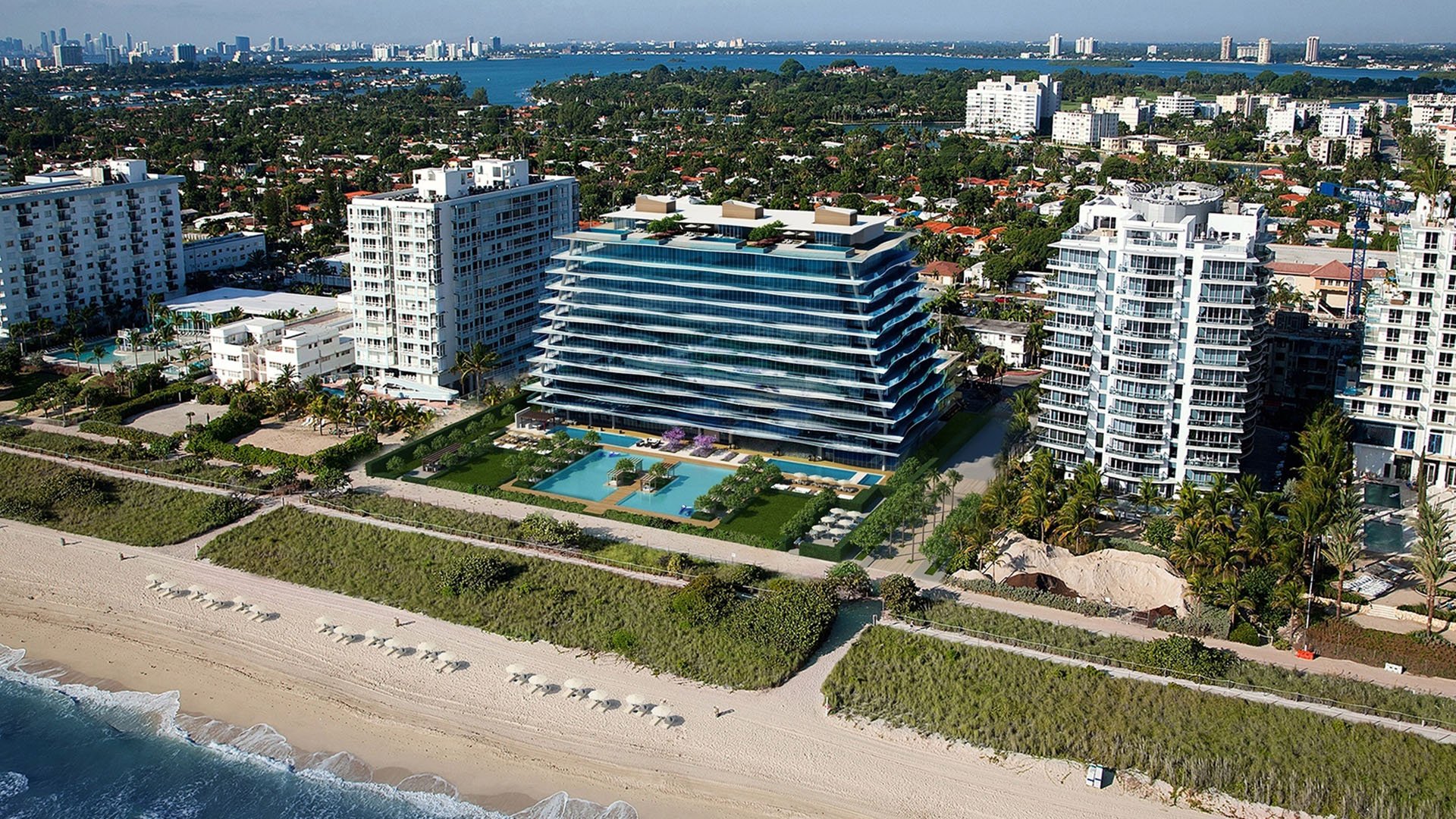
For many South Florida buyers, the ideal beach residence is no longer the loudest tower on the most visible stretch of sand. The more nuanced search is for service without spectacle: a staffed building, a gracious arrival, secure parking, thoughtful wellness spaces, a refined pool environment, and beach access that feels calm rather than performative. That is why quieter beach towns have become so compelling for buyers who want the ease of a full-service tower without the intensity of a major resort corridor.
The best addresses in this category share a distinct sensibility. They feel residential first, with the staffing and amenity depth to support effortless lock-and-leave ownership, but without so much public energy that daily life becomes hotel-like. In places such as Surfside, Hallandale, Hillsboro Beach, Pompano Beach, and select pockets north of Miami Beach, the question is less about being seen and more about being well served.
Quiet does not mean isolated, under-amenitized, or sleepy. In the upper tier, it means a building and town that protect the owner’s private rhythm. The arrival sequence should be composed. The beach experience should not feel crowded before breakfast. Elevators, lobby circulation, valet flow, and amenity programming should support calm rather than friction.
For buyers comparing towers, the critical distinction is between a quiet location and quiet operation. A building may sit in a discreet coastal enclave but still feel busy if the amenity plan is overprogrammed, the lobby is undersized, or parking and guest flow are poorly considered. Conversely, a more visible address can feel serene when the plan is disciplined, the staff culture is polished, and the residences are designed with privacy in mind.
Surfside remains one of the clearest answers for buyers who want a village-like coastal setting while staying close to Miami’s cultural and dining gravity. It has the advantage of feeling residential, walkable, and polished, with a beachfront identity that does not need to announce itself. The best full-service tower here should give owners a sense of retreat the moment they leave Collins Avenue and enter the building.
In this context, buyers often compare projects such as The Delmore Surfside when studying newer interpretations of privacy, scale, and ocean-adjacent living in Surfside. Nearby, Rivage Bal Harbour speaks to the buyer who wants a quieter coastal posture with proximity to one of the region’s most established luxury retail and dining environments. The appeal is not only the address, but the ability to move between serenity and convenience without making either feel compromised.
Hallandale can suit buyers who want a quieter coastal base between Miami and Fort Lauderdale, particularly if they value access to both markets while avoiding the denser feel of the busiest waterfront districts. The key is to study the specific building environment carefully. A calm town setting is only part of the equation; a buyer should also evaluate driveway flow, privacy from neighboring towers, beach approach, and how the building separates residents, guests, service, and delivery movement.
For buyers considering Hallandale, 2000 Ocean Hallandale Beach is a natural reference point in the conversation around refined coastal condominium living in the area. Those looking for a more resort-adjacent private club sensibility may also examine Shell Bay by Auberge Hallandale as part of a broader comparison. The right fit depends on whether the buyer prioritizes pure beachfront calm, club energy, or a blended lifestyle with easy regional access.
North of Fort Lauderdale, Hillsboro Beach and Pompano Beach offer a different coastal mood. These markets can appeal to buyers who want the Atlantic at the center of daily life, but prefer a more measured pace than Miami Beach or Sunny Isles. The appeal is especially strong for second-home owners who want a residence that feels restorative on arrival, with a terrace, views, and building services that make short stays feel frictionless.
In Hillsboro Beach, Rosewood Residences Hillsboro Beach is relevant for buyers studying the branded-residence layer of the quieter-town market. In Pompano Beach, The Ritz-Carlton Residences® Pompano Beach belongs in the conversation for those comparing service-led coastal ownership outside the most trafficked Miami addresses. Pompano Beach searches often begin with value and beach proximity, but the more sophisticated question is whether the tower’s service model matches the owner’s expectations year-round.
A full-service tower should be judged by how quietly it solves problems. The best buildings make daily life feel less administrative. That includes the obvious elements, such as front desk presence, valet, package handling, and maintenance coordination, but also the subtler ones: how guests are announced, how vendors are managed, how beach equipment is stored, and how seasonal arrivals are handled during peak weeks.
Buyers should ask how the building feels at three different times: early morning, late afternoon, and a holiday weekend. Morning reveals the resident routine. Late afternoon reveals beach return, valet pressure, and amenity demand. A holiday weekend reveals the building’s true operating culture. In a quieter beach town, the standard should be calm continuity rather than episodic luxury.
In quieter markets, buyers sometimes overfocus on the town and underweight the plan of the residence itself. The right home should support long stays, not only scenic weekends. Look for separation between entertaining and sleeping areas, generous storage, usable outdoor space, and primary suites that feel protected from the social heart of the apartment. Oceanfront exposure is valuable, but livability comes from proportions, light control, acoustics, and privacy.
Flow-through layouts can be attractive when they bring cross-breezes and layered views, but only if the interior plan remains coherent. Deep terraces are not automatically better if they compromise interior light or furniture planning. A boutique building can offer intimacy, but it should still have enough operational depth to serve owners during peak season. The most successful purchase balances view, plan, service, and town character.
The decision should begin with lifestyle cadence. A buyer who spends long winter stretches in South Florida may want walkability, dining, and a familiar neighborhood routine. A buyer who visits for short restorative stays may prefer the most private beach environment available. A family may prioritize guest rooms, staff coordination, and proximity to schools or airports. A couple downsizing from a waterfront home may care most about service, security, and preserving the feeling of direct coastal connection.
The best South Florida full-service towers for quieter beach-town buyers are not defined by maximum amenity count. They are defined by restraint, competence, and setting. When those three align, the result is a residence that feels effortless without becoming anonymous, private without feeling remote, and luxurious without needing constant display.
What makes a beach town feel quieter for condo buyers? A quieter beach town typically offers a more residential daily rhythm, calmer streets, and less resort-style intensity while still providing access to the water.
Is Surfside a good fit for buyers who want privacy? Yes, Surfside can suit buyers who want a polished coastal setting with a more discreet village feel than larger beach districts.
Should I choose Hallandale for a second home? Hallandale can work well for buyers who want a coastal base between Miami and Fort Lauderdale, but the specific building’s service culture matters.
Are branded residences always better in quieter beach towns? Not always. Branding can support service expectations, but buyers should still evaluate privacy, staffing, layout, and long-term ownership costs.
How important is beach access in a full-service tower? Beach access is important, but the quality of the approach, storage, service support, and crowd conditions can matter just as much.
Is oceanfront exposure worth prioritizing? Oceanfront exposure can be highly desirable, though buyers should balance the view against floor plan, privacy, light, and maintenance considerations.
Do quieter towers have fewer amenities? Not necessarily. Many quieter buildings focus on fewer, better-executed amenities rather than a large menu of spaces that feel busy.
What should I look for in a pool area? Look for privacy, sun exposure, service, seating comfort, and whether the pool feels relaxed during peak occupancy periods.
Does a boutique building offer more privacy? A boutique building can feel more intimate, but privacy also depends on elevator planning, staff protocols, and how guests and vendors circulate.
How should I compare a terrace across different towers? Compare depth, usability, wind, privacy, view corridors, and whether the terrace supports real dining and lounging rather than only visual appeal.
To compare the best-fit options with clarity, connect with MILLION.
If branded residences are on your mind — as a home or as an allocation — we would be glad to share what we are seeing, privately.
Begin a quiet conversation