A buyer-focused editorial comparison of The Cove Residences Edgewater and Tula Residences North Bay Village through the lens of wellness design, natural light, and humidity control in coastal South Florida ownership.
For South Florida’s most discerning buyers, the choice between The Cove Residences Edgewater and Tula Residences North Bay Village is no longer only about skyline, water, or address. It is increasingly about how a residence performs from morning to night. Wellness design, natural light, and humidity control now sit at the center of the ownership experience, shaping comfort in subtle, cumulative ways that are difficult to correct after purchase.
That distinction matters in a coastal market where the most beautiful exposures can also be the most demanding. A glassy living room may frame a superb Waterview, but buyers should ask how that room feels at noon, after rain, during a dinner party, and when the home has been closed for several days. The most successful luxury residences do not merely look serene. They remain composed.
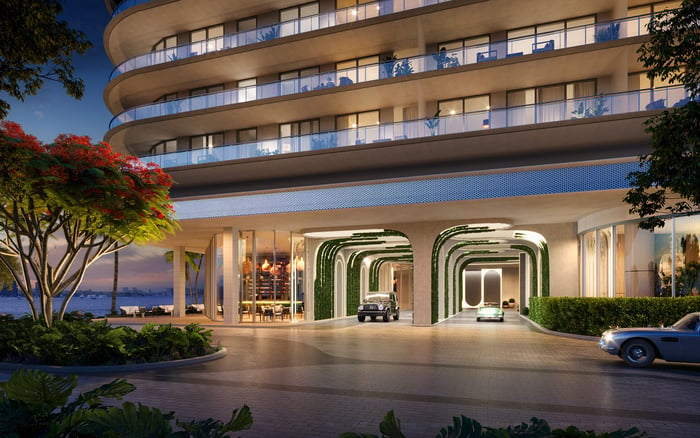
Edgewater offers the urban waterfront proposition: proximity to Miami’s cultural, design, dining, and financial corridors, with a residential tone that can still feel elevated above the city. For buyers considering The Cove Residences Edgewater, the appeal often begins with vertical living, water orientation, and access to the broader mainland rhythm. The experience can feel polished, metropolitan, and visually dynamic.
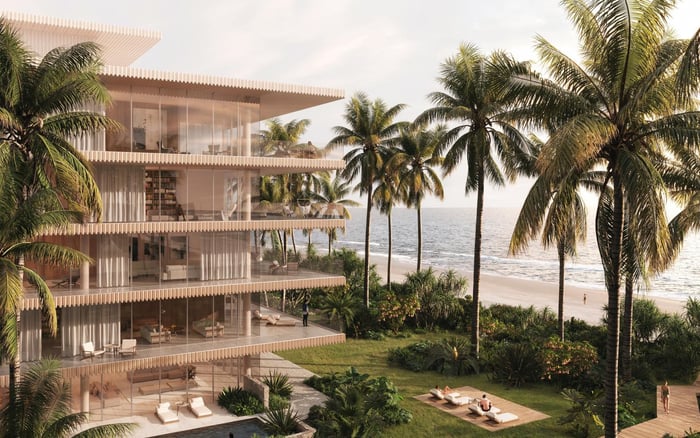
North Bay Village carries a different tempo. Tula Residences North Bay Village occupies a setting defined by island geography, open water, and a sense of separation without full retreat. For some owners, that distinction matters more than raw distance. The day can begin and end with a softer cadence, while still retaining access to Miami Beach, mainland Miami, and the bayfront lifestyle that anchors the area’s appeal.
Neither choice is automatically more luxurious. The sharper question is which address supports the way an owner actually lives. A collector who entertains frequently may favor one pattern of arrival and movement. A second-home buyer seeking quiet, light, and simplicity may prefer another. In both cases, the interior environment deserves the same scrutiny as the view.
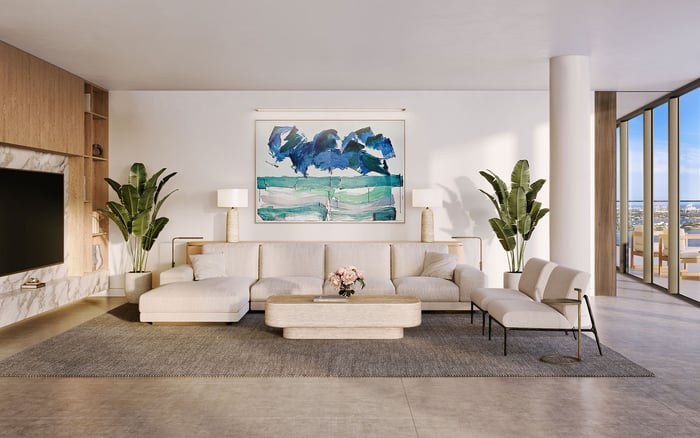
In luxury real estate, light is often treated as a virtue in itself. In practice, quality matters more than quantity. Buyers comparing these two projects should study how daylight enters the primary living spaces, bedrooms, kitchen, baths, and work areas. A bright great room can be a pleasure, but a bedroom that receives aggressive light at the wrong hour may not support rest. A deep terrace can soften exposure, while an exposed Balcony can intensify it.
The best walk-throughs are sensory. Stand where the dining table might go. Sit where a desk could face the water. Consider whether window placement encourages calm or constant visual activity. Ask whether privacy requires shades to be lowered throughout the day, because a view that must be hidden is not delivering its full value.
Natural light also affects art placement, fabric selection, flooring, and the perceived temperature of a room. A residence with generous glazing may feel expansive, but ownership becomes more refined when glazing, overhangs, interior planning, and shade systems work together. Buyers should not be seduced by brightness alone. The goal is livable luminosity.
Humidity control rarely photographs well, which is why it is often under-discussed. Yet it can influence almost everything an owner touches: closet freshness, millwork stability, soft goods, kitchen comfort, spa-like bathrooms, and the ability to leave a residence closed without worry. In South Florida, the invisible systems behind the walls deserve the same attention as marble, appliances, and fixtures.
When evaluating The Cove Residences Edgewater or Tula Residences North Bay Village, buyers should ask specific questions about air conditioning design, ventilation, dehumidification strategy, filtration, service access, and how systems perform during seasonal shifts. If a residence offers large terraces, operable openings, or indoor-outdoor living patterns, the transition between exterior air and conditioned interiors becomes especially important.
This is where New Project decisions can be consequential. Early buyers may have the opportunity to understand specifications before finishes are locked in, and to plan window treatments, closets, flooring, and storage around the way the residence will be used. Even the most beautiful home can lose its ease if comfort depends on constant adjustment.
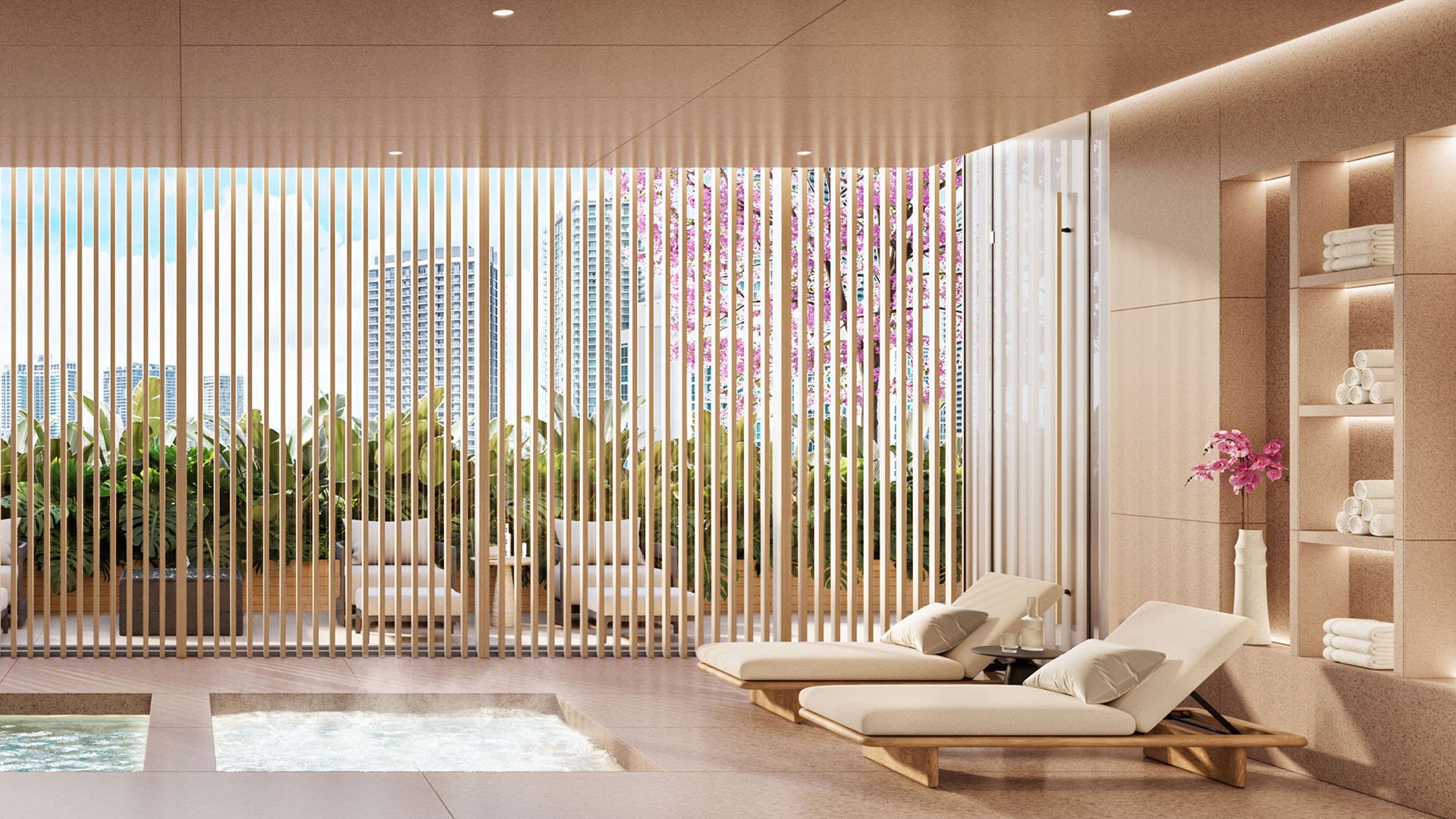
Wellness design is often marketed through amenities, but private residential wellness begins inside the unit. It involves sleep quality, acoustic calm, air movement, daylight management, circulation, material choices, and the subtle psychological effect of order. A Pool, fitness room, or social lounge can enrich the building, but the home itself must carry the daily burden of restoration.
For a primary residence, that may mean a bedroom sequence that feels protected, a bath that receives flattering light without compromising privacy, and storage that accommodates seasonal clothing without feeling improvised. For a pied-à-terre, wellness may be about instant ease: arriving after travel, opening the door, and feeling that the home is fresh, balanced, and ready.
Buyers should also evaluate how a Terrace functions as part of wellness. Is it an outdoor room, or simply an architectural gesture? Does it allow quiet morning use? Can it support a shaded lunch, a planted edge, or a private evening moment? In South Florida, exterior space is most valuable when it expands daily life without making the interior harder to manage.
The Cove Residences Edgewater may speak to a buyer who wants a more urban waterfront life, with energy nearby and a visual connection to Miami’s evolving skyline. Tula Residences North Bay Village may resonate with an owner who values a more island-oriented setting and a softer sense of separation. Both possibilities can be compelling, but the decision should move beyond first impressions.
A disciplined buyer will compare floor plan efficiency, exposure, ceiling height, window placement, terrace usability, storage, acoustic expectations, and mechanical planning. The most persuasive residence is not always the one with the most dramatic first view. It is the one that supports better mornings, quieter evenings, and fewer compromises over time.
In the upper tier, ownership is increasingly about friction reduction. The right home should not require constant correction. It should manage light gracefully, keep humidity in check, support routines, and allow beauty to remain effortless. That is the real shift in the conversation from address to experience.
Is wellness design mainly about amenities? No. Amenities matter, but the private residence itself should support rest, air quality, light control, storage, and daily comfort.
Why is natural light not always an automatic advantage? Too much direct light can create glare, heat, privacy concerns, and furnishing limitations. Balanced light is more valuable than brightness alone.
Should buyers ask about humidity control before choosing a residence? Yes. Humidity strategy can affect comfort, closets, finishes, and the ease of maintaining a coastal home.
How should I compare Edgewater with North Bay Village? Compare daily rhythm, access, views, privacy, arrival experience, and how each setting supports your intended use.
Does a Balcony always improve livability? Not automatically. A Balcony is most useful when it has comfortable depth, shade potential, privacy, and a clear role in daily life.
What makes a Waterview feel better over time? A Waterview gains value when it is paired with privacy, glare control, quiet interiors, and a floor plan that frames it naturally.
Is a Terrace different from a standard outdoor area? A Terrace should feel like an outdoor room, not leftover space. Its orientation, depth, and usability are central.
Are mechanical systems as important as finishes? In coastal luxury ownership, yes. Invisible systems can determine how fresh, quiet, and stable a home feels.
Is a New Project easier to tailor for wellness priorities? It can be, especially when buyers understand specifications early and plan shades, closets, lighting, and materials accordingly.
Which is better, The Cove Residences Edgewater or Tula Residences North Bay Village? The better choice depends on whether you prioritize urban waterfront energy or a more island-oriented residential rhythm.
For a tailored shortlist and next-step guidance, connect with MILLION.
If branded residences are on your mind — as a home or as an allocation — we would be glad to share what we are seeing, privately.
Begin a quiet conversation