A discreet buyer’s guide to evaluating Edgewater and North Bay Village through the practical lens of terrace usability, heat, wind, shade, views, privacy, and daily outdoor living.
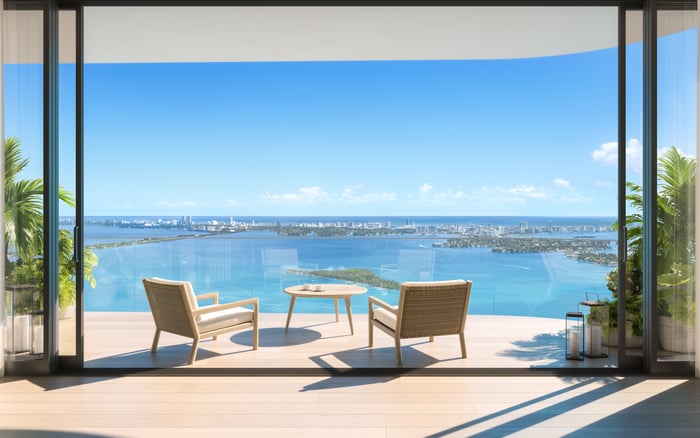
In Miami, a terrace is not simply an outdoor extension of the floor plan. It is a second living room, a breakfast perch, an evening salon, a place to read while the city is still warm, and a private frame for water, skyline, and sky. When the choice narrows to Edgewater or North Bay Village, the sharper question is not which neighborhood offers the larger balcony or the more dramatic view. It is which outdoor space you will actually use.
Heat and wind make terrace design a matter of daily discipline. A large platform without shade may photograph beautifully and sit empty at midday. A narrower terrace with protection, cross ventilation, and a practical furniture zone may become the most loved room in the residence. The right answer is personal, but the evaluation should be rigorous.
Edgewater appeals to buyers who want a residential address close to Miami’s cultural and dining energy while keeping Biscayne Bay in the foreground. It is a neighborhood where high-rise living, city convenience, and waterview orientation often shape the purchase conversation. For terrace buyers, that combination can be compelling: the outdoor room feels connected to both water and city.
The tradeoff is that urban verticality demands careful study. Buyers should examine how a terrace is positioned relative to neighboring towers, how the railing height feels when seated, and whether the outdoor zone has enough depth for real furniture rather than decorative chairs. A usable terrace should allow movement around a table, not require guests to shift every time someone opens a door.
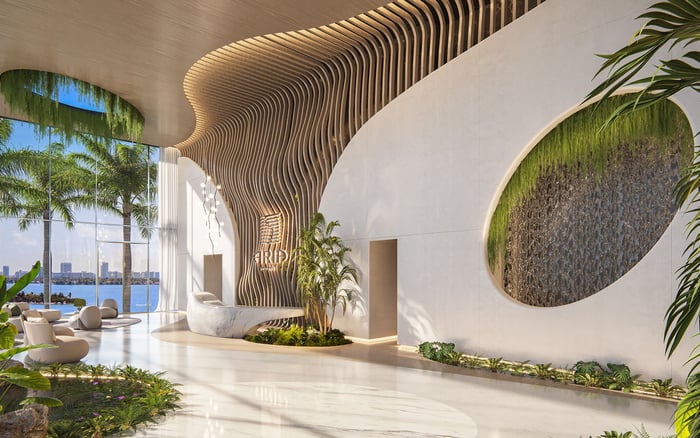
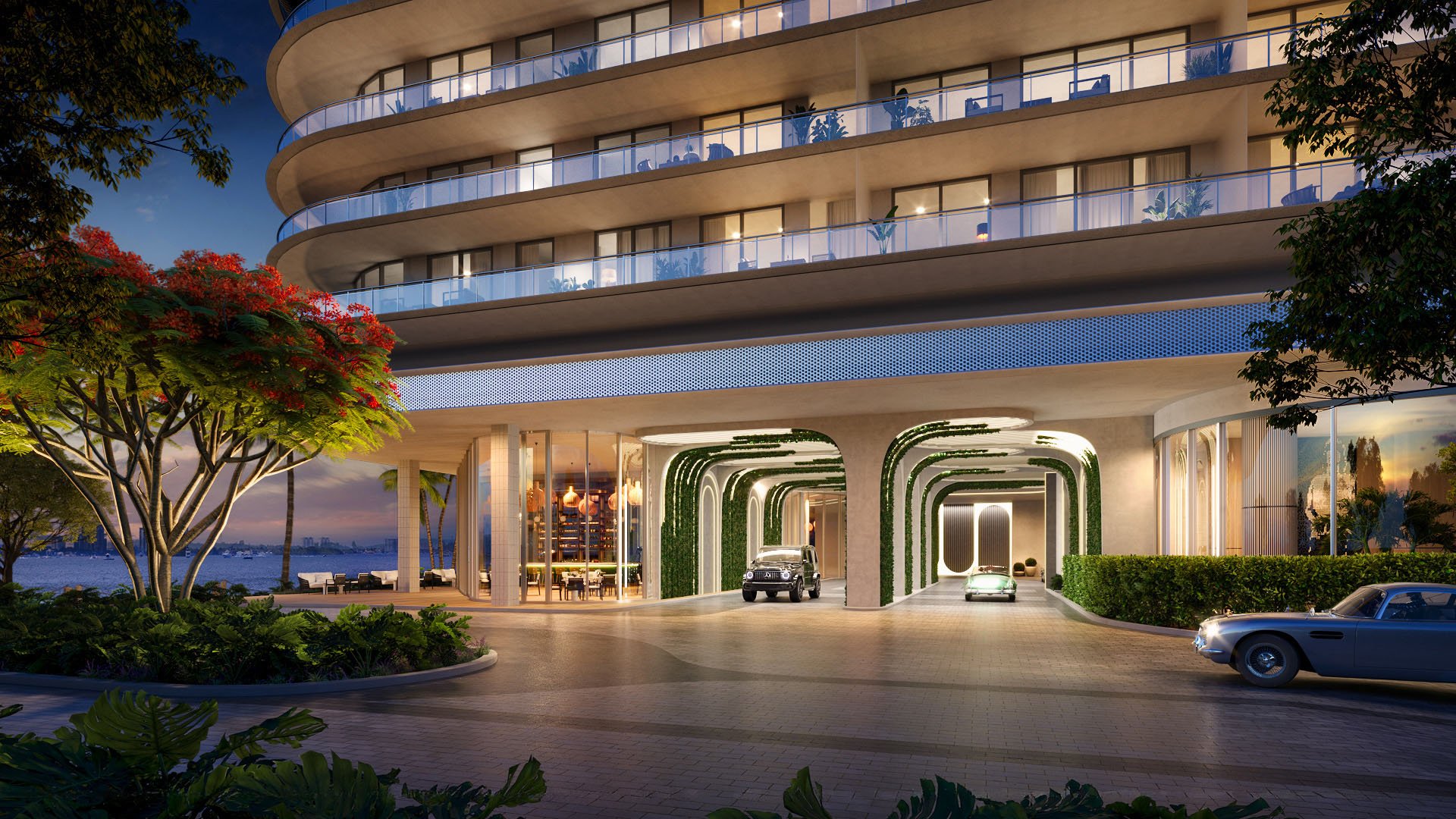
Projects such as Aria Reserve Miami, EDITION Edgewater, and Villa Miami illustrate why Edgewater remains central to the terrace conversation: buyers are not only comparing interiors, they are comparing how each residence mediates bay light, privacy, and the movement between indoor and outdoor entertaining.
North Bay Village offers a different emotional register. The setting feels more island-like, with the water experience often becoming the primary reason to consider the address. The pace can feel quieter than Edgewater, which may matter to a buyer whose terrace use is less about the backdrop of a dynamic city and more about a daily ritual of openness.
Here, the terrace evaluation should focus on exposure, openness, and the way wind behaves around the building form. A breezy afternoon can be ideal for dining, but too much exposure can make lightweight furniture impractical. The goal is not to avoid wind entirely. It is to find a terrace that softens it, channels it, or makes it pleasant rather than distracting.
In North Bay Village, buyers looking at Continuum Club & Residences North Bay Village and Shoma Bay North Bay Village should pay close attention to how the terrace reads at different times of day. A space that feels serene in the morning may feel brighter later, and a terrace that is perfect for evening cocktails may not be the best choice for afternoon work calls.
In South Florida, shade is not an amenity. It is the difference between admiration and use. Buyers often begin with square footage, then discover that overhang, orientation, and covered depth have more influence on comfort than size alone. A shaded seating area extends the day. An exposed slab narrows it.
Look at whether doors open cleanly without interrupting seating. Study whether the covered portion is large enough for the intended use: dining, lounging, plants, exercise, or quiet reading. Consider finishes as well. Dark materials can feel visually elegant, but lighter surfaces may be easier to live with in bright conditions. The finest terraces make outdoor life feel effortless rather than performative.
Wind is highly experiential. Floor height, exposure, building orientation, adjacent structures, and terrace shape all influence whether a breeze feels refreshing or persistent. Serious buyers should stand outside, close the sliding doors, sit down, and stay for a while. A quick step onto the terrace rarely reveals how the space will live.
Ask whether glass railings create a sense of calm when seated. Notice whether conversation feels easy. If the terrace is intended for dining, imagine linens, candles, and serving pieces in real use. If it is intended for plants, consider whether delicate greenery will thrive or struggle. If it is intended for children or pets, assess not only safety but also comfort and supervision.
Many buyers judge terraces while standing at the threshold. That is a mistake. The meaningful perspective is seated. From a chair, does the railing interrupt the water? Does the skyline feel cinematic or blocked? Is there privacy from neighboring balconies? Can you enjoy the view without leaning forward?
Edgewater may appeal to those who want a layered urban bay composition: water, boats, lights, towers, and movement. North Bay Village may appeal to those who want a softer sense of separation from the mainland. Neither is universally better. The right view is the one that complements how the buyer plans to occupy the residence.
Start with intended use. A buyer who entertains frequently should prioritize terrace depth, access from social rooms, and a logical connection to the kitchen. A buyer seeking quiet mornings may value bedroom access, shade, and a protected corner. A frequent traveler may want low-maintenance finishes and wind-tolerant furniture rather than elaborate planting.
Then compare privacy. In both neighborhoods, terrace exposure can vary meaningfully from line to line and floor to floor. Some buyers will accept greater visibility in exchange for dramatic views. Others will prefer a more discreet outdoor room, even if it means a less panoramic outlook. Privacy is not secondary; it determines how relaxed the terrace feels in daily life.
Finally, visit with purpose. Morning, midday, and late afternoon can reveal very different personalities. Bring the actual lifestyle into the showing: where the coffee goes, where the laptop opens, where the dog rests, where guests stand. Luxury is not only what a terrace promises. It is what it permits.
Choose Edgewater if your ideal terrace is connected to Miami’s vertical pulse, with proximity to the city woven into the pleasure of being outdoors. Choose North Bay Village if your ideal terrace is more about separation, water, and a quieter island mood. In either case, insist on shade, test the breeze, sit down before deciding, and treat the outdoor room with the same scrutiny you would give the primary suite.
The best terrace is rarely the one that appears largest on paper. It is the one that stays comfortable, private, and useful when the day is hot, the air is moving, and the city is fully alive.
Is Edgewater better than North Bay Village for terrace living? Edgewater may suit buyers who want a more urban bayfront experience. North Bay Village may suit buyers who prefer a calmer, island-oriented atmosphere.
What makes a terrace usable in Miami heat? Shade, covered depth, airflow, flooring, and furniture placement all matter. A smaller shaded terrace can be more livable than a larger exposed one.
Should I prioritize terrace size or terrace depth? Depth is often more important because it determines whether the space can hold real seating or dining. Raw square footage can be misleading without a practical layout.
How should I evaluate wind during a showing? Spend time seated outside rather than stepping out briefly. Listen for noise, feel the airflow, and imagine the furniture and activities you plan to use.
Are higher floors always better for terrace views? Not necessarily. Higher floors may offer broader outlooks, but comfort, wind, privacy, and railing sightlines can be just as important.
What is the most overlooked terrace detail? The seated view is often overlooked. Buyers should judge the water, skyline, and privacy from a chair, not only from the doorway.
Is a balcony different from a terrace in buyer evaluation?
The terms can be used differently, but the practical question is the same. Can the outdoor area support the way you actually live?
Does waterview orientation guarantee a better residence? A water view is desirable, but it should be balanced against shade, exposure, privacy, and interior flow. The best choice feels good in daily use.
Which neighborhood feels more private? Privacy depends on the specific building, line, and exposure. North Bay Village can feel quieter, while Edgewater can offer a more layered city-and-bay setting.
For a discreet conversation and a curated building-by-building shortlist, connect with MILLION.
If branded residences are on your mind — as a home or as an allocation — we would be glad to share what we are seeing, privately.
Begin a quiet conversation