A discreet, buyer-oriented framework for evaluating self-insurance versus traditional coverage for ultra-luxury waterfront estates in Palm Beach, with practical guardrails for risk, liquidity, and resilience planning.
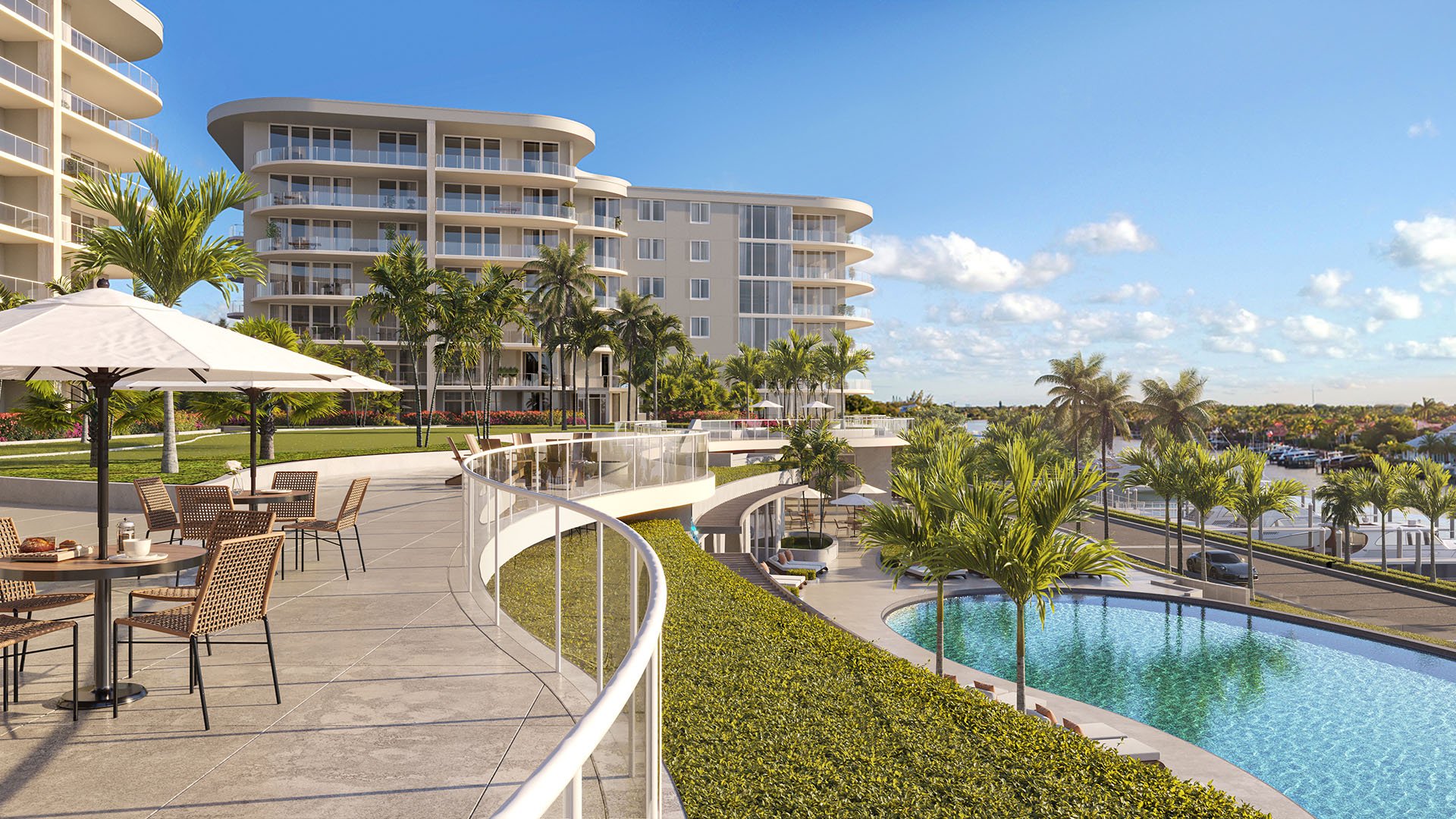
Ultra-luxury waterfront ownership in Palm Beach is defined by singular assets: irreplaceable sites, custom finishes, and lifestyle infrastructure that rarely fits neatly inside standardized underwriting boxes. For many principals, the question is no longer whether coverage is “available,” but whether traditional placement is the most rational way to manage a household balance sheet.
Self-insuring, in this context, is not a binary decision to cancel coverage and hope for the best. It is a capital strategy: choosing to retain a meaningful portion of risk in exchange for flexibility, reduced administrative drag, and tighter control over claims pacing and vendor selection. The trade is simple to describe and difficult to execute: you keep more of the premium-equivalent cash, and you also keep the tail risk.
In Palm Beach, where privacy, speed of restoration, and control over contractors can matter as much as reimbursement itself, the “cost” of insurance is often more than the check you write. It can include friction: documentation demands, exclusions that are hard to evaluate quickly, and uncertainty around post-event timelines. A well-built self-insurance posture can remove some of that friction-but only if it is designed with institutional discipline.
The most common mistake in self-insuring an ultra-luxury waterfront estate is retaining the wrong layer of risk. In practice, a household can be comfortable absorbing high-frequency, low-severity events while still needing protection from low-frequency, high-severity outcomes.
Start by separating exposures into four categories:
Routine attrition: small water events, minor roof repairs, equipment failure, landscape loss, dock wear. These are often handled more efficiently as operating expenses, supported by pre-negotiated vendor relationships.
Project-scale damage: major interior remediation, substantial envelope repair, a partial rebuild of custom millwork. These events can be retained-if liquidity is truly ready, not theoretical.
Catastrophic property loss: structural failure, total rebuild, or multi-month displacement paired with construction escalation. This is the layer many owners underestimate, because it is not only about rebuilding; it is about time, staffing, security, and reputational exposure.
Liability and third-party claims: guests, domestic staff, vendors, marine-related incidents. Even owners who retain more property risk often prefer not to retain liability risk, because severity is uncapped and outcomes can be asymmetric.
The goal is not to be “insured” or “uninsured.” The goal is to decide where you want predictable costs, where you can accept volatility, and where you must cap downside.
The clearest benefit of self-insurance is financial: retain risk and you keep capital that would otherwise be transferred through premium. In ultra-luxury, however, the more consequential benefit is often operational: speed, discretion, and control.
The counterweight is liquidity design. If you self-insure a meaningful layer, you must be able to fund restoration without impairing your portfolio or lifestyle. That means asking questions that read less like personal preference and more like an investment committee memo:
What is your target reserve size? Not a number pulled from intuition, but a reserve mapped to realistic restoration scenarios-and the time required to source materials and labor.
Where does the reserve live? Cash and cash equivalents can be reassuring, but concentration risk exists. Conversely, being “asset rich” is not the same as being claim-ready.
What is your drawdown plan? A private credit line can bridge cashflow, but only if it is pre-arranged and sized for stress.
What is your rebuild tolerance? The cost of waiting can exceed the cost of rebuilding, especially when custom finishes, lead times, and specialist trades are involved.
A disciplined structure often blends tools: a dedicated reserve for predictable events, a contingent line for project-scale losses, and selective transfer for catastrophes or liabilities.
Self-insurance can be rational in Palm Beach when the owner values control and can demonstrate readiness. It becomes performative when it is used as a narrative of self-reliance without the infrastructure to support it.
Self-insurance tends to work best when:
You have multiple residences and can decant temporarily without compromising security or household operations.
The estate has strong physical mitigation and documented maintenance, reducing both the probability and severity of losses.
Your vendor bench is institutional-grade: restoration, security, marine, mechanical, and legal support that can mobilize quickly.
You can tolerate volatility in a given year without forcing asset sales.
It tends to fail when:
The property is a one-of-one complex build with long lead items and specialty subcontractors.
The household runs tight liquidity because capital is committed elsewhere.
Governance is informal, so decisions slow down precisely when speed matters.
In other words, the decision is less about bravado and more about governance.
Most sophisticated owners do not choose pure self-insurance. They choose a hybrid.
Common hybrid approaches include:
High retentions with selective transfer: retain a large deductible-like layer, but transfer catastrophe exposure. This preserves control over smaller events while guarding against existential outcomes.
Parametric-style thinking: without naming products, the concept is rapid-access liquidity tied to event triggers so cash arrives quickly and decisions are not delayed.
Segmented coverage: retain risk for ancillary structures and non-critical improvements, but insure core structural and liability exposures.
A strong hybrid plan is also explicit about what you will not insure. For example, if you knowingly retain risk for certain exterior features, you can specify replacement standards in advance and avoid rushed decisions.
A waterfront estate operates like a business: staffing, perimeter security, marine systems, and bespoke construction. A luxury condo, by contrast, shifts much of the building-level risk into shared governance, shared reserves, and master policies.
That distinction matters when principals split time between a Palm Beach estate and a high-rise in Miami or West Palm Beach. In a condo, you are not only evaluating your personal policy decisions; you are living inside a collective risk framework.
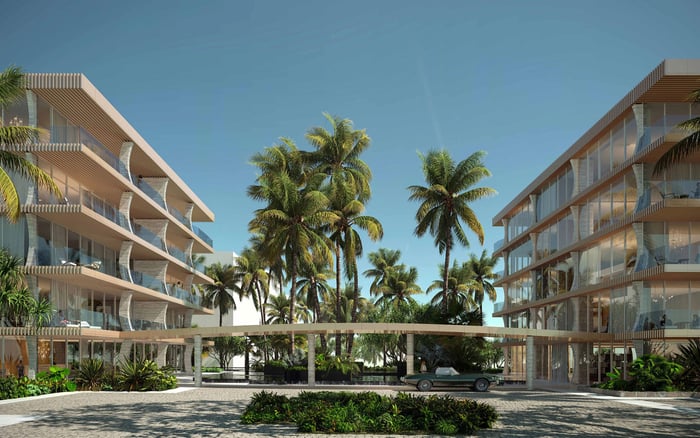
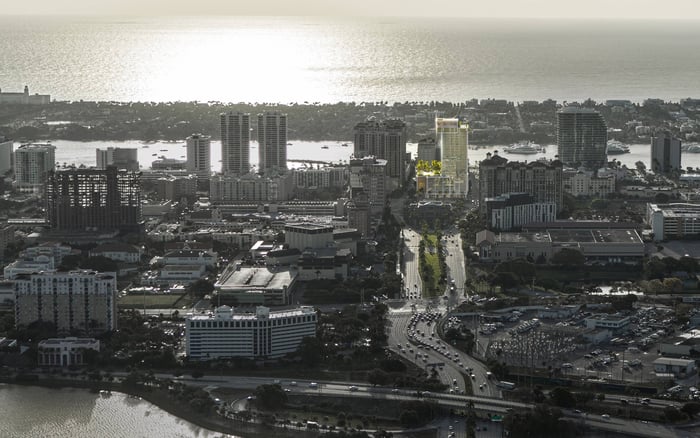
A buyer who prefers a more predictable insurance environment may gravitate toward turnkey, well-managed towers such as Alba West Palm Beach or Forté on Flagler West Palm Beach, where the lifestyle proposition includes professional building operations and a different division of responsibilities.
Conversely, owners who accept the operational complexity of an estate often do so because it buys something condos cannot: control of land, control of access, and the ability to tailor every system-from docks to landscaping-around personal standards.
Self-insurance only improves the cost-benefit equation when severity comes down. That is why mitigation, done correctly, behaves like a financial instrument: it reduces loss probability and, more importantly, reduces loss magnitude.
For ultra-luxury waterfront estates, mitigation is not limited to obvious items. The most cost-effective measures often live in the unglamorous layer:
Water management: shutoff planning, leak detection, drainage, and critical equipment placement.
Envelope discipline: roofing, flashing, openings, and maintenance documentation.
Power and continuity: backup power, fuel planning, and prioritized circuits.
Marine systems: dock engineering, lift maintenance, and a plan for securing watercraft.
The goal is to restart the household quickly, even if restoration takes longer.
If you self-insure a layer, your “policy” becomes your contracts.
In practice, that means:
Pre-negotiated master service agreements with restoration and specialty trades, including rate cards and mobilization commitments.
A documented scope standard for finishes, millwork, and imported materials so replacement decisions do not devolve into value engineering.
A household decision tree: who can authorize what, at what thresholds, on what timeline.
Inventory and documentation that is kept current and secured offsite.
Owners who do this well treat readiness as part of the estate’s operating system, similar to security protocols.
Many principals in South Florida are multi-nodal: Palm Beach for privacy and tradition, Miami Beach or Brickell for culture and convenience, and sometimes a third residence for travel patterns.
That portfolio reality matters for insurance decisions. If you maintain a second base in a full-service setting like Apogee South Beach or a newer trophy product like 2200 Brickell, your tolerance for a prolonged estate restoration can increase because you have a high-comfort fallback.
This is not an argument to buy more real estate. It is a reminder that resilience is often achieved through redundancy-and redundancy can be physical as well as financial.
The cost-benefit analysis of self-insuring an ultra-luxury waterfront estate in Palm Beach is ultimately a question of design: designing retained risk, designing liquidity, and designing operational continuity.
Traditional insurance remains a valuable tool, especially for liabilities and catastrophic property loss. But for owners who prioritize speed, discretion, and control, self-insuring a meaningful layer can be rational-provided it is supported by reserves, credit, mitigation, and governance.
The most sophisticated posture is rarely extreme. It is selective. It is written down. And it is rehearsed.
Is self-insuring the same as having no insurance? No. It typically means retaining a defined layer of risk while still transferring catastrophic or liability exposures.
What is the biggest hidden risk when self-insuring a waterfront estate? Liquidity timing. The issue is often speed of cash deployment, not willingness to pay.
Should I always keep liability insurance even if I self-insure property damage? Often yes, because liability severity can be uncapped and outcomes can be asymmetric.
How do I decide the right reserve level for self-insurance? Model realistic restoration scenarios and fund reserves based on time-to-repair and replacement standards.
Does mitigation really change the financial math? Yes. Mitigation reduces loss severity, which is the core lever that makes retained risk more rational.
Can a line of credit replace cash reserves for self-insurance? It can complement them, but relying only on credit can be risky if terms tighten when you need funds.
How does condo ownership differ from an estate in insurance responsibility? Condos typically involve shared building-level policies and governance, changing what you personally retain.
Will self-insuring speed up repairs after a major event? It can, because you can authorize work immediately rather than waiting for claim determinations.
What documents should be prepared in advance for claims-readiness? Current inventories, finish schedules, vendor contracts, and a clear authorization matrix for the household.
Is self-insurance appropriate for a second-home I occupy seasonally? It depends on your ability to manage maintenance and respond quickly, even when you are not in residence.
For a tailored shortlist and next-step guidance, connect with MILLION Luxury.
If branded residences are on your mind — as a home or as an allocation — we would be glad to share what we are seeing, privately.
Begin a quiet conversation