A discreet buyer’s guide to Miami waterfront residences that favor calm, privacy, and residential ease over resort-style intensity.
For the most discerning Miami buyer, waterfront living is no longer defined by the view alone. The sharper question is how the building feels at 8 a.m., when residents are leaving for the airport; at sunset, when guests arrive; and on a winter weekend, when the city is at full social volume. Privacy is not simply the absence of noise. It is a sequence of controlled moments: the approach, the lobby, the elevator path, the amenity culture, the pool deck, the beach or bay edge, and the way service is delivered without turning daily life into a public performance.
That distinction matters in a market where oceanfront and bayfront addresses can carry very different atmospheres. Some buyers want a glamorous hospitality rhythm. Others want the water, the light, and the security of an exceptional residence without the constant sensation of living inside a destination resort. The best search begins by separating view quality from lifestyle density.
A private waterfront residence usually begins with frictionless access. Buyers should study how residents and visitors enter, whether service circulation feels discreet, and whether amenity areas are designed as extensions of home rather than as stages. The number of residences is only one part of the equation. A larger building can feel composed if circulation is well managed, while a smaller property can feel busy if its common areas are compressed.
Water orientation also shapes privacy. Oceanfront living can deliver broad horizon views and direct coastal energy, while bayfront or island settings often create a softer residential cadence. Canal, inlet, and island addresses may appeal to buyers who prioritize discretion over spectacle. The most successful buildings do not merely place homes near the water; they choreograph how residents encounter the water throughout the day.
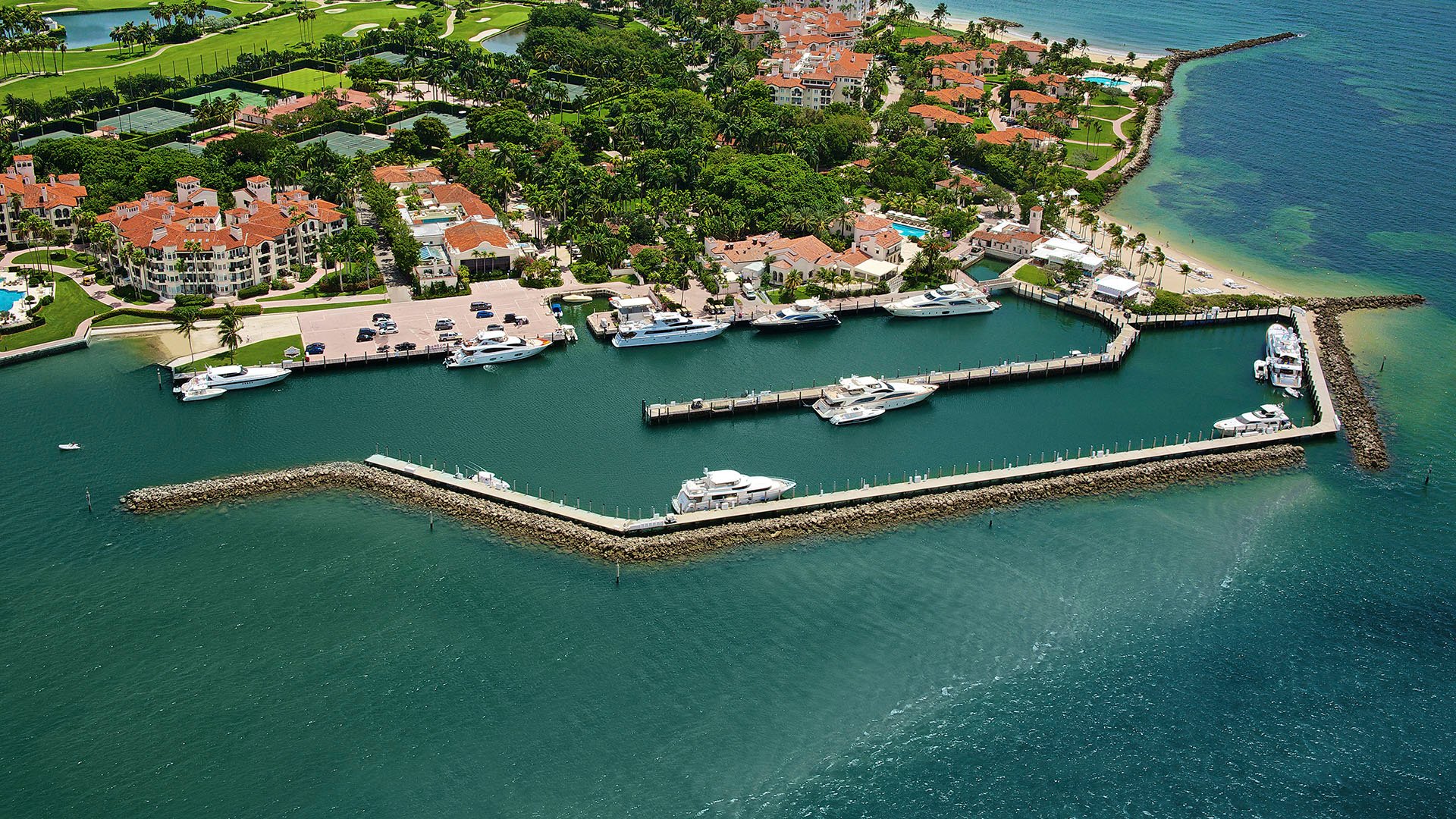
Fisher Island remains the clearest shorthand for separation within the Miami conversation. Its appeal is not only geographic. It represents a lifestyle preference for controlled access, residential quiet, and a sense of removal while remaining connected to the city. Buyers considering The Residences at Six Fisher Island are typically not looking for a conventional resort atmosphere. They are evaluating island life as a privacy framework.
Surfside offers a different expression of discretion. It is close to the cultural and dining gravity of Miami Beach and Bal Harbour, yet it often reads as more residential in tone. The coastline here can feel less performative than more heavily trafficked resort districts. In that context, The Delmore Surfside belongs in conversations with buyers who want oceanfront presence without automatically defaulting to a hotel-like rhythm.
Miami Beach itself requires more careful parsing. The name covers a wide range of lifestyles, from energetic hospitality corridors to quieter residential pockets. For buyers who want the address but not the crowd, the relevant question is not whether a building is glamorous, but whether its day-to-day operations protect residents from overexposure. A residence such as The Perigon Miami Beach should be studied through that lens: how arrival, amenities, and waterfront access support a composed private life.
Coconut Grove and Grove Isle bring another kind of calm. The area’s appeal is less about beach theater and more about mature residential character, bay views, and a sense of neighborhood enclosure. Buyers looking at Vita at Grove Isle are often drawn to waterfront living that feels tucked away from the intensity of Miami’s most visible corridors.
Bay Harbor Islands can also be compelling for buyers who prefer low-key access to water, restaurants, schools, and Bal Harbour shopping without living in the center of a resort district. La Maré Bay Harbor Islands fits naturally into a search focused on residential privacy, particularly for those who value a quieter island setting over a larger beachfront scene.
Boutique residences often appeal to privacy-minded buyers because fewer households can mean a more familiar staff rhythm and a less crowded amenity experience. Yet boutique alone is not a guarantee. The best buildings pair scale with intelligent planning, thoughtful service, and carefully separated public and private zones.
Branded residences can be equally compelling when the brand supports service precision without importing too much hotel energy. The key is to understand whether the building’s identity is primarily residential or whether it is designed to feel like an always-on social environment. Privacy buyers should be especially attentive to guest policies, valet flow, pool access, beach service protocols, and any rules that influence how frequently nonresidents circulate through the property.
The most important tour is not always the first one. Visit at different times of day. Observe the lobby during peak arrivals. Listen to the pool deck. Watch how staff interacts with residents and guests. Ask how deliveries are handled, how service providers enter, how elevators are assigned, and how amenity reservations work during high season.
Also consider the household’s actual lifestyle. A buyer who entertains frequently may need more private outdoor space and a gracious arrival sequence. A part-time resident may prioritize security, lock-and-leave simplicity, and staff consistency. A family may care more about elevator privacy, parking ease, and the transition between home and school routines. The right waterfront residence should make those patterns feel effortless rather than exposed.
In Miami’s luxury market, the most photographed building is not always the most livable one. For privacy-oriented buyers, the better measure is how little friction the residence adds to daily life. The water should be present but not performative. Service should be attentive but not theatrical. Amenities should be generous but not congested. The address should feel impressive to those who know, not loud to everyone passing by.
That is the new definition of waterfront privacy: a residence that preserves access to Miami’s beauty while editing out unnecessary exposure. The most compelling homes are not trying to recreate a resort. They are designed to make the water feel personal.
What makes a Miami waterfront residence private? Privacy depends on access control, circulation, amenity design, guest policies, and how calmly the building operates during peak periods.
Is oceanfront always less private than bayfront? Not always. Oceanfront can feel highly private when planning and service are disciplined, while some bayfront settings may feel busier depending on scale.
Why do buyers consider Fisher Island for privacy? Fisher Island appeals to buyers seeking separation, controlled access, and a residential environment removed from the city’s busiest corridors.
Can Miami Beach still offer quiet waterfront living? Yes. Miami Beach includes both high-energy hospitality areas and more residential pockets, so building selection is essential.
Are boutique buildings better for avoiding congestion? They can be, especially when paired with thoughtful operations, but buyers should still study amenity capacity and visitor flow.
Should I avoid branded residences if I want privacy? Not necessarily. The key is whether the brand is executed as a residential service model rather than a hotel-style social environment.
What should I watch during a property tour? Observe arrivals, valet activity, lobby traffic, elevator use, pool atmosphere, and how staff manages residents and guests.
Is Surfside a good alternative to busier beachfront areas? Surfside can suit buyers who want oceanfront living with a more residential tone than some larger resort-oriented districts.
Why consider Coconut Grove for waterfront privacy? Coconut Grove offers a mature residential character and bay-oriented lifestyle that can feel calmer than more visible beachfront corridors.
What is the main mistake privacy buyers make? They focus on the view first and operations second, when the building’s daily rhythm often determines long-term satisfaction.
For a tailored shortlist and next-step guidance, connect with MILLION.
If branded residences are on your mind — as a home or as an allocation — we would be glad to share what we are seeing, privately.
Begin a quiet conversation