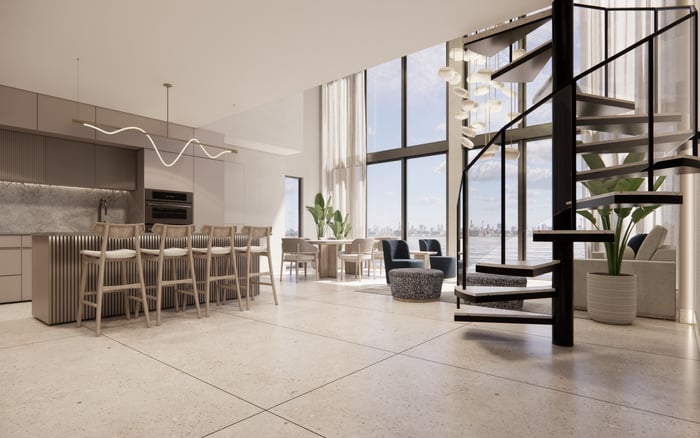
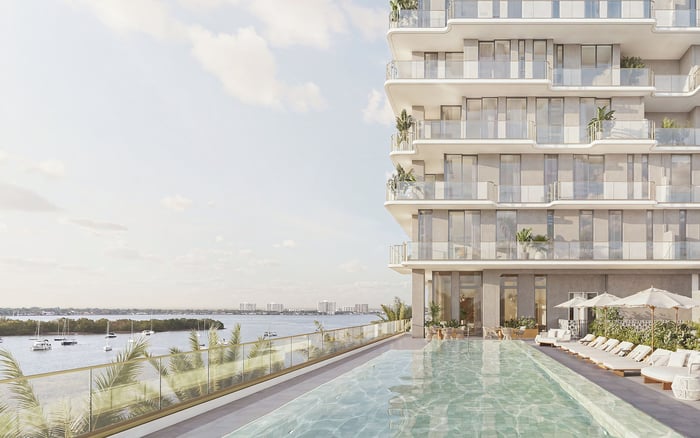
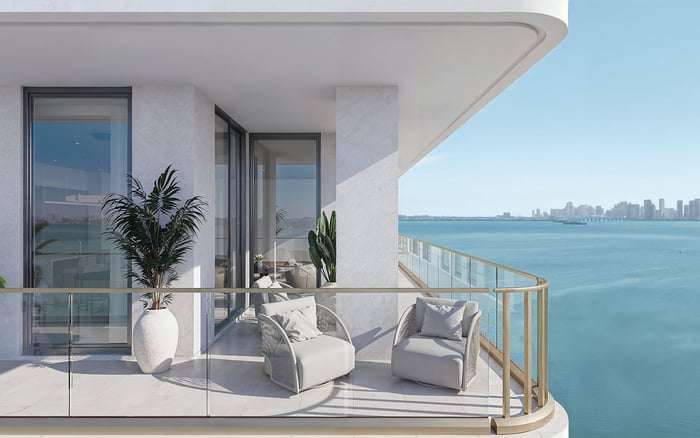
A family-focused editorial view of how school-age-child buyers may compare Shoma Bay and Tula Residences in North Bay Village, with emphasis on daily convenience, building energy, amenity depth, and residential discretion.
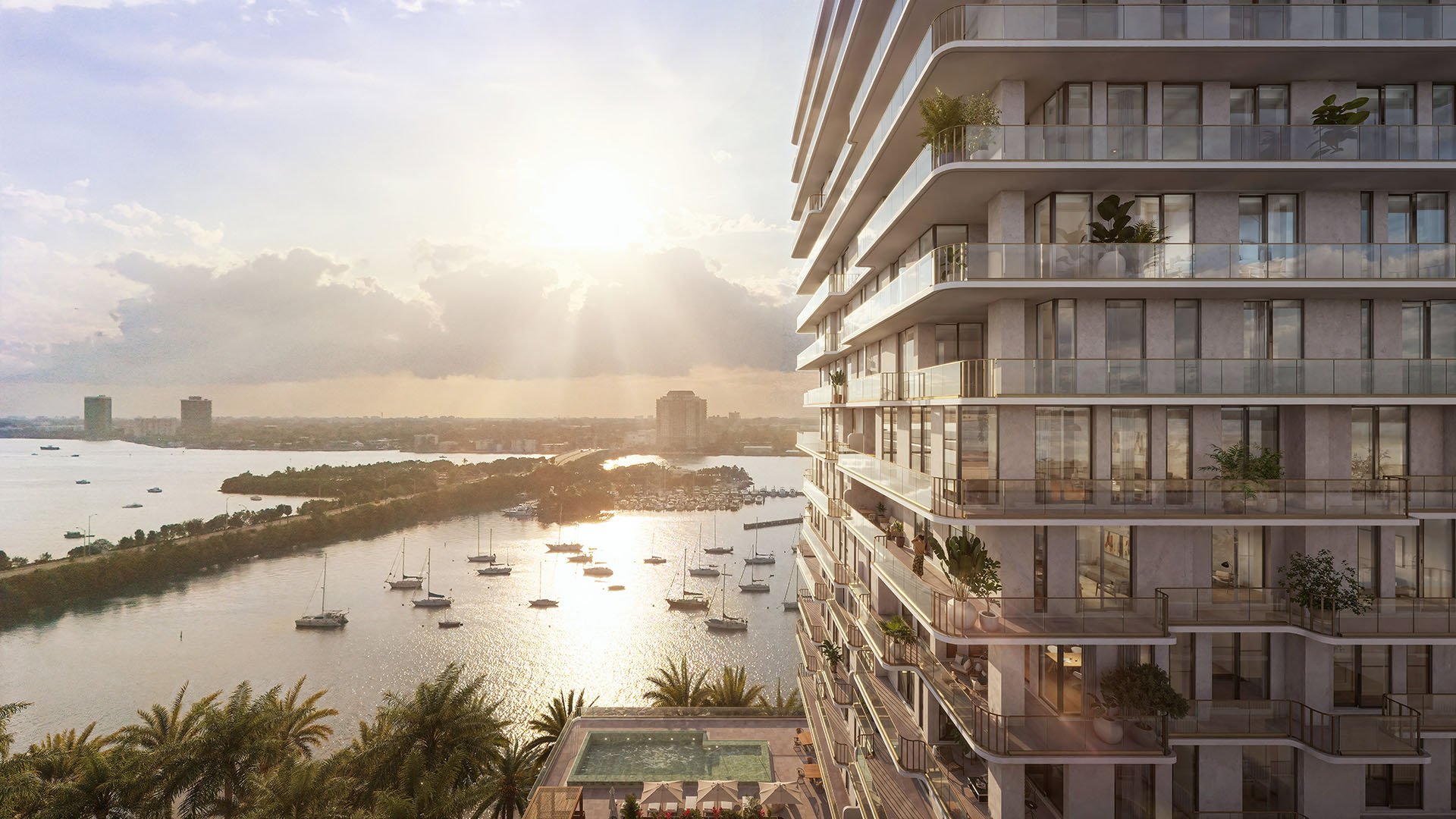
For families with school-age children, the North Bay Village condominium decision is rarely a simple matter of square footage. The more revealing question is how a building functions at 7:15 a.m., at 4:30 p.m., and on a rainy Sunday when the entire household needs room to move without leaving home. That is where the buyer logic behind Shoma Bay North Bay Village and Tula Residences North Bay Village becomes useful.
Shoma Bay is positioned as the larger, more resort-style choice in this family comparison. Its identity is not that of a purely residential boutique building. It is a mixed-use tower, and that distinction matters. For some households, mixed-use means energy, service, and daily convenience. For others, it introduces a more active building rhythm than they may want after school, after sports, or after a long commute.
Tula enters the conversation as the natural counterpoint for buyers testing whether a quieter residential posture may better fit their household. The strongest family analysis is not about declaring one building universally superior. It is about matching the building’s operating personality to the family’s week.
The essential Shoma Bay proposition is amenity depth. Families comparing million-dollar-plus residences often care less about a single showpiece amenity than about whether the building can absorb the repetitions of everyday life. A strong amenity program can reduce friction around after-school downtime, parent work calls, weekend hosting, and moments when children need a change of scenery without requiring a drive.
Shoma Bay’s resort-style positioning makes it the more active side of the decision. Its robust amenity programming supports families that prefer a full-service building environment and a lifestyle that feels complete on site. That can be especially appealing for parents who want convenience without sacrificing the sense of a polished residential address.
The integrated retail component adds another layer. For families, convenience is not theoretical. It is the ability to manage small errands, transitions, and routine needs with fewer interruptions. A mixed-use format can make the building feel less like an isolated tower and more like a compact urban-island base.
Shoma Bay is also described as being on a highly visible causeway corridor in North Bay Village. Visibility and movement can be advantages or tradeoffs, depending on the buyer. Some families like the immediacy of a more connected setting, particularly when school schedules, extracurriculars, and parent appointments require efficient movement through the day.
Others may hear “causeway corridor” and immediately focus on arrival experience, traffic rhythm, privacy, and the tone of the building during peak hours. That is the right instinct. Family buyers should evaluate not only the residence but also the way the building receives the day. The garage sequence, lobby energy, elevator pattern, amenity access, and retail adjacency can all shape whether the address feels effortless or busy.
This is where the comparison with Tula becomes practical. A family considering Tula Residences North Bay Village should use it as a test case for a different daily cadence. If Shoma Bay represents convenience and activity, the counter-question is whether a more residential-feeling environment would better support homework routines, earlier bedtimes, visiting grandparents, or quieter weekends.
School-age-child buyers are often more rigorous than second-home buyers. They are not only buying views, finishes, or a recognizable address. They are buying repeatability. Can the residence support morning preparation without bottlenecks? Can the building handle children returning from school with bags, friends, and sports gear? Can parents maintain adult standards while the home also supports family life?
This is why Shoma Bay’s mixed-use character is meaningful. It suggests a more active daily environment with services and amenities close at hand. For the right family, that is a luxury. It can make the building feel alive, useful, and resilient to the pressures of a full household schedule.
For a family that prizes quiet above all else, the same attributes may require more careful consideration. The best buyer is not the one who chooses the most amenities. The best buyer is the one who understands how those amenities will actually be used. A pool, lounge, fitness environment, retail access, and programmed common areas are most valuable when they match the family’s patterns rather than merely expanding the brochure.
Even when the search begins as a North Bay Village, private-school, new-construction exercise, the real question becomes more intimate: which building will protect the household’s rhythm?
A disciplined family comparison starts with three categories: activity, autonomy, and atmosphere.
Activity asks how much building energy the family wants. Shoma Bay leans toward the active, resort-like end of the spectrum. Its larger tower format and mixed-use environment make sense for buyers who want services, amenities, and retail convenience close at hand. It is the choice for families prioritizing momentum, access, and a more animated urban-island lifestyle.
Autonomy asks whether the building reduces dependence on constant driving or outside arrangements. In this sense, Shoma Bay’s amenity depth is not merely a lifestyle perk. It can become a parenting convenience, especially during fragmented weeks when children’s schedules and adult obligations collide.
Atmosphere asks whether the family wants a quieter residential feel. Tula should be evaluated through that lens. Buyers should review current building materials, residence layouts, amenity planning, and arrival experience to determine whether it offers the level of intimacy and calm they are seeking. The key is not to assume boutique equals better or larger equals busier in a negative sense. The key is to test each environment against the family’s actual day.
North Bay Village is increasingly relevant because it gives buyers an island setting with a more urban interpretation of waterfront living. For families who may have once defaulted to Miami Beach, Bay Harbor Islands, or mainland neighborhoods, the area offers a distinct middle ground: connected, visible, residential, and evolving.
That is why families often widen the lens beyond a single building. A household studying Shoma Bay and Tula may also look at Continuum Club & Residences North Bay Village to understand another full-service residential direction in the same market. Others may include Pagani North Bay Village when they want to compare the area’s design-led and high-profile new development conversation.
These comparisons help clarify priorities. If the family keeps returning to service, convenience, and on-site options, Shoma Bay will likely remain compelling. If the conversation keeps returning to discretion, quiet, and a more contained residential experience, Tula may deserve closer study.
For families with school-age children, Shoma Bay’s appeal is clearest when the household values a full-service, amenity-rich, mixed-use environment. It is the “convenience and activity” side of the North Bay Village family-buyer comparison. Its scale and resort-style positioning make sense for families who want energy, services, and lifestyle programming near home.
Tula’s role is to sharpen the alternative. It gives buyers a way to ask whether a more intimate residential feeling may better serve the family’s schedule and temperament. The smartest buyers will not ask which building is more impressive. They will ask which one makes school mornings easier, afternoons more graceful, and weekends more livable.
In that sense, the decision is less about status than fit. The right North Bay Village residence should feel composed under pressure, not merely beautiful when empty.
Is Shoma Bay a family-oriented choice in North Bay Village? It can be a strong fit for families that value a larger, resort-style building with robust amenity programming and daily convenience.
Why does Shoma Bay’s mixed-use format matter to parents? Mixed-use living can place services, amenities, and activity closer to home, which may help families manage busy school-week routines.
Is Shoma Bay more active than a boutique residential building? Yes. Its larger tower format and integrated retail point to a more energetic daily environment than a quieter boutique model.
How should families think about Tula Residences? Families should evaluate Tula as the quieter counterpoint in the search, focusing on layout, atmosphere, arrival experience, and daily rhythm.
Does North Bay Village work for school-age children? It can, provided the family carefully studies commute patterns, school routines, after-school logistics, and the building’s everyday functionality.
What is the biggest advantage of Shoma Bay for family buyers? The central advantage is convenience, especially for households that want amenity depth and a full-service environment close at hand.
What is the main tradeoff with a resort-style tower? A larger, more active building may feel less private than a quieter residential setting, depending on the family’s preferences.
Should families prioritize amenities or residence layout? Both matter, but layout should come first. Amenities add value when they support the way the family actually lives.
Are nearby North Bay Village projects worth comparing? Yes. Comparing several buildings can help families understand whether they prefer convenience, discretion, design profile, or service depth.
What is the best way to choose between Shoma Bay and Tula? Walk through a typical school day and weekend, then choose the building whose energy and logistics best match that rhythm.
For a confidential assessment and a building-by-building shortlist, connect with MILLION.
If branded residences are on your mind — as a home or as an allocation — we would be glad to share what we are seeing, privately.
Begin a quiet conversation