Origin has stronger advertised support for fiber connectivity and shared workspaces, while Bay Harbor Towers emphasizes internet readiness and a service-rich waterfront lifestyle. Neither project’s available specifications establish generator-backed connectivity or enclosed private offices.
For a buyer whose home must accommodate confidential calls, international business and uninterrupted concentration, connectivity deserves the same scrutiny as a floor plan. A waterfront setting can make the working day more pleasurable. It cannot establish whether an internet connection survives a power interruption or a lounge offers genuine privacy.
Bay Harbor Towers and Origin Bay Harbor Islands provide different levels of detail on these questions. Origin offers the stronger advertised specification for residential connectivity and work-oriented common areas. Bay Harbor Towers advertises internet readiness alongside an extensive wellness and service program. Neither project’s available specifications establish generator-backed connectivity, redundant telecom routes or enclosed private offices.
This is not a verdict on either building’s engineering. It marks the boundary between the advertised offering and the details that require written confirmation. Connectivity readiness is not telecom resilience.
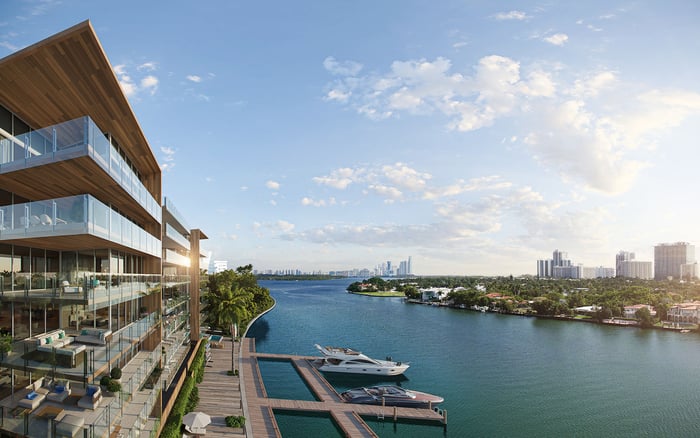
At 10141 East Bay Harbor Drive, Bay Harbor Towers is described as a waterfront condominium with 44 residences across eight floors. Its stated 2026 delivery date remains a projection, not confirmation of completion or occupancy.
The connectivity language centers on high-speed internet pre-wiring or Wi-Fi readiness. That gives buyers a basis for discussing installation and service activation. It does not establish multiple carriers, physically separate fiber routes, automatic failover or continued service during an outage. These are distinct specifications; none should be inferred from the word “ready.”
The advertised service offering includes 24/7 receptionist services, concierge assistance and valet parking. These services may ease the demands of maintaining a residence, but they are no substitute for a defined technical support arrangement. Ask separately who would handle a connectivity problem, which equipment that responsibility covers and whether assistance extends inside the home.
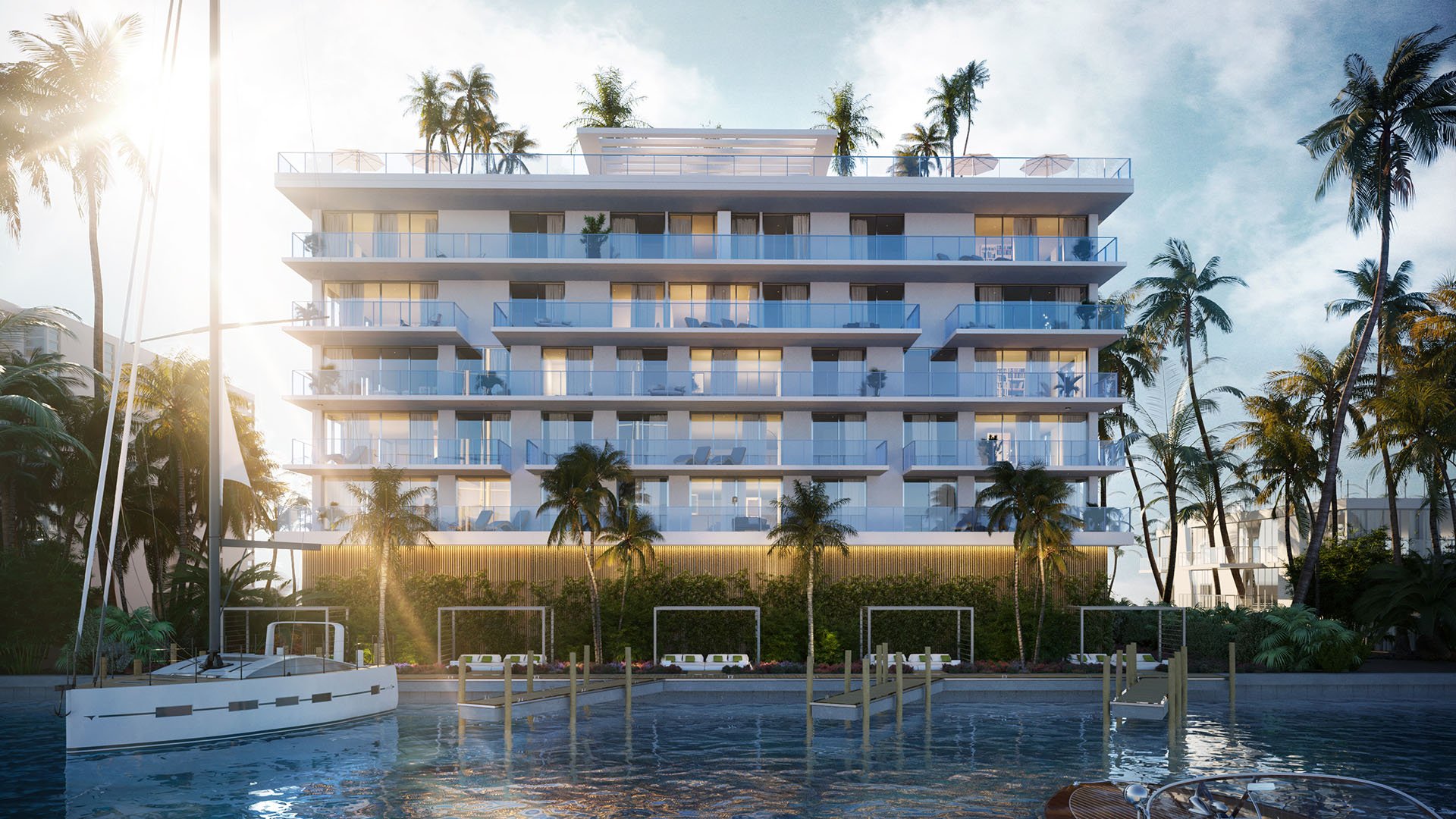
At 9760 West Bay Harbor Drive, Origin Bay Harbor Islands, also described as Origin Residences Bay Harbor, is a 27-residence waterfront condominium. Its advertised fiber-to-the-home/high-speed internet offering is the more specific residential connectivity claim in this comparison.
That gives buyers a clearer starting point, not a continuity guarantee. Request the proposed service specification, available plans, installation responsibilities and any limits on provider choice. Fiber-to-the-home language does not establish a second carrier or an independent backup route.
Origin’s announced communal amenities explicitly include coworking space and a social room. A lobby-level business lounge is also described, alongside mail and parcel rooms. These descriptions support a shared-workspace offering, though buyers should confirm how the spaces relate to one another rather than assume each description identifies a separate facility.
For someone seeking an occasional change of setting without leaving the building, this is a meaningful distinction. For someone conducting sensitive negotiations, the decisive details remain enclosure, acoustics, access and network arrangements.
Generator-backed connectivity remains unverified for both projects. That does not mean backup systems are absent. It means the available descriptions do not establish which telecom equipment, if any, receives standby power or how long that support would last.
The useful question is not simply whether a building has a generator. It is whether the proposed backup arrangement covers the equipment and circuits needed for the buyer’s intended connection. Request developer specifications or condominium engineering documents that address the following:
Telecom circuits: Identify which network rooms, distribution equipment and related circuits receive standby power.
In-residence equipment: Confirm whether power support extends to the equipment serving the individual home.
Runtime and transfer: Ask for stated backup duration, operating assumptions and arrangements during the transition to standby power.
Carrier diversity: Establish whether alternative providers and physically distinct routes are specified.
Failover arrangements: Request a description of how service would switch, what triggers the change and who maintains the system.
Keep these requests separate from general amenity questions. Origin’s advertised EV charging stations do not establish backup power for residential internet equipment. Likewise, a staffed reception desk or an extensive wellness program provides no basis for a claim of service continuity during an outage.
For a purchase decision, distinguish between a feature that is advertised, one specified in project documents and one demonstrated through testing. Ask which documents support each assurance before treating uninterrupted connectivity as part of the residence’s value.
Origin’s coworking and business-lounge descriptions provide a stronger basis for assessing communal work facilities. They do not establish enclosed offices, acoustic privacy, reservation rules or dedicated bandwidth. A social room should not automatically count as an additional meeting room.
Ask to review the relevant layouts and proposed operating rules. Determine whether calls are permitted, space can be reserved, guests may attend meetings and any rooms offer genuine separation. For network use, request clarification on access controls and whether workspace connectivity is distinct from other common-area services. These are diligence questions, not confirmed features.
At Bay Harbor Towers, the described relaxation area belongs to the wellness offering. It should not be recast as a coworking facility, business lounge or private meeting room. Buyers who need an enclosed workspace should evaluate the individual residence’s plan and separately request confirmation of any work-oriented common facilities.
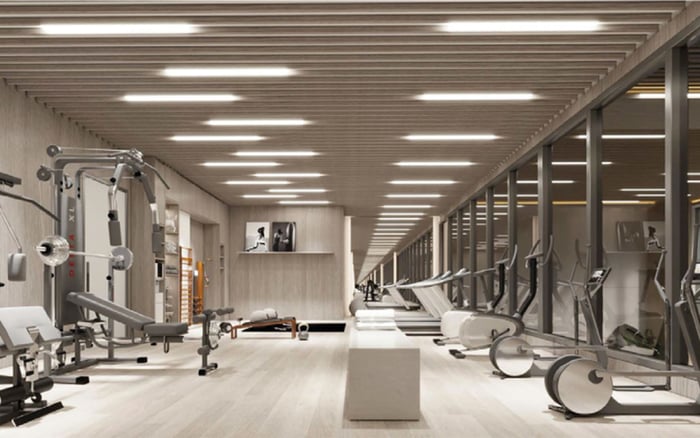
Bay Harbor Towers’ announced amenities include indoor and outdoor saltwater lap pools, a rooftop pool, hot and cold plunge pools, a summer kitchen, an outdoor lounge and a private marina. Origin advertises a rooftop pool deck with summer kitchens and a bar, a gym and 24-hour security.
These offerings can shape the rhythm of a day at home, but they answer different questions from those governing telecom resilience and confidential work. Treat them as advertised amenities, not independently confirmed operational facilities.
The same discipline applies if the search extends to Bal Harbour and Rivage Bal Harbour. Carry the same technical questions into that comparison rather than assume equivalent connectivity or workspace provisions across a luxury shortlist.
Origin merits closer examination for buyers prioritizing advertised fiber connectivity and shared working areas. Bay Harbor Towers warrants consideration for its waterfront, wellness and service offering, with work-from-home requirements assessed separately. Neither should presently be selected on the assumption that generator-backed internet or private common-area offices are documented features.
The strongest buyer file keeps lifestyle preferences beside, not in place of, technical specifications. Before committing, identify essential work requirements and request written answers for each one.
For a discreet conversation about matching a South Florida residence to your working life, connect with MILLION.
If branded residences are on your mind — as a home or as an allocation — we would be glad to share what we are seeing, privately.
Begin a quiet conversationOrigin advertises fiber-to-the-home/high-speed internet. Bay Harbor Towers advertises high-speed internet pre-wiring or Wi-Fi readiness.
Generator-backed connectivity remains unverified for both. This does not establish that backup systems are absent.
No. Origin’s advertised fiber offering does not establish redundant carriers, diverse fiber routes or automatic failover.
Yes. Its announced amenities include coworking space and a social room, and a lobby-level business lounge is also described.
The available descriptions do not establish enclosed offices, acoustic privacy, reservation rules or dedicated bandwidth.
The described relaxation area is part of the wellness offering. It does not establish a coworking facility or private meeting room.
Bay Harbor Towers is described as containing 44 residences across eight floors. Origin is described as a 27-residence condominium.
The published 2026 delivery date is a projection, not confirmation of completion or occupancy.
Request specifications covering generator-backed telecom circuits, backup runtime, in-residence networking power, carrier diversity and failover arrangements.
No. Advertised EV charging stations do not establish standby power for residential internet equipment.