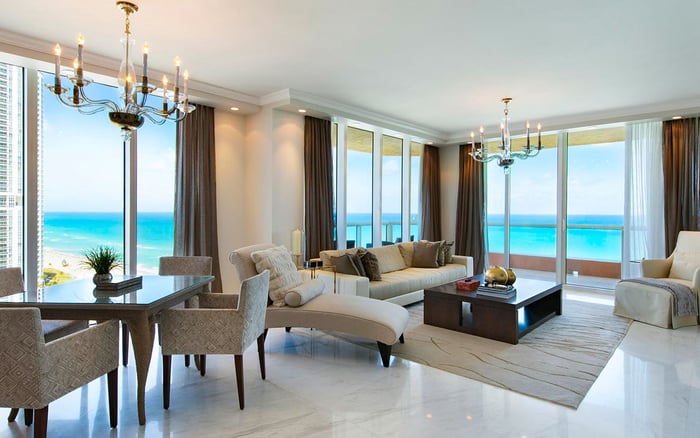
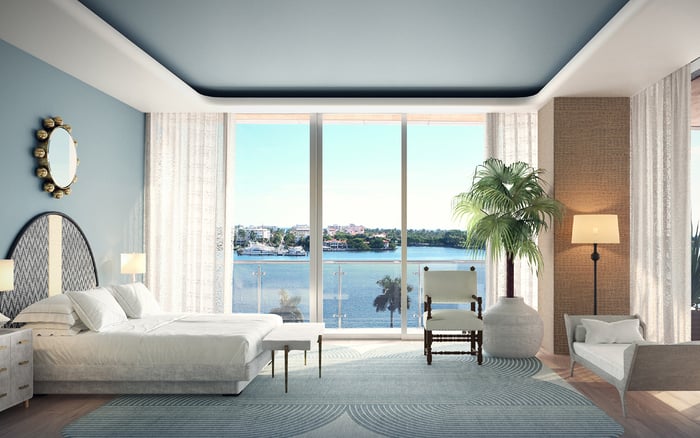
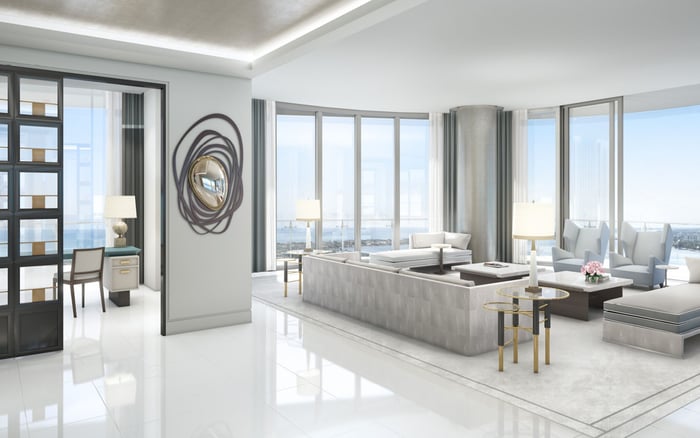
At The Bristol Palm Beach, wine planning belongs in the same conversation as design, service, privacy, and resilience. For ultra-luxury households on the West Palm Beach waterfront, the question is not simply whether a residence can display a collection, but whether the household wants to internalize the wine experience or rely on restaurants, clubs, retailers, and events.

The Bristol Palm Beach belongs in the South Florida luxury conversation because it invites a broader question about how waterfront condominium households live, host, and protect the details that matter. For wine-minded owners, the decision is not only whether bottles can be displayed beautifully. It is whether the household wants a private wine experience that functions with the same discretion and reliability expected from the rest of the residence.
That context changes how a household should think about wine. In a large-format luxury home, wine is rarely just a decorative flourish. It can shape how the household entertains, hosts family, receives guests, travels, staffs the home, and manages lifestyle logistics across multiple settings.
The core question is simple: should the wine experience be internalized inside the residence, through a considered wine room and sommelier support, or outsourced to restaurants, clubs, retailers, private events, and hospitality venues? The right answer depends less on vanity than on frequency, privacy, collection value, service expectations, and operational discipline.
At The Bristol, the residential premise encourages owners to think in zones: formal entertaining, family living, outdoor moments, staff flow, service staging, art, and collections. A wine program belongs in that same planning language.
A Bristol household may not need a theatrical cellar. It may need a controlled, reliable, discreet wine environment that supports dinners, quiet tastings, gifting, seasonal entertaining, and inventory protection. The distinction matters. A showpiece wine wall can impress once. A serious wine room supports daily living for years.
Buyer shorthand often reduces decisions to West Palm Beach, Palm Beach, water view, balcony, terrace, or high-floor preferences. Those are legitimate lifestyle filters, especially in a waterfront setting. Yet for wine-minded buyers, the deeper question is how the residence handles service complexity. A high-rise waterfront home must reconcile beauty with systems: temperature, access, power reliability, humidity, staffing, delivery protocols, and privacy.
A sommelier can advise beautifully, but storage determines whether the collection is protected. In South Florida, subtropical climate conditions make wine-room planning especially important. Heat, humidity, sunlight, vibration, and inconsistent handling are not abstract concerns. They mark the difference between owning a collection and merely displaying bottles.
For a Bristol residence, the first decision is whether the wine area is meant for short-term entertaining stock, mid-term household drinking, or long-term collecting. Each use case requires a different level of technical seriousness. A modest, well-managed reserve for dinners can be simpler. A deep collection with especially valuable bottles requires tighter environmental control, thoughtful redundancy, and disciplined inventory practices.
Households should ask where the wine will live, who can access it, how deliveries arrive, how bottles are logged, and what happens during travel periods. A collection should not depend on one person’s memory or a loose arrangement of boxes, labels, and casual notes. At this level, the wine room is part of the residence’s operating infrastructure.
Sommelier support is often misunderstood as luxury performance. In practice, it can be both a risk-management tool and a lifestyle tool. The right advisor helps a household decide what to buy, what to drink now, what to hold, what to serve with menus, what to send as gifts, and when to rebalance the cellar.
For owners who entertain frequently, sommelier service can reduce friction. It can coordinate selections for a dinner, prepare service temperatures, brief household staff, manage glassware expectations, and ensure bottles are opened with care. For households that travel often, it can provide continuity when the principals are away.
The service model does not need to be full-time. Many households benefit from a hybrid arrangement: periodic cellar review, event-specific support, acquisition guidance, and staff training. The goal is not to import restaurant theater into the home. The goal is to make private hospitality feel effortless, precise, and calm.
One reason a Bristol household may internalize wine service is privacy. Restaurants and clubs offer atmosphere, but they also involve public rooms, reservation windows, visible spending, and limited control over pacing. In-residence hospitality allows a family to host with intimacy, select the guest list carefully, and design the evening around personal rhythm.
This is especially relevant for households accustomed to complex lifestyle logistics. A private dinner may involve family members arriving from different cities, guests moving between a yacht and residence, or a last-minute change in schedule. Wine service that lives inside the household ecosystem can adapt more easily than a fixed external reservation.
Privacy also extends to the collection itself. The owner may not want every bottle, preference, purchase pattern, or valuation exposed. A well-run wine program limits who knows what is stored, what is opened, and what is transferred in or out.
The in-residence model works best for households that host often, value privacy, own meaningful inventory, or want complete control over hospitality. It also suits owners who prize continuity, where the same preferences, producers, vintages, and serving rituals can be maintained over time.
The outsourced model works best for households that prefer variety without operational responsibility. Restaurants, clubs, retailers, and events can provide access, social energy, and discovery without requiring the owner to manage storage, staff training, or environmental resilience.
Many Bristol households may choose both. A residence can hold a thoughtful core collection while the broader wine life remains connected to Palm Beach and West Palm Beach hospitality. The art is deciding which bottles deserve the discipline of private storage and which experiences are better enjoyed outside the home.
A wine room is only as good as its protocol. Who receives deliveries? Who verifies bottles? Who updates inventory? Who has keys, codes, or supervised access? Who decides when a bottle can be opened?
For a serious household, these questions should be answered before the collection grows. The staff member who assists with entertaining may not be the same person who should approve acquisitions. The advisor who recommends purchases may not be the person who physically handles the cellar. Clear roles protect both the wine and the household.
Concierge-level and valet-oriented living can make arrivals and departures smoother, but the private residence still needs its own standards. Deliveries should be anticipated. Event pulls should be documented. Rare bottles should not be placed into general service by accident. Everyday drinking wine and collectible inventory should be separated in both storage and mindset.
Waterfront living brings beauty and exposure. For wine, resilience means planning for climate, building systems, and household absence. Owners should think about backup procedures, monitoring, alerts, insurance conversations, and what happens if a service issue arises while the family is traveling.
This does not mean every residence needs a vast technical cellar. It means the level of infrastructure should match the value and purpose of the collection. A small but precious selection may deserve more rigor than a large but casual assortment. The design should follow the risk.
The most successful wine rooms are quiet in the best sense. They do not demand attention. They hold temperature, support service, protect inventory, and integrate with the household’s way of living.
Before committing to a wine-room concept at The Bristol, households should answer five questions.
First, how often will wine be served at home? Second, is the collection primarily for pleasure, entertaining, gifting, or long-term holding? Third, who will manage selection, service, and inventory? Fourth, how much privacy does the household require around its preferences and purchases? Fifth, what level of environmental resilience is appropriate for the collection’s value?
The answers will determine whether the residence needs a dedicated wine room, a refined service reserve, outside professional oversight, or a lighter arrangement supported by trusted hospitality venues. In an estate-style condominium environment, the most elegant answer is rarely the loudest. It is the one that makes the household feel prepared.
Is a wine room necessary at The Bristol Palm Beach? Not for every household. It is most useful for owners who entertain often, value privacy, or maintain a meaningful collection.
Why does climate matter for wine storage in West Palm Beach? Subtropical conditions can complicate temperature and humidity control. A serious wine plan should address environmental stability from the start.
Should a wine room be designed for display or preservation? Preservation should come first. Display can be beautiful, but storage quality determines whether the collection is protected.
What does a sommelier add beyond choosing bottles? A sommelier can support acquisitions, menu pairing, cellar organization, staff training, event preparation, and service standards.
Can sommelier support be occasional rather than full-time? Yes. Many households use periodic advisory support, event-specific service, and scheduled cellar reviews.
Is outsourcing wine experiences a sensible option? Yes. Restaurants, clubs, retailers, and events can offer variety without the responsibility of managing private storage.
What should be separated inside a household wine program? Everyday drinking bottles, event inventory, gifts, and collectible wines should be clearly distinguished to avoid mistakes.
How does privacy affect the decision? In-residence wine service limits public exposure and gives the household more control over guests, pacing, selections, and spending visibility.
What should staff protocols cover? Protocols should define delivery handling, access, inventory updates, event pulls, approvals, and rare-bottle protection.
What is the best approach for a new Bristol buyer? Start with lifestyle frequency, collection value, privacy needs, and resilience requirements, then design the wine program around those priorities.
For a tailored shortlist and next-step guidance, connect with MILLION.
If branded residences are on your mind — as a home or as an allocation — we would be glad to share what we are seeing, privately.
Begin a quiet conversation