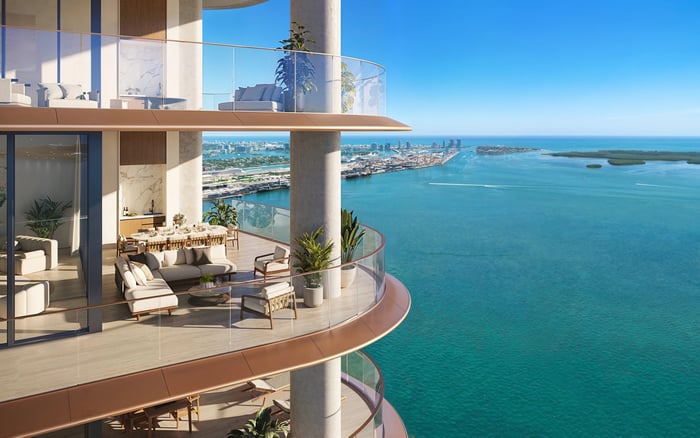
A discreet buyer’s guide to selecting a Brickell Key residence with the right physical, mechanical, and lifestyle conditions for art, wine, watches, design objects, and other climate-sensitive collections.
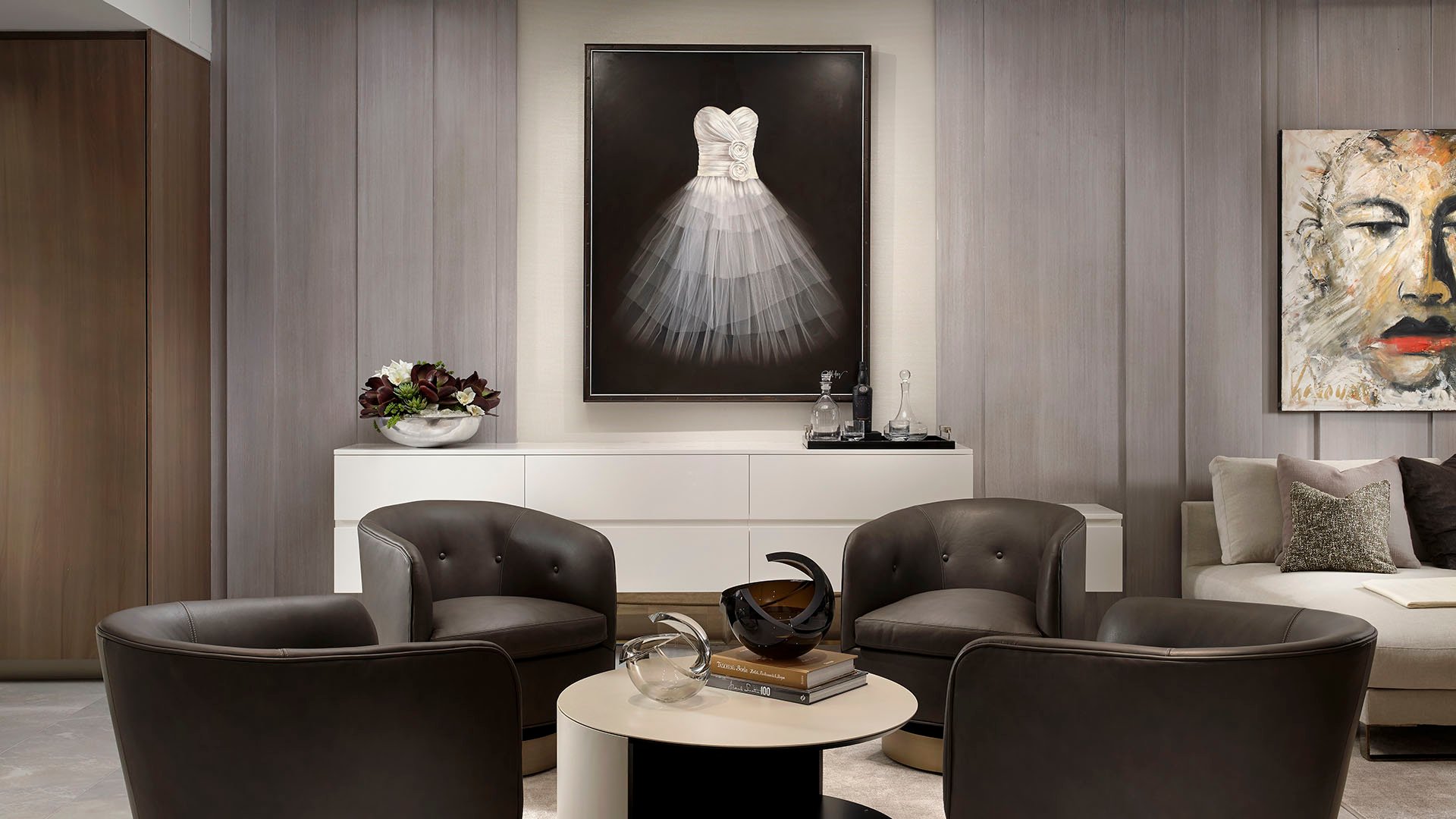
For the serious collector, a residence is more than a view, a floor plan, or a desirable address. It is a controlled environment. Art, wine, rare books, couture, watches, design objects, and musical instruments all respond to temperature, humidity, sunlight, vibration, and air quality. In South Florida, where beauty and climate intensity exist side by side, those conditions demand more than tasteful interiors.
Brickell Key appeals because it offers a quieter waterfront setting beside the larger Brickell district. The island feeling matters. It creates a sense of separation from the urban core while preserving proximity to restaurants, offices, cultural venues, private banking, and the daily rituals that make Brickell useful. For collectors, that combination can be powerful: privacy, views, and convenience within one compact geography.
Yet a collector’s purchase should be approached differently from a conventional luxury acquisition. A waterview is valuable, but so is the wall it leaves available for hanging. A balcony may be desirable, but the door systems, exposure, and humidity behavior around it deserve scrutiny. High floors can provide light and outlook, while also changing sun exposure and the way mechanical systems perform. The best Brickell Key residence is not simply the most dramatic. It is the one that can remain composed.
Begin with the mechanical backbone. Ask how the residence is cooled, how zones are controlled, and whether the system can maintain steady conditions in rooms with different purposes. A primary suite, salon, wine room, study, and gallery corridor may not need the same settings. The key is not just power, but consistency.
Humidity is the subtler issue. South Florida buyers often focus on air conditioning, but collections are frequently more sensitive to moisture than temperature alone. Look for evidence that humidity can be managed without overcooling the home. Dedicated dehumidification, tight building envelope performance, and well-sealed openings can all matter, subject to what is actually present in the building and residence.
Glazing deserves equal attention. Waterfront residences invite glass, and glass invites light. Natural light can be beautiful for living, but harsh for works on paper, textiles, photography, and certain finishes. A collector should consider UV protection, solar gain, window treatments, art placement, and whether there are enough controlled walls away from direct exposure.
Storage should be treated as a primary room, not a leftover closet. If a residence will hold crates, archival materials, seasonal pieces, collector footwear, handbags, watches, or design inventory, storage needs to be dry, clean, secure, and accessible. A service route that allows discreet movement of objects without crossing social spaces is a quiet luxury.
Most buyers read a floor plan for entertaining. Collectors should read it for environmental discipline. Where are the longest uninterrupted walls? Which rooms take the hardest afternoon sun? Does the entry sequence allow deliveries and installations without crossing fragile living zones? Is there a den or secondary room that can become a controlled archive?
Open plans are seductive, but they can make precision harder. A continuous living, dining, and kitchen space with extensive glass may be spectacular, yet less forgiving for light-sensitive works. By contrast, a residence with a gallery-like arrival, defined corridors, and rooms that can be individually treated may offer a more useful canvas.
Waterfront living also raises the question of salt air. This does not mean a buyer should avoid the water. It means finishes, hardware, framing, balcony doors, and maintenance protocols should be part of the conversation. A collector who owns metal sculpture, vintage furniture, fine jewelry, or mechanical objects should think carefully about where those pieces live within the home.
Brickell Key’s great advantage is psychological as much as geographic. It gives buyers the sensation of retreat without requiring them to abandon the city. That distinction is especially relevant for collectors who entertain privately, receive advisors, or rotate objects in and out of storage. The neighborhood’s waterfront character supports a quieter daily cadence than the densest parts of Brickell, while remaining close to the larger market.
Mainland Brickell can still serve as an important comparison set. A buyer evaluating Brickell Key may also study new and emerging residences nearby to understand how contemporary buildings are addressing wellness, service, and high-design living. Projects such as The Residences at 1428 Brickell and St. Regis® Residences Brickell can be useful reference points when considering how newer luxury product frames privacy, amenity programming, and residential support.
The point is not to substitute one location for another. It is to sharpen the buyer’s eye. If Brickell Key provides the island-like calm, nearby Brickell helps reveal what today’s ultra-premium buyer may expect from arrival, service, wellness, and building infrastructure.
A collector should ask practical questions early, before emotion takes control. Can the residence support supplemental climate equipment if needed? Are there restrictions affecting interior modifications, specialty storage, filtration, window treatments, or lighting? How are service contractors, installers, art handlers, and deliveries managed by the building?
Insurance should be discussed in parallel with the real-estate search. High-value collections may require documentation, appraisals, specific storage standards, alarm protocols, and environmental expectations. The residence, building rules, and insurer expectations should not contradict one another.
Power resilience also matters. A climate-sensitive home is only as reliable as its continuity during interruptions. Buyers should understand what systems are supported during outages, what is building-level and what is residence-level, and how long critical conditions can be maintained. Avoid assumptions. Ask directly, and have specialists review the answers.
Security should be discreet rather than theatrical. The best arrangements are layered: controlled building access, private elevator or limited-access corridors where applicable, in-residence alarm design, secure storage, and careful vendor management. For a collector, privacy is part of preservation.
Once the right residence is identified, the interior program should begin with conservation logic. Lighting can be warm and atmospheric while still controlled. Window treatments can be elegant while reducing exposure. Display walls can be dramatic without placing works in the most punishing sun path.
Materials should be chosen with the climate in mind. Woods, leathers, metals, stone, lacquer, and fabrics all behave differently in a humid coastal environment. A sophisticated interior designer will collaborate with art advisors, lighting consultants, closet specialists, and mechanical experts rather than treating the collection as an afterthought.
A wine collection requires its own discipline. Even if a residence has beautiful entertaining space, wine storage should not be judged by appearance alone. Temperature consistency, vibration control, humidity, backup conditions, and ease of inventory management are more important than spectacle.
Collectors comparing Brickell options may also look at Baccarat Residences Brickell, Cipriani Residences Brickell, or Una Residences Brickell to understand different expressions of waterfront or urban luxury nearby. Each comparison helps clarify whether the buyer prioritizes calm, brand-led service, architectural identity, or immediate access to the city’s social center.
The most successful collector homes in South Florida rarely announce their complexity. They feel effortless because the technical decisions are hidden behind calm rooms, graceful storage, and disciplined service. That is the standard Brickell Key buyers should pursue.
For this audience, luxury is not excess. It is control. It is the confidence that a painting will not sit in harsh afternoon light, that a watch collection is secure, that wine rests in stable conditions, and that a delivery can be handled without disrupting a private dinner. Brickell Key gives the setting. The buyer must secure the performance.
Is Brickell Key a good fit for collectors? It can be, especially for buyers who value privacy, waterfront calm, and quick access to Brickell. The residence and building systems still require careful diligence.
What is the first climate issue a collector should evaluate? Humidity control should be examined early. Temperature matters, but moisture is often the more persistent South Florida concern.
Are high floors better for climate-sensitive collections? Not automatically. High floors may offer views and light, but exposure, glazing, and mechanical performance are more important for collection care.
Does a waterview create risk for art or wine? A waterview is not the issue by itself. The concern is direct sun, heat gain, humidity behavior, and where sensitive objects are placed.
Should a collector avoid a balcony residence? No, but the buyer should inspect door seals, exposure, and how indoor conditions behave near openings. A balcony can be compatible with proper planning.
What specialists should be involved before closing? Consider a mechanical consultant, art advisor, insurance specialist, lighting designer, and experienced inspector. Their review can prevent expensive corrections later.
Can a standard luxury closet protect couture and accessories? Sometimes, but valuable fashion collections may need stronger humidity control, ventilation, lighting discipline, and security than a conventional closet provides.
Is Brickell Key better than mainland Brickell for privacy? Many buyers perceive Brickell Key as quieter and more removed from the daily intensity of Brickell. The right choice depends on service needs and lifestyle rhythm.
Do buyer’s guides replace specialist inspections? No. Buyer’s guides can frame the questions, but a climate-sensitive purchase should include expert review of the actual residence and building conditions.
What is the core rule for collectors buying waterfront property? Prioritize environmental stability before aesthetics. A beautiful waterfront home should still protect the objects that make it personal.
For a confidential assessment and a building-by-building shortlist, connect with MILLION.
If branded residences are on your mind — as a home or as an allocation — we would be glad to share what we are seeing, privately.
Begin a quiet conversation