Continuum’s beachfront setting and South of Fifth lifestyle reward a rigorous review of unit quality, association health, carrying costs and exit strategy.

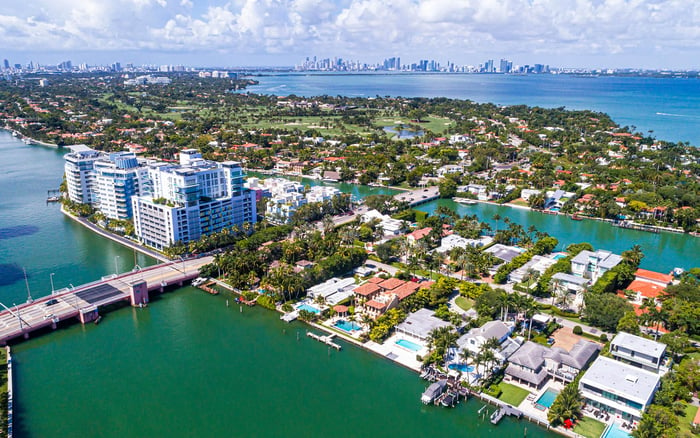
Continuum on South Beach occupies a beachfront site in Miami Beach’s South of Fifth neighborhood, where residential exclusivity meets the unmistakable energy of South Beach. Direct oceanfront living anchors the proposition, but it is only one layer. A walkable restaurant scene, nearby parks and marina adjacency extend the experience beyond the private grounds.
The result is a rare duality. Residents can move between a resort-style home environment and an established neighborhood with a global profile. For buyers who use Sofi as shorthand for South of Fifth, the appeal is immediate: privacy and access coexist without requiring a retreat from the city’s social rhythm.
Yet an address that inspires an emotional response demands a more disciplined acquisition process, not a less exacting one. In 2026, the sophisticated buyer should treat Continuum as both a lifestyle purchase and a substantial, long-duration capital commitment.
The first discipline is to separate the reputation of Continuum on South Beach from the quality and pricing of the residence under consideration. Ocean views, condition, layout, exposure and the relationship between interior space and the broader property experience all shape its utility. Each should be judged at the unit level rather than inferred from the name at the entrance.
Pricing warrants the same restraint. Relevant comparable sales should anchor the analysis, with close attention to the attributes that distinguish one residence from another. Branding, presentation and recent momentum may shape perception, but they should never substitute for evidence-based valuation.
The distinction becomes clearer when considering alternatives. A buyer comparing the intimate South of Fifth universe might also examine Apogee South Beach or The Ritz-Carlton Residences® South Beach. The purpose is not to declare a universal winner, but to identify the residence, ownership structure and setting that best fit the buyer’s priorities.
A beautifully finished residence can still carry obligations that merit close examination. Building age and the condition of structural, mechanical and common-area systems warrant both unit-specific and association-level due diligence. Buyers should request current budgets, reserve studies, meeting minutes, insurance information, inspection materials, pending-litigation disclosures and assessment history directly from the association.
Governance matters as much as physical condition. Reserve funding, anticipated capital expenditures and the association’s approach to long-term stewardship can shape future costs and the broader ownership experience. The review should extend beyond whether an assessment exists today. The more consequential question is whether foreseeable obligations appear to be recognized, planned for and funded with appropriate discipline.
An oceanfront acquisition requires this clear-eyed perspective. Salt air, exposure and a complex amenity environment can make the condition of shared systems especially consequential. Qualified legal, financial, insurance and inspection professionals should interpret the documents and physical findings for the specific transaction.
Purchase price is only the entry point. A credible ownership model should account for condominium fees, insurance, routine maintenance, financing costs where applicable and the possibility of assessments. Buyers should test a base case against more conservative scenarios rather than rely on a single annual estimate.
The property’s intended use should guide the model. A primary residence, second home and investment asset each bring different priorities around liquidity, leverage, holding period and acceptable carrying cost. Even when appreciation forms part of the thesis, it should be weighed alongside lifestyle benefits and the ease or difficulty of an eventual exit.
Comparison shopping can sharpen the analysis. Five Park Miami Beach offers another Miami Beach reference point, while The Perigon Miami Beach broadens the conversation beyond South of Fifth. These comparisons are most valuable when they clarify trade-offs-not when they reduce distinct properties to a simple price-per-square-foot contest.
For MILLION buyers, the strongest approach is sequential. First, confirm that the neighborhood and resort-style proposition suit daily life. Then assess the residence on its own merits, establish a comparable-sales framework, investigate the association and model the complete carrying cost. Finally, align financing and title structure with intended use, holding period and estate or tax considerations, guided by the appropriate professionals.
The objective is not to neutralize the emotion of living on the beach. It is to ensure that emotion rests on a durable ownership foundation. Continuum’s appeal is clearest when ocean views, amenities and neighborhood ambiance are matched by a residence acquired at a supportable price and held within a considered capital plan.
Where is Continuum on South Beach located? It occupies a beachfront site in Miami Beach’s South of Fifth neighborhood.
What defines its lifestyle proposition? Direct beach access, ocean views, on-site amenities and neighborhood ambiance form the core proposition.
Is Continuum more than a conventional condominium? It is positioned as a resort-style residential property rather than a conventional standalone condominium.
What should buyers examine at the unit level? Buyers should assess condition, layout, exposure, views and pricing against genuinely relevant comparable sales.
Which association documents deserve review? Current budgets, reserve studies, meeting minutes, insurance information, inspection materials and assessment history are central to the review.
Why do reserves matter? Reserve funding can influence the association’s ability to address anticipated capital expenditures without imposing unexpected burdens on owners.
What belongs in a total ownership-cost model? In addition to price, include condominium fees, insurance, maintenance, financing where relevant and potential assessments.
How should a second-home buyer structure the analysis? The buyer should align leverage, carrying costs, holding period and liquidity expectations with anticipated personal use.
Should appreciation be the primary justification? No. Potential appreciation should be considered alongside lifestyle value, total cost and expected exit liquidity.
What is the essential 2026 buyer discipline? Separate the emotional power of the address from the quality, price and obligations of the specific residence.
When you're ready to tour or underwrite the options, connect with MILLION.
If branded residences are on your mind — as a home or as an allocation — we would be glad to share what we are seeing, privately.
Begin a quiet conversation