For collectors considering Mila, the decisive questions extend beyond interior area and views. This buyer-focused guide examines display walls, daylight control, HVAC continuity, security, installation access, and the upgrades best resolved before finishes are complete.
At Mila Bay Harbor Islands, an art collector should look beyond location and outlook. A residence must also perform as an integrated environment, with glazing, solar exposure, HVAC, wall construction, lighting, access, and security working in concert.
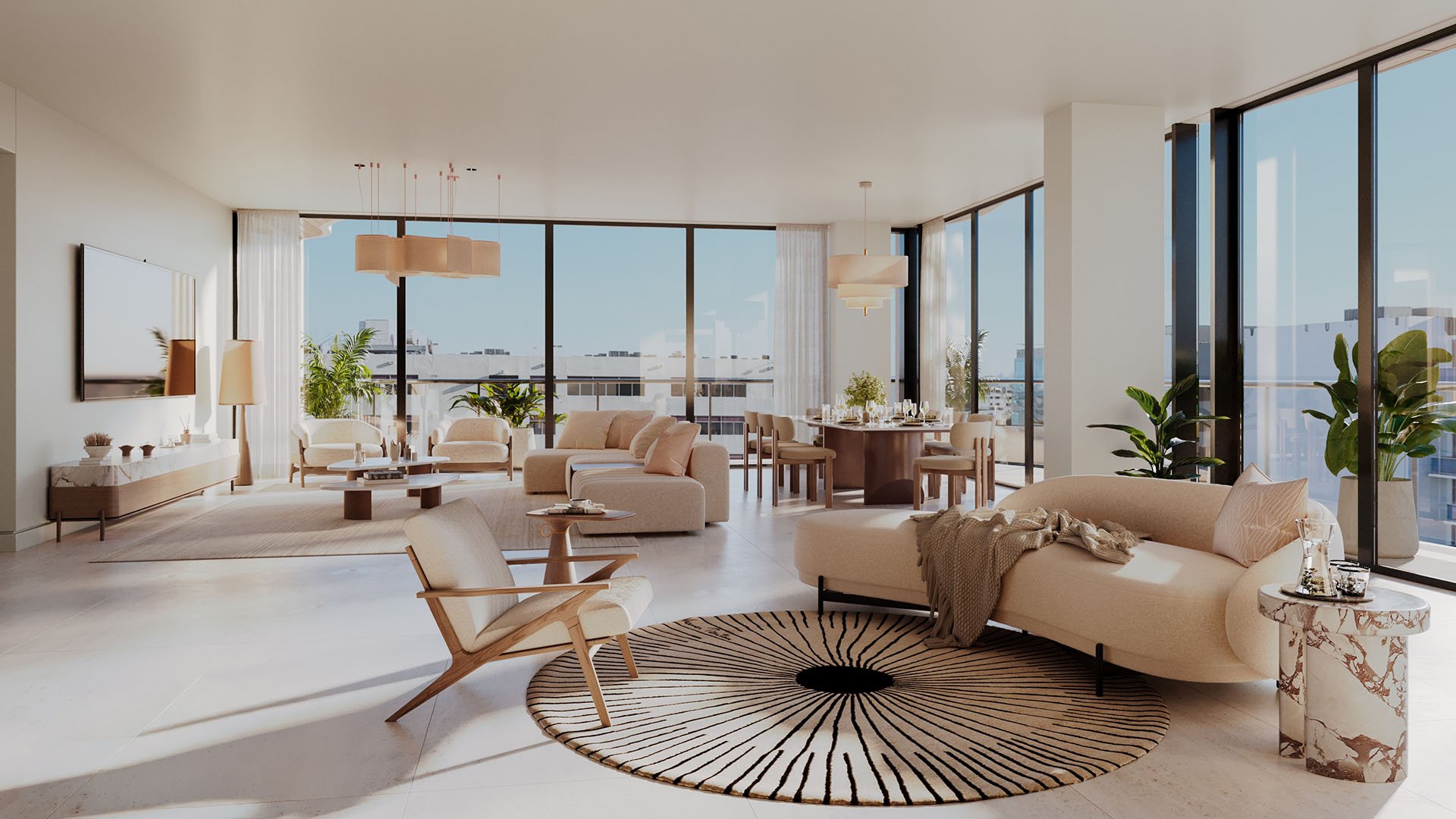
That shift in perspective is essential. A generous interior may feel ideal during a tour, yet expansive glass and open planning can leave surprisingly few uninterrupted surfaces for art. A balcony or terrace connection can further fragment perimeter walls. The critical question is not simply how large the residence is, but how much of it can safely and elegantly support the collection.
Review architectural plans work by work. Record the width and height of every plausible display wall, then subtract doorways, switches, thermostats, kitchen openings, circulation routes, terrace access, and furniture clearances. The result is a practical hanging schedule rather than an abstract square-footage figure.
The review should also distinguish between a wall that appears available and one capable of carrying a large or heavy piece. Buyers should request confirmation of wall construction and load capacity, then identify where reinforcement may be required. The same discipline applies when comparing Mila with nearby choices such as Alana Bay Harbor Islands. Floor plans should be judged by uninterrupted display opportunities, not area alone.
A scaled collection overlay can expose conflicts early. A principal canvas may compete with a television, sculpture may interrupt a circulation path, or a seemingly perfect wall may receive more daylight than the work can tolerate.
Orientation matters because direct sun and sustained daylight vary by exposure and room. Before assigning locations for photographs, works on paper, textiles, or other light-sensitive pieces, confirm the residence’s orientation and map direct-sun conditions throughout the day.
Request written glazing specifications, including ultraviolet protection, visible-light transmission, and solar-heat performance. These details help a conservator and lighting specialist evaluate risk, but they are not a complete daylight strategy. Interior shades or other controls may still be necessary where extensive glazing creates prolonged exposure.
Art lighting should be designed separately from general illumination. Dedicated circuits and controls allow exposure, glare, color rendering, and heat to be considered for each display zone. Buyers also comparing La Maré Bay Harbor Islands can apply the same room-by-room test rather than assume all glazing performs alike.
South Florida’s climate makes stable interior temperature and relative humidity central to collection planning. The relevant question is not whether the residence feels comfortable during a visit, but whether the HVAC system can maintain suitable, stable conditions continuously, including while the home is vacant.
Ask how the system is zoned, monitored, and controlled-and what happens during a power interruption. Exact environmental targets should be established with a qualified art conservator because acceptable conditions vary by medium and collection. The residence’s capabilities can then be measured against those collection-specific requirements.
Sensors may be appropriate in display and storage zones, particularly if the owner travels frequently. Alert protocols should also be discussed so that a deviation prompts action rather than merely creating a historical record. HVAC changes, sensor wiring, and control locations are easier to coordinate before finishes are complete.
Collection security begins before the artwork reaches the front door. Review the entire route from the building entrance and loading area through elevators, corridors, residence access points, and final display zones. Ask how deliveries are scheduled, supervised, and separated from ordinary building activity.
Large works present physical constraints as well as security concerns. Confirm loading procedures, elevator dimensions, doorway clearances, turning radii, and any protective requirements before acquiring or assigning a piece to the residence. A work that fits a feature wall may still be impossible to move safely through the route.
Inside the home, coordinate sensors and security measures with lighting, shades, HVAC controls, and the planned hanging scheme. Collectors considering another local option, such as The Well Bay Harbor Islands, should conduct the same end-to-end review rather than assess only lobby or residence access.
The most valuable planning window comes before walls and ceilings are closed. Negotiate wall reinforcement, electrical locations, lighting controls, shade provisions, sensors, and any necessary HVAC modifications while changes can still be integrated cleanly.
Create a coordinated drawing that combines the art plan with reflected ceiling plans, electrical layouts, shade pockets, climate controls, and security devices. This reduces visual clutter and helps prevent late-stage compromises, such as placing a sensor beside a focal work or routing a shade control through a preferred hanging wall.
Written construction documents and developer disclosures should confirm Mila’s exact glazing, HVAC tolerances, backup-power support, wall assemblies, security provisions, and freight access. For a collector, discretion is not simply an aesthetic quality. It is the result of technical decisions made early enough to disappear into the architecture.
Is total interior square footage a reliable measure of display capacity? No. Usable wall dimensions should be calculated after accounting for glazing, openings, circulation, kitchens, terraces, and building systems.
Why does residence orientation matter to an art collector? Orientation influences direct-sun exposure and sustained daylight, both of which should guide the placement of light-sensitive works.
Which glazing details should a buyer request? Request written specifications for ultraviolet protection, visible-light transmission, and solar-heat performance.
Are interior shades still relevant if the glass offers ultraviolet protection? They may be. Daylight controls can help manage sustained natural light beyond what glazing alone addresses.
Should art lighting share the general lighting plan? It should be planned separately so that exposure, glare, color rendering, and heat can be controlled by display zone.
What should be verified about Mila’s HVAC system? Confirm whether it can maintain stable conditions continuously, including during vacancies and power interruptions.
Who should set temperature and humidity targets? A qualified art conservator should establish targets appropriate to the collection’s specific media and sensitivities.
What access details matter for oversized artwork? Verify loading procedures, elevator dimensions, corridor turns, doorway clearances, and the intended wall’s load capacity.
When should wall reinforcement and controls be negotiated? Resolve them before finishes are completed, when reinforcement, wiring, shades, sensors, and HVAC changes are easier to integrate.
What is the best first step for a collector evaluating a residence? Overlay a scaled inventory of works onto the architectural plan, then test each location for light, climate, structure, access, and security.
For a discreet conversation and a curated building-by-building shortlist, connect with MILLION.
If branded residences are on your mind — as a home or as an allocation — we would be glad to share what we are seeing, privately.
Begin a quiet conversation