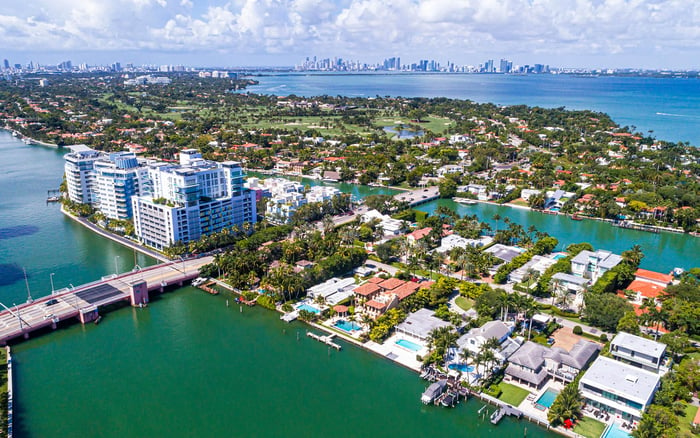
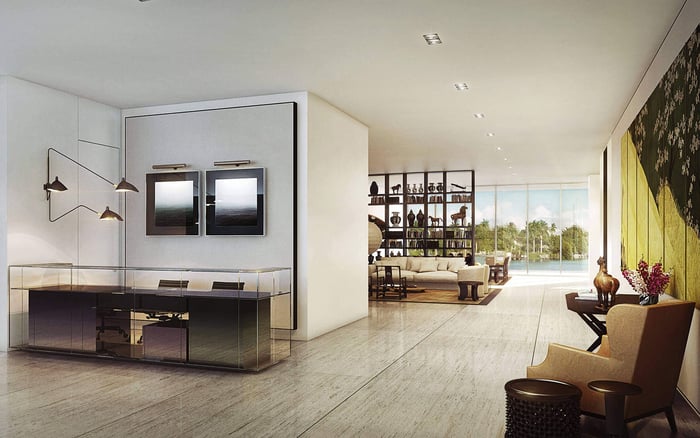
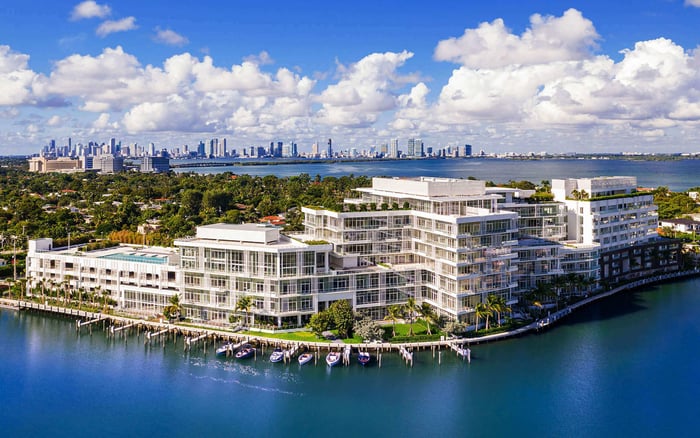
Low-density luxury is less about a single unit count than the lived experience of privacy, calm circulation, discreet service, and carefully managed shared spaces. Three Miami residential propositions invite buyers to assess that experience through different lenses: oceanfront identity, established hospitality, and a residence-and-hotel model.

For South Florida buyers, low-density living increasingly means more than a limited number of residences. It suggests a quieter arrival, fewer encounters in common areas, more predictable access to amenities, and service that feels personal rather than institutional. The appeal is not isolation, but control over pace, privacy, and the moments between the front door and the wider city.
That distinction is especially relevant in Miami Beach, where a residence may serve as a primary home, a seasonal retreat, or a multigenerational gathering place. Buyers may value generous interiors, but they also scrutinize elevator use, lobby activity, pool capacity, guest circulation, staffing, and the relationship between private and shared spaces. Low density becomes meaningful only when the entire building supports an unhurried routine.
The appeal also reflects a broader shift in luxury. Scale alone no longer defines prestige. A boutique atmosphere, discreet operations, and a sense of recognition can matter as much as visual spectacle. **Ocean**front positioning may heighten the appeal, but the decisive question remains practical: Does the property preserve calm when residents, guests, and staff are all using it?
The three names in this discussion are not interchangeable. Each gives buyers a distinct framework for assessing privacy and residential character, and each demands its own due diligence.
At 57 Ocean Miami Beach, the buyer conversation naturally begins with the residential experience conveyed by the property’s identity. Rather than accepting “low density” as a conclusion, a purchaser should examine how the building translates intimacy into daily life. Floor-plan relationships, elevator access, amenity circulation, service protocols, and visitor handling all help determine whether the experience feels genuinely composed.
Setai Residences Miami Beach introduces another lens: the expectations associated with a recognized hospitality environment. For buyers drawn to branded residences, the central issue is balance. Service and social energy can be valuable, but private ownership should remain distinct. The most relevant questions concern separation, access, management, and how residential priorities are protected within a broader hospitality setting.
With Delano Residences & Hotel Miami, the name itself places residences and hotel use within the same proposition. That makes operational clarity particularly important. Buyers should understand which spaces are residential, which are shared, how arrivals are managed, and whether the service model delivers convenience without compromising discretion. A residence-and-hotel concept can meet demand for effortless living, but its success should be judged through the resident’s daily path.
Together, the projects illustrate why low density is best understood as an experience rather than a slogan. Buyers are not simply asking how many homes exist. They are asking how often they wait, how visible their movements feel, and how consistently the property maintains its atmosphere.
The first measure is circulation. Review the entire route from vehicle arrival to residence, including lobby access, elevators, service corridors, deliveries, and guest entry. A single congested transition can undermine privacy, even when the residence itself is exceptionally secluded.
The second measure is amenity intensity. An extensive program may sound impressive, yet buyers should consider who can use each space, when access is available, and whether reservations are required. The objective is not necessarily more amenities, but dependable access to those that matter.
Third, study the operational structure. In properties connected to hospitality, ask how residential service differs from hotel service and how shared costs are allocated. In more purely residential settings, examine staffing, security, maintenance, and the capacity to deliver personal attention over time.
Finally, compare the legal and financial documents with the sales narrative. Confirm use rules, rental provisions, guest policies, ownership responsibilities, and the treatment of shared facilities. Low-density appeal has enduring value only when governance protects the experience buyers believe they are acquiring.
Scarcity can support desirability, but scarcity alone is not an investment thesis. A smaller residential community may offer greater privacy and a more distinctive identity, while concentrating operating responsibilities among fewer owners. Buyers should therefore assess both lifestyle value and the durability of the expense structure.
The strongest proposition is one in which restraint creates a recognizable advantage: easier access, calmer shared spaces, coherent service, and a residential atmosphere that remains consistent across seasons. For a second-home owner, that may mean arriving without friction. For a full-time resident, it may mean a building that feels composed on an ordinary Tuesday, not only during a private presentation.
The comparison among these three properties is therefore less about declaring one model superior than matching operational character to personal priorities. The right choice is the one whose privacy, service, and shared-space logic align with how the buyer intends to live.
What does low-density living mean in a luxury condominium? It generally describes a sense of privacy and ease created through limited congestion, thoughtful circulation, and controlled access to shared spaces.
Is a lower unit count always better? No. Unit count matters only in relation to layout, elevator planning, amenity use, staffing, and management quality.
Why is elevator planning important? Elevator allocation shapes waiting times, privacy, guest movement, and the transition from arrival to residence.
Do hotel-linked residences feel less private? Not necessarily. Buyers should examine the separation of entrances, amenities, elevators, staff functions, and guest circulation.
What should buyers ask about shared amenities? Ask who has access, whether reservations are required, how capacity is managed, and which costs are shared.
Does low density guarantee quiet interiors? No. Interior quiet also depends on floor-plan placement, construction, mechanical systems, and neighboring uses.
Can low density affect ownership costs? Yes. Fewer owners may share building expenses, so budgets, reserves, staffing, and maintenance obligations warrant close review.
Which documents matter most during due diligence? Buyers should review governing documents, budgets, use restrictions, rental provisions, disclosures, and agreements governing shared facilities.
Is low-density living best for primary residents or second-home owners? It can suit both. The deciding factor is whether the building’s access, service, and operating model align with the owner’s routine.
How should buyers compare these three residences? Compare privacy, circulation, amenity access, service structure, ownership terms, and the distinction between residential and hospitality areas.
For a confidential assessment and a building-by-building shortlist, connect with MILLION.
If branded residences are on your mind — as a home or as an allocation — we would be glad to share what we are seeing, privately.
Begin a quiet conversation