A practical buyer’s guide to evaluating terrace comfort, furniture fit, delivery logistics, building rules, and entertaining flow at Alma Bay Harbor Islands.
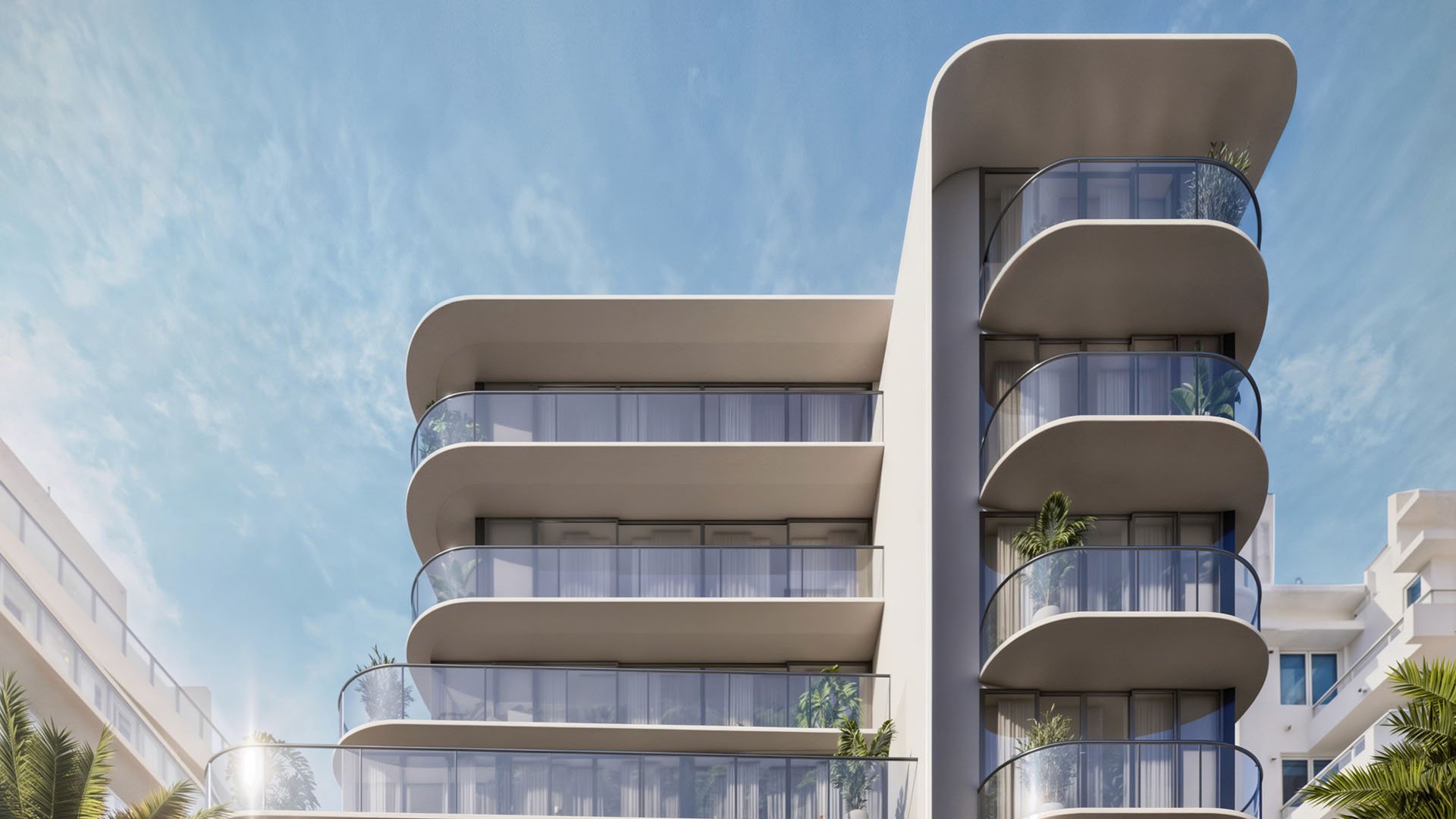
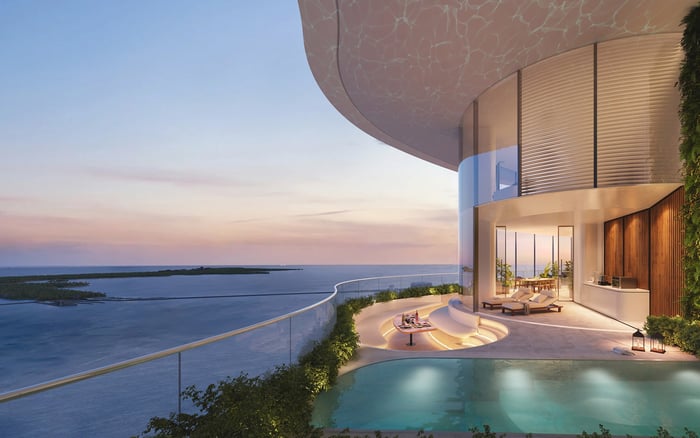
Buyers considering Alma Bay Harbor Islands should assess a terrace with the same care applied to an interior room. A view may create the initial impression, but comfortable daily use depends on dimensions, exposure, circulation, permitted furnishings, and the relationship between the terrace and adjoining rooms.
Start by defining how the outdoor area would be used. Morning coffee, reading, dining, and hosting each require different furniture arrangements and levels of shade. Rather than relying on renderings or general impressions, ask for current plans and documents for the specific residence.
Visit at the times when you are most likely to use the terrace. Observe where direct sun reaches the seating area, whether glare affects adjoining rooms, and how much of the space remains comfortable. Conditions can vary by orientation, time, season, floor, and surrounding structures, so one visit may not provide a complete picture.
Ask whether architectural overhangs cover the intended seating zone. If additional shade would be important, verify which umbrellas, screens, or other devices are permitted and how they must be secured. Current building documents should determine what is allowed.
Wind can affect furniture selection, table settings, umbrellas, planters, and the overall comfort of an outdoor room. During a visit, compare open edges and corners with areas protected by walls or the building form. Ask whether conditions differ across the terrace and whether any areas are better suited to dining or lounging.
Request the applicable rules for securing or storing outdoor items. Buyers should also ask what precautions are required during severe weather and whether furniture covers, planters, or screens are subject to restrictions. Do not assume that a product shown in a rendering or used elsewhere will be acceptable for a particular residence.
Obtain a dimensioned plan before selecting a dining table, sectional, loungers, or planters. Plot each item at its actual size, including chairs in the pulled-out position. Preserve a clear route between exterior doors, seating areas, and any service points shown on the residence plan.
Scale alone does not establish usability. Door swings, structural elements, changes in depth, and the shape of the terrace may determine whether a preferred layout works. A furniture plan should distinguish between the area occupied by furnishings and the space needed for comfortable movement.
Buyers comparing terrace layouts may also review Alana Bay Harbor Islands, Onda Bay Harbor, and The Well Bay Harbor Islands. Each project and residence should be evaluated through its own current plans, disclosures, and rules.
Large outdoor pieces must reach the terrace before they can be enjoyed. Request measurements for every stage of the delivery path, including building entrances, elevators, corridors, residence doors, turns, and terrace openings. Compare those clearances with the packaged dimensions of each item rather than its assembled size alone.
Ask whether deliveries require reservations, protective measures, approved vendors, or limited time windows. If a table or sofa cannot travel through the route intact, determine whether the manufacturer permits safe on-site assembly. Confirm these details before placing a nonreturnable order.
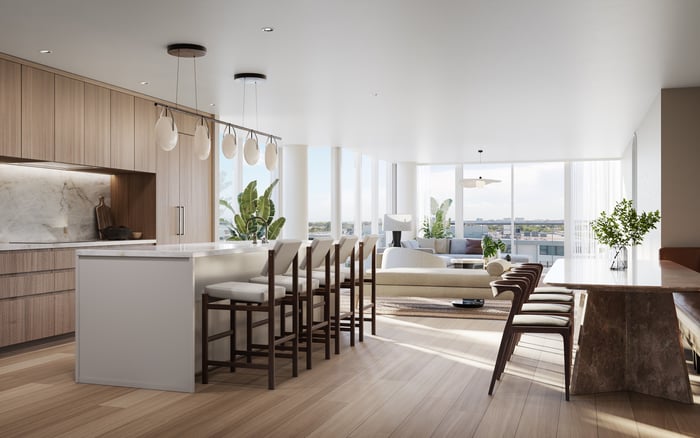
Map the path between the kitchen, interior living area, and terrace. Guests and serving traffic should be able to move without squeezing behind occupied chairs or crossing the main conversation area. If doors connect the interior and exterior, include their operating space in the layout.
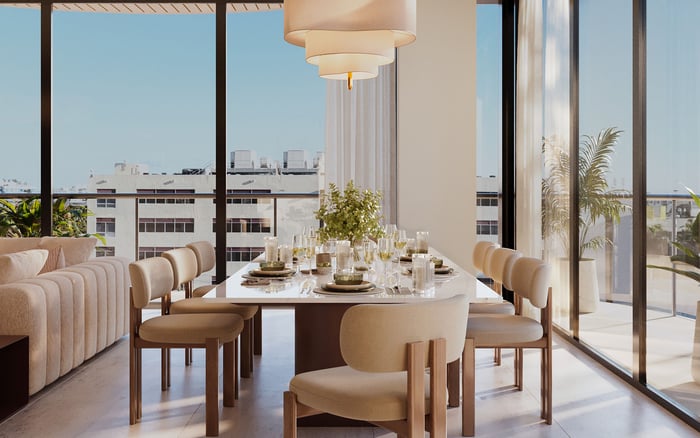
Test the plan for the number of seated guests you realistically expect to host. A layout that accommodates occasional standing guests may not support a full dining arrangement. Buyers should also identify where serving pieces, lighting, and other outdoor items could be placed without obstructing circulation.
Any grill, cooking appliance, heater, or electrical accessory should be treated as a document-review question. Verify whether it is permitted, where it may be positioned, and what installation or safety requirements apply. Do not purchase equipment based on assumptions.
Before committing, request the residence plan, applicable condominium documents, delivery procedures, and current rules governing exterior furnishings and alterations. Ask about drainage, available power, exterior lighting, maintenance responsibilities, and any restrictions affecting the intended setup.
Review the answers against your routine rather than an idealized use case. A terrace should support the activities, times of day, furniture, and level of upkeep that fit the buyer’s actual lifestyle. Where an answer is not documented, seek clarification from the appropriate project or condominium representative.
Why should a terrace be evaluated like an interior room? Its dimensions, circulation, exposure, and rules determine whether it can support the buyer’s intended use.
When should a buyer visit the terrace? Visit near the times when the space would most often be used, and consider more than one visit if conditions are important to the decision.
How can buyers evaluate shade? Observe the terrace directly and compare the seating plan with any overhangs or other permitted shade options.
What should buyers ask about wind? Ask which areas are more exposed and what rules govern umbrellas, screens, covers, planters, and furniture storage.
Why are dimensioned plans important? They allow buyers to test furniture placement, door operation, and walking paths before ordering pieces.
Should furniture be measured assembled or packaged? Check both, because assembled dimensions affect terrace fit while packaged dimensions affect delivery access.
What delivery clearances should be confirmed? Verify entrances, elevators, corridors, turns, residence doors, and terrace openings along the complete route.
How should buyers plan for entertaining? Map seated capacity, serving paths, door clearances, and movement between the kitchen, living area, and terrace.
Can buyers assume grills or heaters are permitted? No. Confirm current rules, approved equipment, placement requirements, and any applicable installation conditions.
Which documents should buyers request? Request current residence plans, condominium documents, delivery procedures, and rules covering exterior furnishings and alterations.
For a confidential assessment and a building-by-building shortlist, connect with MILLION.
If branded residences are on your mind — as a home or as an allocation — we would be glad to share what we are seeing, privately.
Begin a quiet conversation