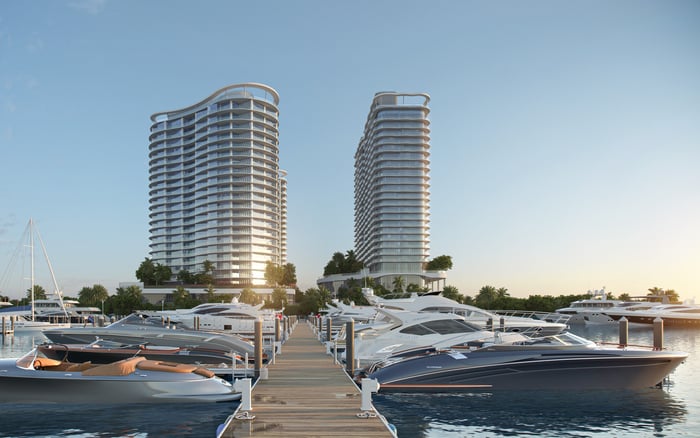
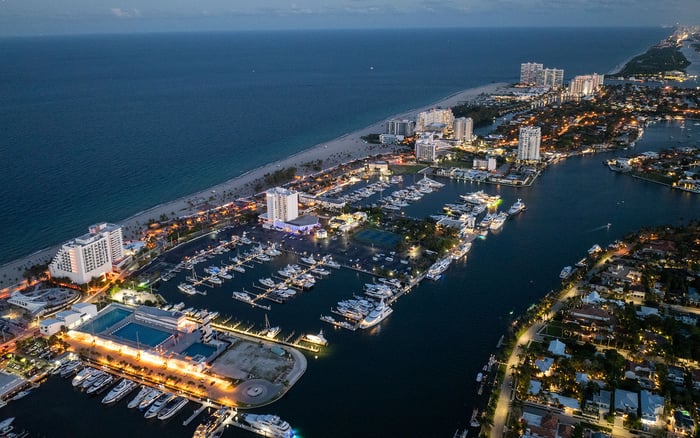
For Fort Lauderdale buyers who treat a yacht like a second home, the real differentiator between addresses is not finish level. It is how quickly you can cast off, how predictably you can return, and how many constraints sit between your dock line and open water. This editorial frames the comparison between **St. Regis® Residences Bahia Mar Fort Lauderdale** and **Sixth & Rio Fort Lauderdale** through the lens of superyacht-oriented access: slip practicality, channel realities, bridge risk, and day-to-day operating friction. Because specific slip dimensions, depths, bridge clearances, and marina rulebooks vary by operator and are not always publicly uniform, the most useful approach is a buyer’s checklist. Think in terms of what you can verify during due diligence, what can change seasonally, and what you can contractually secure.
In Fort Lauderdale, “waterfront” is not a single category. Two residences can both feel coastal and still deliver entirely different boating lives. The difference lives in operations: whether you can depart on your own timetable, whether your captain can provision without friction, and whether a night return feels composed or complicated.
That’s where the comparison between St. Regis® Residences Bahia Mar Fort Lauderdale and Sixth & Rio Fort Lauderdale becomes most relevant. One presents as marina-first-by placement, cadence, and intent. The other reads as urban and river-adjacent, designed for buyers who want walkability and culture with boating still firmly in the mix.
For a superyacht owner-or a buyer planning to step up in LOA-the question isn’t whether either address is “boater friendly.” It’s how many variables sit between your slip and Port Everglades, and how many of those variables you can actually control.
When you hear “superyacht slip,” most people think length. In practice, length is the entry point-not the underwriting.
Beam and fairway width.
A wider beam and higher freeboard can turn a slip that’s technically “long enough” into a daily stress test if fairways are tight or turning basins are constrained. Maneuvering room matters as much as the headline LOA.
Controlling depth, not just average depth.
Depth is not a brochure number. It’s shaped by tides, seasonal silt, and maintenance dredging schedules. Confirm what depth is reliable at mean low tide-at the berth and along the full in-and-out route.
Shore power and redundancy.
True superyacht readiness means the right voltage, amperage, and safe distribution. Verify pedestal capability, the condition of the infrastructure, and whether there is a clear, proven process for service upgrades.
Fendering, pilings, and dock construction.
Bigger boats punish weak docks. Look for substantial pilings, appropriate spacing, and fendering that matches your hull and rub-rail profile. If yachting convenience is part of the purchase logic, dock robustness is not optional.
Water, pump-out logistics, and waste rules.
Routine operations should feel invisible. If crew has to improvise with hoses, staging, or off-site pump-out schedules, the lifestyle loses its polish quickly.
Security and access control.
A slip is a meaningful asset. Confirm whether the dock is controlled, monitored, and insulated from casual foot traffic. If you entertain dockside, privacy and predictable access are part of the value.
The key due-diligence move: treat the slip the way you treat title. Know what you are buying or leasing, what rights attach to it, and what obligations follow.
“Near the ocean” is a feeling. Port access is a route.
The difference between an elegant boating day and a frustrating one often comes down to choke points: no-wake zones, bridge schedules, congested bends, and traffic patterns that intensify on weekends or during events.
Bridge risk.
Bridges introduce uncertainty for taller vessels and for owners who prize spontaneity. Even when clearances are workable, the psychological cost is real: you plan around fixed openings, you time arrivals, and someone else’s schedule becomes part of your day.
Channel and inlet conditions.
The inlet isn’t just the exit-it’s the return, often in less forgiving conditions than your departure. Cross-currents, wind direction, and surge can turn an “easy” approach into a technical one.
Traffic and commercial movement.
South Florida is a working maritime corridor. Commercial traffic can reshape route planning, especially when you want to move quickly and safely.
The practical takeaway: if boating is central to your identity, you’re not only buying a home-you’re buying an operating environment.
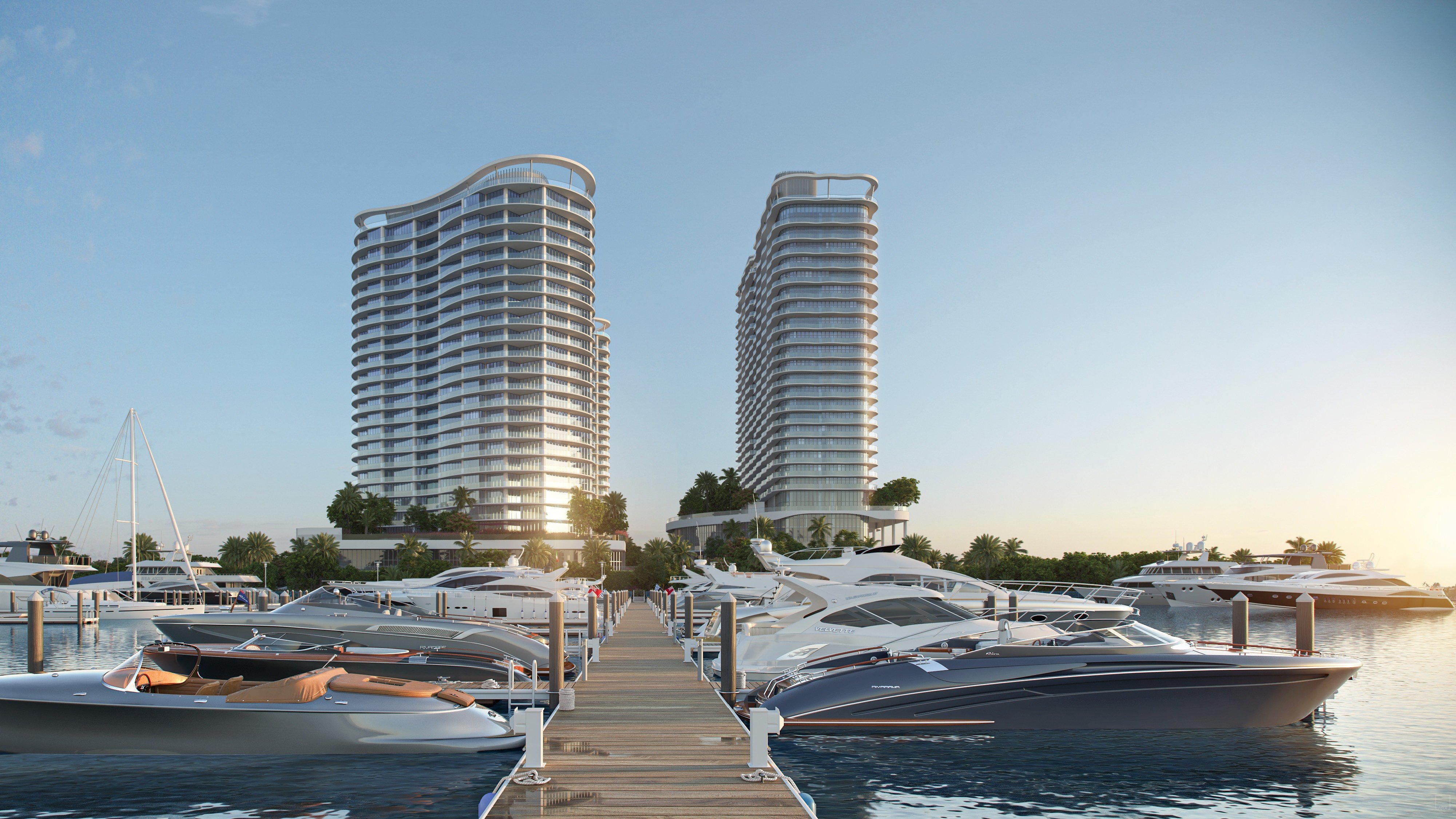
The appeal of St. Regis® Residences Bahia Mar Fort Lauderdale is alignment: a luxury residential experience positioned to feel naturally compatible with yachting culture. For buyers who want their building to speak the same language as their vessel, that coherence matters.
In a marina-forward proposition, the day is organized around the dock. That can translate into simpler crew routines, more intuitive provisioning, and less friction when you need to depart or return efficiently. It also tends to draw neighbors with a similar rhythm, quietly raising standards around security expectations and dock etiquette.
Marina adjacency also calls for a more exacting buyer mindset. Underwrite the details:
Assignment mechanics: Whether slips are deeded, licensed, or governed by separate agreements.
Transferability: What happens if you sell, upgrade boats, or want to sublet usage.
Operating rules: Liveaboard policies, guest berthing, fueling procedures, and work restrictions.
If boating is integral, demand clarity early. A marina-centric lifestyle should not be implied-it should be written.
Reads as a more city-forward choice, aimed at buyers who want Fort Lauderdale beyond the marina-restaurants, arts, and daily walkability that makes a second home live like a true residence.
In river-adjacent living, boating can be exceptional, but it’s often shaped by more variables. River routes can add bends, traffic, and potential bridge considerations depending on the exact approach. The upside is the lifestyle blend: you gain a more cosmopolitan daily routine, even if you trade away some marina-first immediacy.
For the yacht owner, the right evaluation is not “Can I boat from here?” It is:
How many constraints exist between me and the ocean?
Are those constraints predictable enough for my usage pattern?
Does the building’s culture and management anticipate yachting needs-or simply accommodate them?
A city-forward residence can be the right call when you want boating present but not dominant, or when you prefer the discretion of a quieter docking routine versus the visibility that can come with marquee marina environments.
If you are evaluating Fort-lauderdale with a superyacht lens, this framework tends to surface the truth quickly.
1) Route mapping: daytime and nighttime.
Do the run twice-one departure in daylight, one return after dark. Note lighting, traffic, and stress points.
2) Captain interview, not just a tour.
Bring the person who will run the boat. The questions are technical and experience-based, not aesthetic.
3) Write down the “soft costs.”
Tenders, crew transport, provisioning time, and staging space become recurring costs in both money and patience.
4) Confirm insurance implications.
Certain berth types and routing realities can influence insurance expectations and procedures.
5) Back-up plan.
If your primary berth is unavailable, what is the realistic alternative? A premium lifestyle includes redundancy.
Fort Lauderdale is often the center of gravity for yacht owners, but some buyers maintain a second node farther south for a different mix of access, social life, or flight convenience.
In Brickell, for example, a pied-à-terre can function as a city base when you are not actively cruising-particularly if your boat is staged elsewhere. A polished option to explore is 2200 Brickell, suited to buyers who want a refined, residential cadence anchored by a strong urban address.
If you prefer a more design-forward skyline experience, 888 Brickell by Dolce & Gabbana presents a different luxury proposition: less about docks at your door and more about a high-impact city residence that pairs well with a yacht held in a separate marina strategy.
For a pure oceanfront counterpart that complements a yachting lifestyle, 2000 Ocean Hallandale Beach offers a coastal posture that can be compelling for buyers who want the Atlantic as a daily horizon, even when boating access is managed through a broader network.
These pairings are not substitutes for a Fort Lauderdale base. They are strategic complements, especially for owners splitting time between cruising, business, and social seasons.
Choosing between St. Regis® Residences Bahia Mar Fort Lauderdale and Sixth & Rio Fort Lauderdale becomes simpler once you name the priority.
If the yacht is the organizing principle of your calendar, a marina-forward address typically wins because it reduces friction you feel every week. If your ideal week blends dining, cultural access, and occasional runs on the water, a city-forward residence can be the smarter, more dimensional home.
Either way, the most sophisticated buyers treat marine access as a contractable asset. Your purchase should secure what matters: the right to berth, certainty of access, and an operating reality that matches the yacht you own today-and the yacht you intend to own next.
What is the single most important slip spec beyond length? Beam and maneuvering room often determine whether docking feels effortless or stressful.
Do bridge schedules matter if I rarely leave during peak hours? Yes-arrivals aren’t always planned, and night returns can be less flexible.
Should I assume slip rights transfer automatically with the condo? No. Confirm whether berthing is deeded, assigned, or governed by a separate agreement.
How do I verify usable depth for my yacht? Confirm low-tide depth at the berth and along the route, not just an average figure.
Is marina adjacency always better for superyachts? Not always; visibility, rules, and traffic can be tradeoffs depending on how you use the boat.
What should I ask about shore power? Verify voltage and amperage capacity, redundancy, and whether upgrades are permitted and timely.
How can I test port access realistically? Run the route in and out at different times, including a return after dark.
Do I need a backup berth strategy? If you cruise often, yes-weather, maintenance, and marina constraints are real.
Can a city-forward residence still work for a serious boater? Yes, if route constraints and docking terms align with your yacht’s profile and schedule.
What is the smartest next step before making an offer? Bring your captain and put slip terms, fees, and rights in writing during due diligence.
For a confidential assessment and a building-by-building shortlist, connect with MILLION Luxury.
If branded residences are on your mind — as a home or as an allocation — we would be glad to share what we are seeing, privately.
Begin a quiet conversation