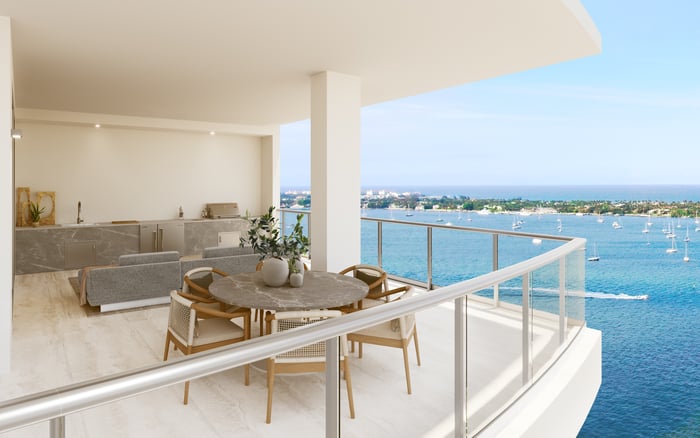
A refined summer lock-up plan for Maison D'Or owners, from humidity and water management to storm readiness, access protocols, and post-event reporting.

For a South Florida second home, summer departure is less about closing the door than establishing a temporary operating plan. At Maison D'Or South Flagler, owners can begin with a written checklist covering climate control, water, electrical equipment, exterior areas, access, inspections, and emergency communication.
General guidance should serve only as a framework. Before every extended absence, owners should confirm the current procedures for their residence with building management and qualified professionals.
A successful lock-up begins with clarity. Before departure, the owner, residence manager, building team, and any private household staff should know who may enter the home, who monitors weather conditions, who authorizes work, and who delivers a condition report after a storm.
Provide current contact details and approved access instructions to the designated representative. Written directions can identify preferred vendors, insurance contacts, spending authority, and escalation steps for urgent repairs. Management should separately confirm the rules governing contractor entry, elevator use, keys, and access during storm preparation.
This operational review is also useful when considering other Palm Beach County residences, including Forté on Flagler West Palm Beach and Shorecrest Flagler Drive West Palm Beach. The practical chain of command supporting a seasonal residence deserves attention alongside design and location.
Before an extended absence, clean and dry the residence. Remove perishable food, flowers, open containers, and materials likely to attract pests or retain moisture. Clean appliances that will be switched off and follow manufacturer or management instructions for leaving them secured or ventilated.
Do not assume a universal thermostat setting. Confirm the required temperature, humidity target, HVAC operation, and monitoring procedure with management. In South Florida, the plan should focus on maintaining suitable interior conditions throughout the absence.
Water isolation also requires building-specific direction. Ask management and a qualified professional whether the residence’s supply should be shut off, which valves may be operated, and how connected appliances or systems should be handled.
Unplug nonessential electronics and appliances when appropriate. Equipment required for climate control, monitoring, or other essential functions should remain powered only as directed by management or the relevant professional.
Balcony preparation should occur before travel rather than after storm conditions are announced. Move furniture, planters, decorative objects, and other loose items indoors. Confirm that exterior doors and windows are secured according to building procedures.
Shutter responsibilities should be documented. Owners need to know whether deployment is handled by the residence, building staff, or an authorized vendor, together with any access deadlines and reporting process. Necessary documents and valuables should be stored appropriately, and the designated representative should understand the residence’s emergency instructions.
The building team may follow separate procedures for common areas and shared systems. Owners should understand when building preparations begin, what access limitations may apply, and how management will distribute updates.
These questions can also inform the evaluation of residences such as The Ritz-Carlton Residences® West Palm Beach. Clear operating procedures are an important consideration for any seasonal home.
Assign a trusted caretaker, property manager, or maintenance professional to inspect the residence on an agreed schedule and when management permits entry after a major weather event. The inspection scope can include signs of water intrusion, unusual humidity, odors, power interruption, appliance issues, and visible concerns around doors, windows, and outdoor spaces.
A concise digital report can record the inspection time, interior conditions, photographs, relevant building notices, and recommended action. Establish who may approve emergency spending, which decisions require direct owner consent, and how the representative should proceed if normal communications are unavailable.
Routine visits and post-event inspections serve different purposes. A seasonal calendar addresses continuing oversight, while a storm protocol defines safe access, reporting priorities, and escalation. Both should be reviewed before each extended absence.
Conclude the lock-up with a brief handover rather than a last-minute checklist. Review climate settings, water procedures, appliance status, balcony clearance, shutter responsibilities, access permissions, emergency contacts, and the first planned inspection. Request written confirmation of current building procedures where available.
A well-prepared seasonal residence depends on clearly assigned people, reliable communication, and instructions tailored to the home and building. Assumptions should be replaced with documented responsibilities and confirmed procedures.
When should summer lock-up planning begin? Begin early enough for management, household staff, and vendors to confirm access, responsibilities, and any building-specific deadlines.
Should the air conditioning be turned off? Do not make that decision without building-specific guidance. Confirm the required temperature, humidity target, and HVAC procedure with management.
Is there one correct thermostat setting for every vacant residence? No universal setting should be assumed. The appropriate setting depends on the residence, its systems, and current management requirements.
Should the residence’s water supply be closed? Ask management and a qualified professional whether isolation is appropriate and which valves may be operated. Connected appliances and building systems may affect the procedure.
What should be moved indoors from a balcony? Remove furniture, planters, decorative objects, and other loose items in accordance with building instructions.
Who is responsible for hurricane shutters? Responsibility may depend on building procedures. Obtain written confirmation of who handles deployment, access, and completion reporting.
How often should an unoccupied residence be inspected? Set a schedule with the designated caretaker or manager based on the home’s needs and building access rules. Include a separate process for inspections after major weather events.
What should a condition report include? It can include the inspection time, photographs, interior conditions, observed concerns, relevant notices, and recommended next steps.
What access information should a representative receive? Provide approved entry instructions, current contacts, authority limits, and an escalation path. All access arrangements should comply with management procedures.
Can owners rely only on a general condominium checklist? Use a general checklist as a starting point, then adapt it to current management rules, residence systems, and professional guidance.
For a discreet conversation and a curated building-by-building shortlist, connect with MILLION.
If branded residences are on your mind — as a home or as an allocation — we would be glad to share what we are seeing, privately.
Begin a quiet conversation