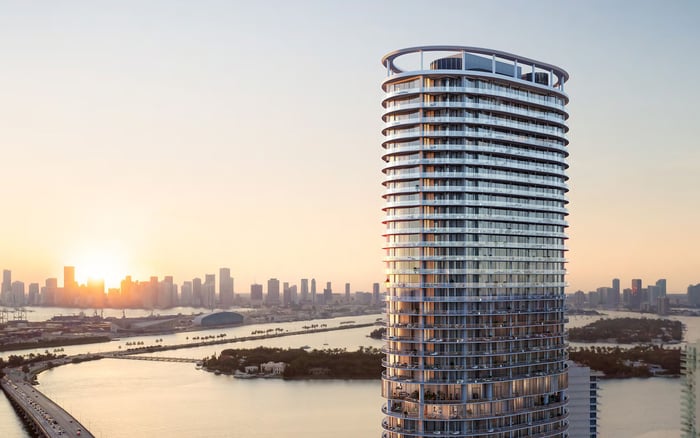
At Palazzo del Sol, operational due diligence should extend beyond the private elevator. Storage rights, delivery procedures, service circulation, staff access, renovations, and island contingencies all deserve written confirmation before a buyer commits.

At Palazzo del Sol, private elevator access is integral to an ultra-luxury residential experience defined by privacy, exclusivity, and discreet circulation. Yet buyers often focus on the elegance of arrival while overlooking the operational routes used by movers, household staff, contractors, grocery couriers, art handlers, and oversized deliveries.
That distinction matters even more on Fisher Island than in a mainland Miami Beach condominium. Every installation presents two logistical challenges: reaching the island and navigating the building. For an expansive residence with substantial terrace areas, the difference between a seamless move and a costly complication can come down to door clearances, reservation windows, staff credentials, and written association rules.
In the Palazzo del Sol Fisher Island resale market, these details should be treated as part of the asset, not as an afterthought. This is the practical dimension of lifestyle quality, and it belongs in any serious buyer's guide.
A buyer should not assume that a residence includes storage simply because the home is large or the building occupies the upper tier of the market. Confirm whether storage is deeded, assigned, licensed, or available separately, then identify its precise location and the document governing its use.
Size is only the beginning. Determine whether the space is climate controlled, whether it can accommodate humidity-sensitive possessions, how access is credentialed, and whether staff may enter without the owner present. Fine wine, archival clothing, sporting equipment, luggage, art crates, and seasonal furnishings each carry distinct requirements.
Storage dimensions, location, and climate conditions require confirmation through the condominium declaration, current rules, management, and physical inspection. Buyers comparing island options such as Palazzo della Luna should apply the same discipline to each property rather than presume neighboring buildings operate identically.
The private residential elevator and the service or freight elevator serve different purposes. Before ordering a monumental dining table, sculpture, custom millwork, gym equipment, or unusually deep seating, obtain the service elevator's interior cab dimensions, door width, load rating, and permitted operating hours. Each specification should be independently confirmed.
Measure the route from end to end. Loading access, service-entry doors, corridor turns, ceiling clearances, elevator thresholds, and the final approach to the residence can each become the limiting point. Confirm whether elevator padding is mandatory, who installs it, how far in advance reservations must be made, and whether deposits or damage waivers apply.
Private elevator access should not be interpreted as permission to move furniture through the resident arrival sequence. Buyers evaluating The Residences at Six Fisher Island can apply the same operational test: identify the formal routes for people, objects, and trades before judging convenience.
Package handling deserves close scrutiny in a household that regularly receives groceries, flowers, wardrobe shipments, design samples, and specialty goods. Ask about package-room capacity, notification procedures, storage duration, refrigeration for perishables, and the treatment of oversized or high-value items. Each arrangement should be confirmed in writing.
A useful delivery review follows an item from island arrival to the residence. Who authorizes entry? Where does a courier wait? May building staff accept the item? Is delivery to the residence available or required? What happens after hours? The answers can affect privacy as much as convenience.
The objective is discreet separation. Establish whether vendors can use dedicated service entrances and corridors without crossing primary resident-arrival areas. The same question applies when considering estate-style alternatives such as The Links Estates at Fisher Island, even if the operational framework differs.
Household employees need a clear access framework. Confirm credentialing, parking, loading, elevator use, service-corridor access, guest authorization, and after-hours entry. A principal, family office, or estate manager should understand who can issue credentials and how quickly permissions can be changed.
For move-ins, move-outs, and furniture installations, request the current written rules governing scheduling, elevator reservations, protective padding, deposits, insurance requirements, and contractor access. A verbal summary is no substitute for the operative documents.
Renovations demand even broader planning. Island transportation must be coordinated with building restrictions on work hours, materials, debris removal, contractor entry, and service-elevator use. Sequence deliveries before approving fabrication, particularly for pieces that cannot be disassembled or readily stored.
Due diligence should account for adverse conditions, not only a normal weekday. Ask how service elevators, stairs, loading areas, and island transportation function during storms, power interruptions, or ferry disruptions. Determine which procedures govern essential staff, pending deliveries, active construction, and items already in transit.
The goal is not to predict every interruption, but to establish responsibility, communication channels, and alternatives before they are needed. For a second home or remotely managed residence, provide written authority to a trusted representative and ensure management has current contact information.
Before closing, assemble a single file containing the declaration, current rules and regulations, storage documentation, service-elevator specifications, move procedures, contractor requirements, staff-access protocols, delivery policies, and emergency contacts. Then validate the paper trail through an on-site inspection.
Unit-specific rights and arrangements can differ and may change over time. The most polished residential experience rests on an equally polished operating system-one that protects privacy while allowing daily life to proceed without friction.
Does every Palazzo del Sol residence include storage? Buyers should verify unit-specific rights and determine whether storage is deeded or assigned.
Is the private elevator also used for furniture moves? Do not assume so. Confirm which elevator and circulation route management requires for movers and vendors.
What service-elevator specifications should a buyer request? Ask for cab dimensions, door width, load rating, operating hours, padding rules, and reservation procedures.
Are grocery deliveries refrigerated after arrival? Confirm the current procedure for refrigerated holding in writing.
How are oversized packages handled? Ask management where oversized items are received, how long they may remain, and how they reach the residence.
Can household staff enter after hours? Confirm credentialing, authorization, parking, loading, service access, and after-hours procedures for each staff member.
What documents govern move-ins and installations? Request current rules addressing scheduling, elevator reservations, protection, deposits, insurance, and contractor access.
Why should corridor separation matter? Separate service circulation can support privacy by reducing overlap between vendors and primary resident-arrival areas.
What should renovation planning include? Account for island access, work restrictions, materials, debris removal, contractor credentials, and service-elevator scheduling.
How should buyers prepare for disruptions? Confirm procedures for stairs, elevators, loading, island transportation, communications, and authorized representatives.
To compare the best-fit options with clarity, connect with MILLION.
If branded residences are on your mind — as a home or as an allocation — we would be glad to share what we are seeing, privately.
Begin a quiet conversation