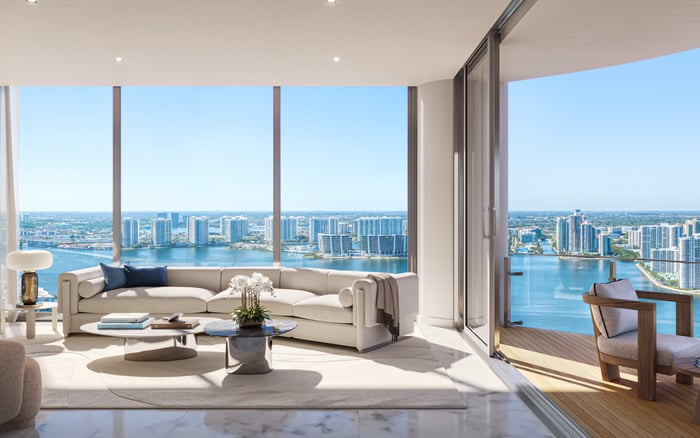
A discreet buyer’s guide to evaluating smart-lock protocols at St. Regis® Residences Sunny Isles, with emphasis on privacy, service access, administrator controls, and resale confidence.

At St. Regis® Residences Sunny Isles, the conversation around smart locks and digital access deserves the same scrutiny as views, finishes, amenities, and brand standards. In an ultra-luxury condominium, access is not simply the act of opening a door. It is a protocol that affects resident privacy, guest discretion, service delivery, emergency readiness, and future buyer confidence.
Sophisticated buyers are no longer satisfied with a general assurance that a building offers modern technology. They want to understand how the system behaves when a housekeeper arrives, when a valet coordinates with residence staff, when a guest credential expires, when a device is lost, or when ownership changes hands. For a Sunny Isles purchaser, the strength of the access protocol can become part of the broader trust that defines daily life in a high-service tower.
The key is not to assume that any particular lock, app, biometric reader, key card, PIN system, or access-control vendor is in place unless that detail is independently confirmed during the buyer’s diligence process. The stronger approach is to ask operational questions. A smart-lock system should be evaluated by what it permits, what it records, who can see it, how quickly access can be changed, and how gracefully the building balances service with discretion.
Privacy begins with data. Buyers should ask what access information is collected each time a resident, guest, staff member, or vendor enters a controlled area. Does the system create logs tied to a specific person, device, credential, residence, time, or door? Can management distinguish among residents, approved guests, building staff, valet, housekeeping, maintenance, and outside vendors? The answers matter because access logs can reveal patterns of occupancy, travel, guest movement, and household routines.
Retention is just as important as collection. A buyer should ask how long access records are kept, who may review them, and under what circumstances they may be exported, audited, or shared. A luxury building should not treat access data casually. The protocol should define administrative roles, review permissions, and escalation procedures with precision.
Guest access deserves particular scrutiny. In a high-service condominium, guests may include family, private chefs, personal assistants, drivers, stylists, security teams, contractors, and short-term visitors. Buyers should ask whether guest credentials can be time-limited, revoked instantly, and restricted to certain areas. They should also ask whether the system creates an audit trail that is useful without becoming intrusive. The ideal balance allows a resident to host effortlessly while preserving the quiet privacy that underpins oceanfront living in Sunny Isles Beach.
A branded-residence environment carries an elevated service expectation. Staff, valet, housekeeping, engineering, maintenance, and approved vendors may need controlled access to common areas, service corridors, amenity spaces, parking, package rooms, and, in certain cases, private residences. The access protocol should support that hospitality-oriented rhythm without making the private home feel operationally exposed.
Buyers should ask how service access is granted. Is it based on individual credentials rather than shared codes? Can permissions be limited by time, location, role, and task? Are former employees, vendors, contractors, guests, or owners deactivated promptly? A strong protocol should make it simple to remove one person or device without affecting every other resident or requiring broad system resets.
The most refined service environments are often the least visible. A resident should not need to manage every operational detail personally, yet the system should still provide clear boundaries. If housekeeping is approved for one window of time, the protocol should reflect that. If a vendor needs access to a mechanical area but not a residence, the permission structure should reflect that as well. Service should feel fluid, not vague.
Emergency override procedures also belong in this discussion. Buyers should ask who can authorize emergency access, how that access is logged, whether master credentials exist, and how overrides are reviewed afterward. In a luxury tower, safety and privacy must be designed to coexist.
Resale perception is increasingly tied to operational sophistication. A future purchaser may look beyond marble, ceiling heights, terraces, and amenity programming to ask how the building protects access, manages credentials, and updates technology. An elegant residence can lose confidence if the access system feels proprietary, outdated, poorly documented, or difficult to transfer at closing.
This is where investment thinking becomes practical. Buyers should ask whether the access system is upgradeable, whether it relies on a proprietary platform, how long it is expected to be supported, and whether the condominium’s long-term technology budget addresses replacements or major updates. In a new-construction setting, it is easy to focus on the opening-day experience. The better question is how the system will age five, ten, or more years into ownership.
Transferability is another important resale issue. At closing, can the outgoing owner’s credentials, devices, guest permissions, and app associations be fully removed? Can the incoming owner receive clean access without inheriting old permissions? Are staff and vendor authorizations reviewed when a residence changes hands? A buyer wants the transition to be elegant, complete, and verifiable.
For ultra-luxury buyers, confidence often comes from governance as much as hardware. Board policies, management-company protocols, administrator rights, audit practices, and emergency procedures all influence how the system is perceived. In a competitive South Florida market, privacy and operational control should feel intentional rather than improvised.
The most effective diligence conversation starts with clear questions. Ask what types of credentials are supported, such as mobile access, cards, PINs, mechanical keys, biometrics, or some combination. Ask whether each method carries the same level of permission and whether residents can choose preferred options without weakening building security.
Ask who holds administrator privileges. This includes building management, security leadership, engineering staff, the management company, board-authorized representatives, and any external technology administrators. Buyers should understand whether privileges are tiered, monitored, and reviewed. No access system should depend on informal trust alone.
Ask how credentials are revoked. Lost phones, former household staff, former guests, contractors, and prior owners should be removed cleanly. Revocation should be fast, targeted, and documented. The best systems are not only convenient when granting access; they are disciplined when ending it.
Ask how private residence access differs from common-area access. Lobby, elevator, amenity, garage, service, and residence permissions should not be treated as interchangeable. The protocol should be granular enough to match the building’s service culture.
Finally, ask how access data is handled in disputes, emergencies, maintenance events, and ownership transfers. The answer should be clear enough that a purchaser can understand the building’s philosophy: discretion first, service close behind, and technology as the quiet infrastructure that supports both.
Should buyers assume St. Regis® Residences Sunny Isles uses a specific smart-lock vendor? No. Buyers should confirm any specific vendor, app, lock type, or biometric feature through direct diligence rather than assumption.
What is the first privacy question to ask? Ask what access data is collected, who can view it, how long it is retained, and whether it identifies residents, guests, staff, or vendors.
Why do guest credentials matter in a luxury condominium? Guest access should be easy to delegate, time-limit, revoke, and audit without exposing broader household routines.
How should service staff access be evaluated? Buyers should ask whether staff, valet, housekeeping, maintenance, and vendors receive individual, role-based credentials with limited permissions.
What are administrator privileges? They are the elevated rights that allow certain people to issue, change, review, or revoke access credentials.
Why are emergency overrides important? Emergency access can be essential, but buyers should understand who authorizes it, how it is logged, and how it is reviewed.
Can smart-lock protocols influence resale? Yes. Future buyers may value systems that are transferable, upgradeable, well governed, and clearly documented.
What should happen when ownership changes? Prior credentials, guest permissions, devices, and app associations should be removed so the new owner begins with clean access.
Do these questions apply to other branded residences in South Florida? Yes. Buyers comparing Sunny Isles with other branded projects, including St. Regis® Residences Brickell, can use the same privacy, service, and resale framework.
What is the best way to shortlist comparable options for touring? Start with location fit, delivery status, and daily lifestyle priorities, then compare stacks and elevations to validate views and privacy.
For a tailored shortlist and next-step guidance, connect with MILLION.
If branded residences are on your mind — as a home or as an allocation — we would be glad to share what we are seeing, privately.
Begin a quiet conversation