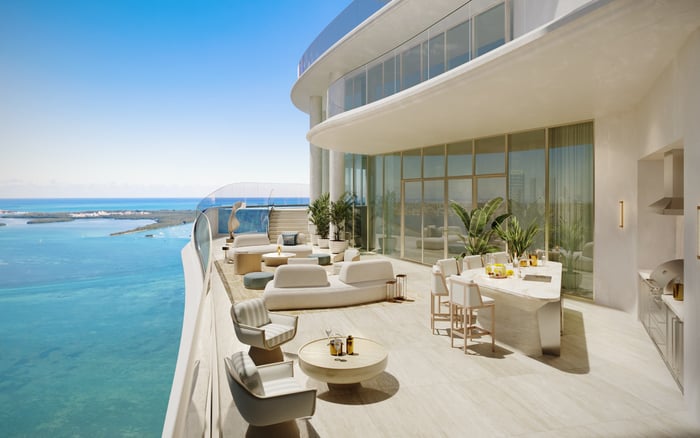
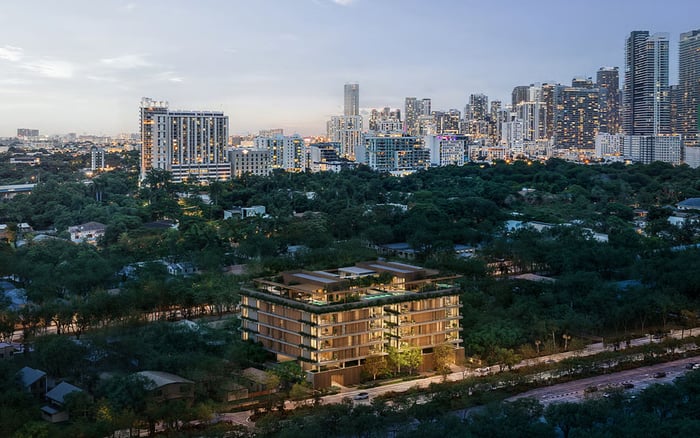
A buyer-focused comparison of St. Regis® Residences Brickell and Delano Residences & Hotel Miami through the lens of wellness credibility, indoor environment, privacy, and daily recovery.
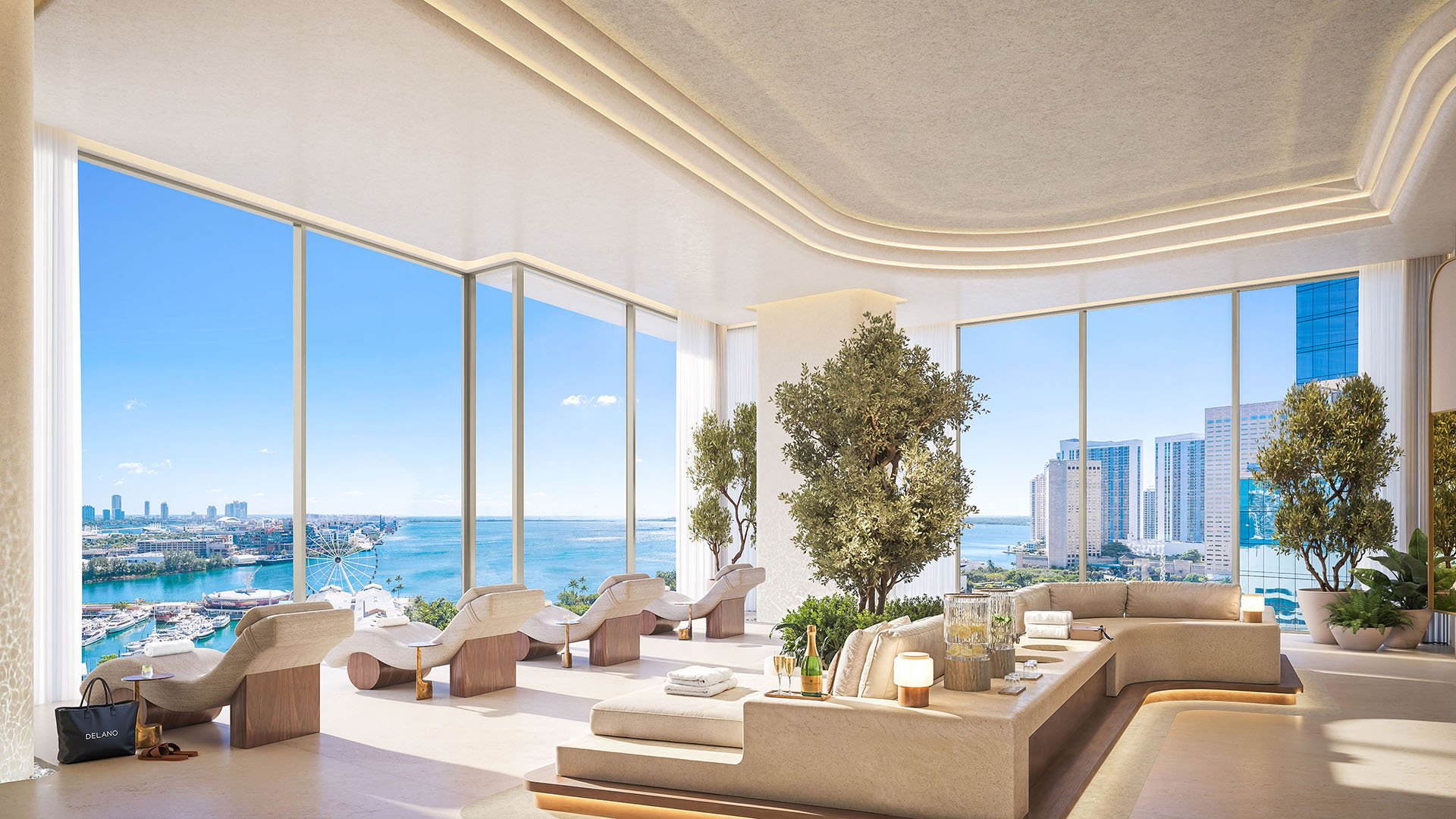
For South Florida’s most discerning buyers, wellness has moved beyond spa imagery and brand language. The real test is daily performance: how quietly a building lives, how reliably it supports rest, how cleanly it separates private routines from social energy, and whether its indoor environment can be understood through specifications rather than mood.
That is the sharper lens for comparing St. Regis® Residences Brickell with Delano Residences & Hotel Miami. Both names carry luxury recognition, but recognition is not the same as residential wellness. A buyer choosing between them should resist allowing hospitality cachet to become shorthand for recovery quality. The question is not which brand sounds more indulgent. It is which address can support the buyer’s actual rhythm after work, travel, training, entertaining, and long Miami days.
Within this comparison, St. Regis® Residences Brickell reads as the more controlled, urban, privacy-oriented proposition. It is framed less as a beach escape and more as a vertical resort in the city core, with a wellness case grounded in predictability, discretion, and repeatable use. Delano Residences & Hotel Miami, by contrast, should be evaluated through its disclosed residential and hotel operating details, particularly before making assumptions about air quality, recovery spaces, or the experience of daily quiet.
The most compelling argument for St. Regis® Residences Brickell is not simply the name on the building. It is the building logic. In Brickell, the project is positioned for buyers who want urban access without surrendering a controlled private environment. That distinction matters for executives, international owners, and high-intensity city users who need the residence to function as a reliable reset point.
Its wellness appeal is therefore less about beachfront environmental romance and more about operational discipline. A full-time resident moving between meetings, flights, private dining, and family obligations may value a calmer in-building experience over a more socially animated resort rhythm. In that sense, St. Regis® Residences Brickell is best understood as a residential sanctuary within an urban setting, not a seasonal backdrop.
This is especially relevant for buyers comparing New-construction and Pre-construction offerings across Miami. The market is full of wellness vocabulary, but the strongest buildings are judged by repetition. Can the owner return at 7 p.m. and decompress without friction? Are amenities structured for actual use rather than occasional display? Does the arrival sequence feel private? Does the building support a weekly rhythm, not just a weekend impression?
For St. Regis® Residences Brickell, the answer is tied to controlled daily routines. The project’s Brickell context makes it city-centered, yet its appeal depends on removing as much residential unpredictability as possible once the owner is inside the building.
Delano Residences & Hotel Miami requires a more forensic buyer approach. A hospitality identity can be attractive, particularly for those who enjoy a branded lifestyle and hotel-level energy. But for wellness-focused ownership, the buyer should separate lifestyle appeal from measurable residential conditions.
The key is not to assume that a hotel-residence environment automatically improves or weakens wellness. It may offer services and atmosphere that certain buyers prize, but the operational model must be understood in detail. How are private residential areas separated from public or hotel-facing experiences? What is the arrival pattern? Where are quiet recovery zones located? How does the building manage noise, circulation, and amenity access?
These questions are not skeptical for the sake of being skeptical. They are the correct due diligence for a buyer whose definition of luxury includes sleep, privacy, and low-friction recovery. Delano may prove compelling for a buyer who wants the sensation of a branded Miami hospitality environment, but the decision should rest on verified building specifics, not inherited associations.
Air quality is one of the easiest wellness topics to romanticize and one of the hardest to evaluate casually. A beautiful lobby, a water view, or a famous name does not answer the technical questions that matter. Buyers should ask for specifics on filtration, fresh-air strategy, humidity management, ventilation design, and how systems perform in private residences as distinct from shared amenity areas.
This is particularly important in Miami, where comfort is inseparable from cooling, moisture control, and indoor consistency. The best residence is not necessarily the one with the most evocative wellness language. It is the one whose indoor environment can be explained clearly and maintained predictably.
For St. Regis® Residences Brickell, the wellness case available here is based more on controlled building experience than on environmental claims tied to the coast or open-air resort living. That distinction matters. Buyers choosing Brickell are typically not buying a beachfront premise. They are buying access, privacy, and the possibility of a highly managed interior world.
For Delano Residences & Hotel Miami, the same standard should apply. A buyer should request project-level documentation rather than infer air quality benefits from location, branding, or hospitality imagery. In the ultra-premium market, credible wellness is documented, not implied.
Recovery is not only about the spa. It begins with the path from car to residence, the quiet of the elevator experience, the way amenities are accessed, and whether an owner can use the building without performing for it. In that respect, privacy is a wellness amenity.
St. Regis® Residences Brickell is positioned as the stronger fit for buyers who want calmer in-building living over beachfront social energy. That does not make it universally superior. It makes it more legible for a specific buyer profile: someone who wants an urban address that can absorb the intensity of Miami rather than amplify it.
Pool areas, fitness rooms, treatment spaces, lounges, and terraces should all be assessed by how they behave at peak times. A dramatic amenity that feels crowded or exposed may be less valuable than a quieter space that can be used consistently. High floors may appeal to buyers seeking separation from street activity, but elevation alone is not a substitute for acoustic planning, elevator privacy, and controlled amenity flow.
The deeper point is that wellness credibility is cumulative. No single feature proves it. It emerges from the relationship between design, operations, circulation, staffing, and resident behavior.
The St. Regis® Residences Brickell buyer is likely to value predictability. This owner may live in Miami full-time or use the residence often enough that operational calm matters. Brickell is not incidental to the decision. It is the setting for a highly urban life, where the home must provide contrast to the city without disconnecting from it.
The Delano buyer may be more drawn to a hospitality-forward identity, depending on the specific residential program and building operations. That can be powerful for an owner who wants service, atmosphere, and a recognizable Miami lifestyle. Yet the wellness-minded buyer should still ask whether the day-to-day experience supports sleep, privacy, and recovery as effectively as it supports arrival drama.
For MILLION readers, the smartest comparison is not brand versus brand. It is use case versus use case. If the priority is an urban private base with a controlled daily cadence, St. Regis® Residences Brickell has the clearer wellness narrative. If the priority is a branded hospitality environment, Delano deserves consideration only after its operational details are tested against the same standards.
Is St. Regis® Residences Brickell the more wellness-oriented choice? It is the clearer fit for buyers prioritizing privacy, controlled routines, and urban recovery. Its wellness case is tied to operational calm rather than beachfront assumptions.
Does the St. Regis® name alone prove wellness quality? No. Brand prestige should be secondary to privacy, noise control, indoor environment, amenity usability, and daily residential flow.
How should buyers evaluate Delano Residences & Hotel Miami? Buyers should review the specific residential and hotel operating details before drawing conclusions. Air quality, quiet, and recovery spaces should be assessed through disclosed building information.
Is Brickell a good fit for wellness-focused buyers? Brickell can work well for buyers who want city access paired with a private retreat. The key is whether the building provides enough calm to counterbalance the urban setting.
What matters most for air quality in a luxury residence? Filtration, ventilation, humidity control, and system performance matter more than imagery or branding. Buyers should seek clear technical explanations.
Are hotel-residence buildings less private by definition? Not necessarily. The determining factors are circulation, access control, amenity separation, and how residential areas are operated.
Who is the ideal St. Regis® Residences Brickell buyer? It suits a high-intensity urban user who wants a predictable recovery environment after work, travel, or city activity. Full-time or frequent use strengthens the logic.
Should buyers prioritize spa amenities? Spa amenities are valuable, but they are only one part of recovery. Quiet arrival, acoustic comfort, and private amenity access can be equally important.
Is a beachfront setting automatically better for wellness? No. A beachfront address may be appealing, but wellness depends on how the building manages privacy, air, sound, and resident routines.
What is the simplest way to choose between these two concepts? Choose the building that best supports your real weekly rhythm, not the one with the most persuasive branding. Daily use is the ultimate test.
For a tailored shortlist and next-step guidance, connect with MILLION.
If branded residences are on your mind — as a home or as an allocation — we would be glad to share what we are seeing, privately.
Begin a quiet conversation