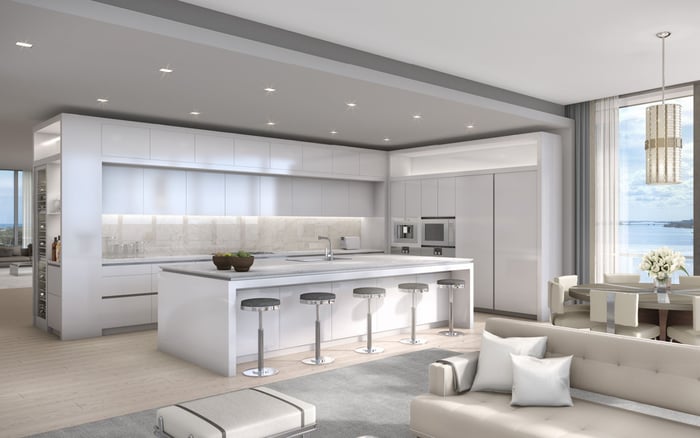
A buyer-oriented comparison of St. Regis® Residences Bahia Mar Fort Lauderdale and Shell Bay by Auberge Hallandale through the practical lens of balcony governance, outdoor kitchen usability, and terrace weather resilience.
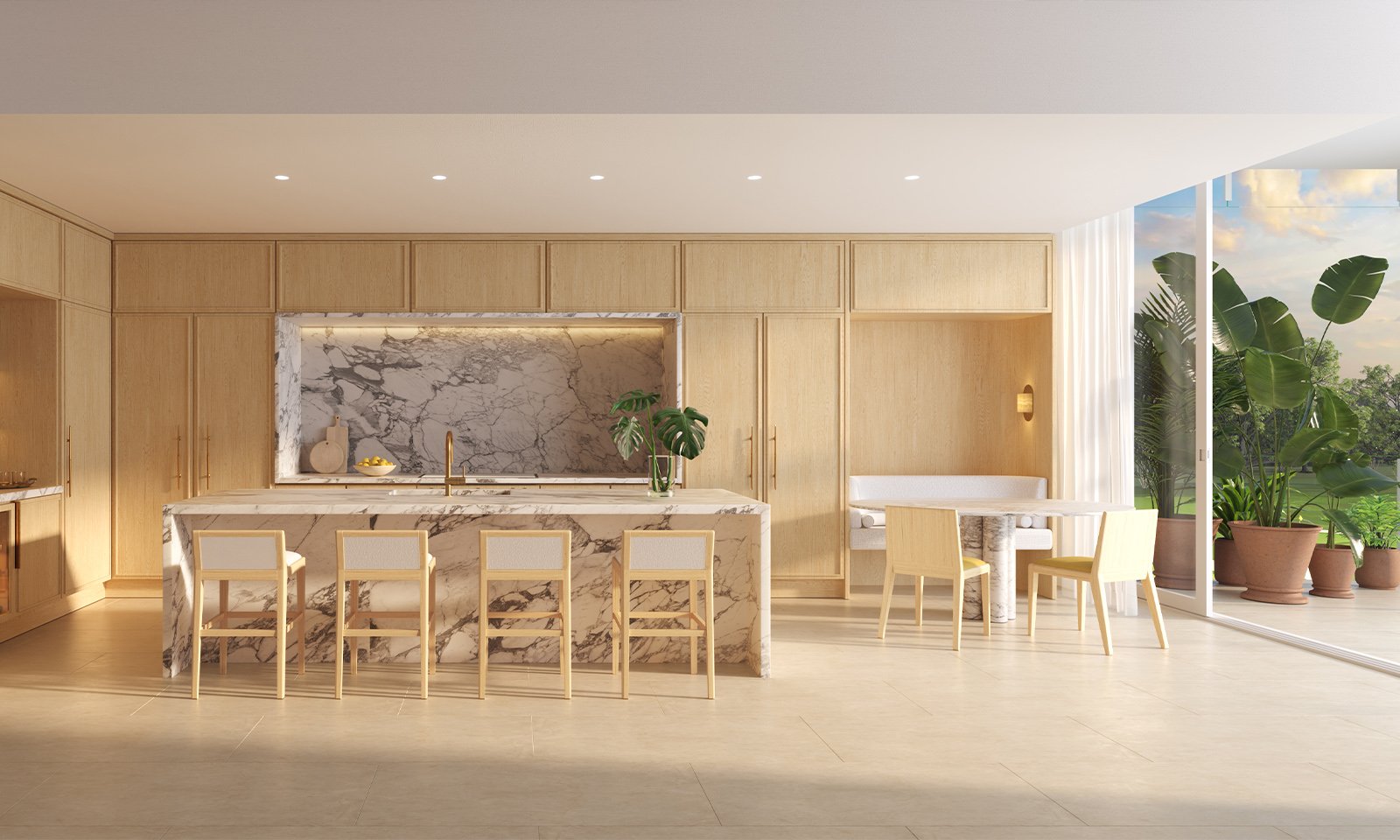
For the ultra-prime South Florida buyer, terrace square footage is only the opening line. The more consequential question is what that outdoor space will permit, withstand, and preserve over time. That is the useful lens for comparing St. Regis® Residences Bahia Mar Fort Lauderdale with Shell Bay by Auberge Hallandale. Both belong in the branded-residence conversation, yet a 2026 buyer should resist evaluating them only by view, finish palette, or amenity narrative.
The sharper test is practical. Can the balcony accommodate the way you intend to live? Can an outdoor kitchen be used without colliding with building rules, life-safety restrictions, neighbor sensitivities, or maintenance realities? Can the terrace perform through salt air, humidity, wind-driven rain, intense sun, and seasonal storm preparation without becoming a decorative liability?
This is not a small distinction. In Broward’s luxury market, the outdoor room has become a private theater for morning coffee, family dinners, sunset entertaining, and quiet work calls. But the best terrace is not simply expansive. It is one whose rules and weather tolerance align with the owner’s actual habits.
A balcony can feel like private territory, but in a condominium environment it is often governed by a layered set of documents. A buyer comparing Fort Lauderdale and Hallandale should ask for clarity before contract confidence becomes design assumption. The relevant questions are straightforward: what furniture is allowed, what storage is prohibited, whether planters require approval, whether rugs or umbrellas are restricted, and how storm preparation is enforced.
The distinction matters because a terrace staged during a sales presentation may not reflect the full range of post-closing limitations. A dining table might be acceptable, while a large canopy is not. A sculptural planter may require specific drainage protection. A pet relief solution may be prohibited. A buyer who expects the terrace to function as a second living room should treat the house rules as carefully as the floor plan.
For St. Regis® Residences Bahia Mar Fort Lauderdale, the buyer’s task is to understand how the residence’s balcony standards shape a waterfront lifestyle. For Shell Bay by Auberge Hallandale, the question is similar but not identical: how does the building’s governance translate outdoor elegance into daily permission? The answer is found not in adjectives, but in the exact rules that regulate use.
Outdoor kitchens are among the most emotionally persuasive features in South Florida luxury property. They suggest ease, sociability, and a kind of resort living that begins at home. Yet they are also among the most rule-sensitive elements of a terrace. Before assigning value to any outdoor cooking area, a buyer should confirm whether cooking is permitted, whether equipment must be built in, whether fuel types are limited, and whether ventilation, fire suppression, electrical service, and access requirements are fully addressed.
The phrase outdoor kitchen can mean very different things. In one context, it may imply a true cooking station. In another, it may mean cabinetry, refrigeration, a sink, and serving space without open-flame cooking. The valuation difference can be significant for an owner who entertains frequently. It can also shape how a residence competes in resale conversations, because buyers tend to remember whether the terrace supports hospitality or merely suggests it.
Maintenance deserves equal attention. Salt air can test hardware, hinges, appliance finishes, stone surfaces, and cabinetry. Drainage must be intentional. Electrical components must be appropriate for exterior exposure. A beautiful installation that requires constant intervention is not luxury. It is friction dressed in a premium finish.
A terrace in South Florida is a climate interface. The most sophisticated buyers understand that comfort is not only about view orientation or depth. It is about shade, wind behavior, railing design, water management, thresholds, flooring grip, furniture anchoring, and the ease of preparing for severe weather. These details rarely carry the romance of a sunset rendering, but they often determine whether an owner uses the space every week or only when conditions are ideal.
A 2026 buyer should ask how the terrace drains after heavy rain, whether water migrates toward door systems, how exterior flooring performs when wet, and whether furniture can be secured or stored without burden. The terrace should also be studied at different times of day if possible. Morning glare, afternoon heat, and evening breezes can change the experience of the same square footage.
The most resilient outdoor spaces feel effortless because the hard work has been absorbed into planning. Door tracks sit with intention. Materials are chosen for exposure, not showroom fragility. Outdoor lighting is useful without being harsh. Railings preserve views while respecting wind. These are not incidental construction details. They are the grammar of long-term livability.
The comparison between St. Regis® Residences Bahia Mar Fort Lauderdale and Shell Bay by Auberge Hallandale is not only architectural. It is also behavioral. A buyer should ask where the terrace will fit into daily life: morning routine, weekend hosting, family overflow, visiting guests, or seasonal residence patterns. The answer can shift the decision more than a modest difference in interior finish.
Fort Lauderdale buyers may place particular emphasis on a sense of coastal ease, access to established city rhythms, and a residence that feels connected to a broader waterfront lifestyle. Hallandale buyers may frame the decision through privacy, resort atmosphere, and a more contained residential cadence. Those are not universal truths, and each buyer will weigh them differently, but they help clarify the larger question: is the terrace meant to be a social platform, a private retreat, or a flexible outdoor extension of the interior rooms?
This is where the nameplate matters, but only after the rules are known. A branded residence can imply service culture, design discipline, and elevated common-area expectations. It cannot, by itself, guarantee that a balcony will accommodate every owner’s preferred way of cooking, furnishing, planting, or entertaining.
The strongest buyer conversations are specific. Ask for the governing documents that address balcony use. Ask whether outdoor cooking is permitted and under what conditions. Ask how storm-related furniture removal is handled. Ask whether there are restrictions on exterior décor, shade devices, lighting, audio, planters, pets, or storage. Ask who maintains key terrace components and where owner responsibility begins.
A buyer should also request clarity on alteration approvals. If a future owner wants to upgrade terrace cabinetry, add approved furniture systems, change lighting, or install planters, the review pathway matters. A slow or ambiguous approval process can reduce the usefulness of an otherwise desirable space.
Finally, evaluate resale language. If a residence is likely to be marketed later as an indoor-outdoor home, the outdoor area must withstand scrutiny. Buyers at this level will ask whether the terrace is usable, not just photogenic. They will distinguish between a balcony that supports living and a balcony that serves as scenery.
There is no universal winner between St. Regis® Residences Bahia Mar Fort Lauderdale and Shell Bay by Auberge Hallandale when the question is balcony rules, outdoor kitchens, and weather tolerance. The better choice is the one whose documents, design, exposure, and operating culture match the buyer’s actual outdoor life.
For the owner who entertains often, outdoor kitchen permission may outrank a slightly larger terrace. For the seasonal resident, storm preparation and furniture storage may matter more than built-in appliances. For the design purist, exterior material resilience may be the decisive feature. For the privacy-driven buyer, adjacency, sightlines, and acoustic behavior may be the hidden premium.
The disciplined approach is to treat the terrace as a functional room with its own governance, infrastructure, and climate burden. Once that is understood, the emotional decision becomes more reliable. The view may sell the dream, but the rules and weather tolerance determine the ownership experience.
Why are balcony rules so important in a luxury condo purchase? They determine how the outdoor space may actually be used, furnished, decorated, and prepared for storms.
Should buyers assume outdoor kitchens are always permitted? No. Buyers should confirm cooking permissions, fuel restrictions, ventilation needs, and building approvals before assigning value.
What is the key difference between balcony size and balcony utility? Size measures area, while utility reflects rules, exposure, drainage, comfort, and usable daily function.
How should a buyer compare St. Regis® Residences Bahia Mar Fort Lauderdale and Shell Bay by Auberge Hallandale? Compare the documents, terrace design, outdoor cooking rules, weather exposure, and lifestyle fit rather than relying on brand prestige alone.
What terrace materials deserve special scrutiny in South Florida? Exterior flooring, cabinetry, appliance finishes, hardware, lighting, and drainage systems should be evaluated for heat, salt air, and humidity.
Can planters, umbrellas, or exterior furniture be restricted? Yes. Many condominium settings regulate balcony objects for appearance, safety, drainage, wind, and maintenance reasons.
Why does storm preparation affect terrace value? A terrace that is easy to secure and restore is more livable, especially for seasonal owners or frequent travelers.
Is Hallandale different from Fort Lauderdale for outdoor living? The lifestyle cadence can differ, so buyers should evaluate privacy, access, views, service culture, and daily use patterns.
Should terrace approvals be reviewed before contract signing? Yes. Approval requirements can affect future upgrades, furnishings, lighting, outdoor kitchen changes, and resale positioning.
What is the simplest buyer test for a terrace residence? Ask whether the terrace can support the way you live on a normal week, not only how it looks during a showing.
For a discreet conversation and a curated building-by-building shortlist, connect with MILLION.
If branded residences are on your mind — as a home or as an allocation — we would be glad to share what we are seeing, privately.
Begin a quiet conversation