South Beach offers a clear proximity argument for Miami Beach Marina, while Surfside introduces a northern charter alternative. For private aviation, chauffeur logistics, and seasonal travel, the more revealing comparison is between exact addresses, departure points, and the hours an owner actually travels.
The distinction between South Beach and Surfside becomes clearer when the conversation moves from the view to the departure. Where is the yacht actually berthed? Which private-aviation terminal does the household use? What happens between leaving the apartment and settling into the car? For an owner dividing time among residences, these details deserve as much attention as architecture and service.
The clearest distinction is specific: South Beach offers proximity to Miami Beach Marina. Surfside introduces a northern charter alternative that may suit certain itineraries. Neither establishes a universal winner, particularly for private aviation. The useful comparison is not neighborhood against neighborhood in the abstract, but residence, departure point, and travel window considered together.
Miami Beach Marina sits at 300 Alton Road, at the southern tip of South Beach. Direct access to Government Cut and open Biscayne Bay makes the location particularly relevant for owners whose boating routine begins there. The marina also provides water access to the Atlantic Ocean, Intracoastal Waterway, Miami River, and Florida Keys.
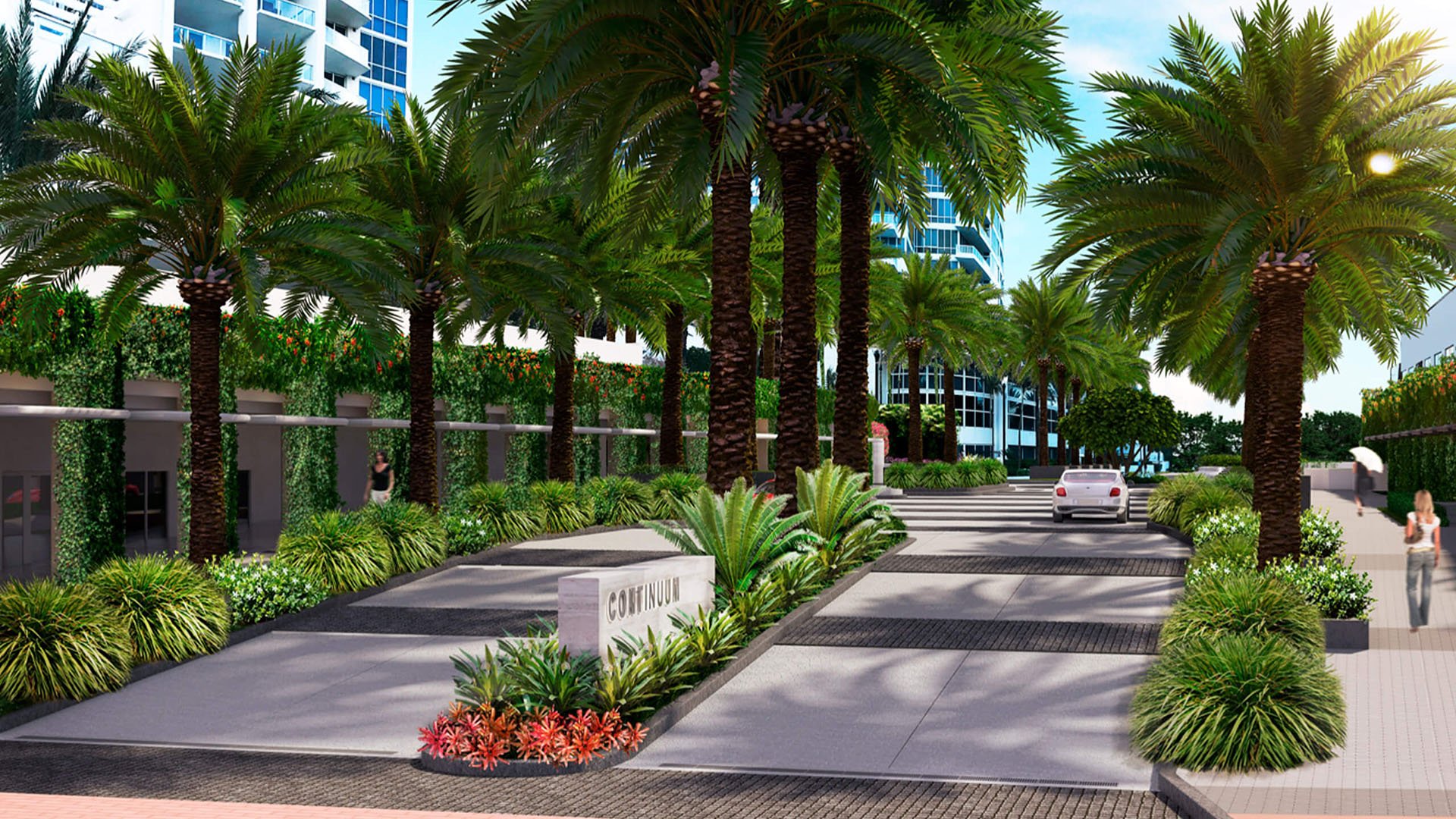
For a buyer considering Apogee South Beach, that geography is a useful starting point for due diligence, not a substitute for testing the journey. The same applies when evaluating Continuum on South Beach: establish the actual pickup location, dock destination, and boarding procedure before assigning a convenience premium to the address.
The marina offers 400 wet slips and accommodation for vessels up to 250 feet. Those figures describe its overall offering, not a promise that a particular yacht can secure a suitable berth. Draft, beam, availability, bridge clearance along the intended route, fuel arrangements, and crew requirements should all be confirmed independently.
Dock assistance includes help entering and leaving slips, as well as moving groceries, luggage, and other items between land and yacht. An on-site deli offers provisioning. These services matter because a short drive is only one part of departure. Confirm how assistance will work for your vessel and schedule rather than assuming every handoff is automatic.
Surfside should not be assessed solely by the journey to a South Beach dock. An indicative road estimate places Surfside approximately 25-35 minutes from Miami Beach Marina. That is a planning range, not a guaranteed transfer time, and it excludes loading, dockside movement, and preparations before departure.
Pelican Harbor Marina at 79th Street offers another possibility, approximately 10-15 minutes south of Surfside for charters heading toward Biscayne Bay or the Venetian Islands. It is worth investigating for suitable charter plans, but should not be treated as an interchangeable substitute for an established yacht berth elsewhere.
A buyer weighing Arte Surfside should therefore define the boating routine first. Regular departures from a yacht kept at Miami Beach Marina present a different decision from occasional charters arranged around a northern departure point. The practical advantage lies in the combination of residence and boating arrangement, not simply the shorter line on a map.
Miami-Opa-locka Executive Airport, or OPF, is a relevant reference point. Indicative estimates place the drive from OPF to Miami Beach or South Beach at 20-30 minutes in normal traffic. A separate planning range puts OPF to South Beach at 20-25 minutes outside rush hour and approximately 45 minutes during Friday’s 3-7 p.m. peak.
Treat these as road estimates, not complete aircraft-to-residence durations. Averaging them would create a false impression of precision. Test the journey between the actual fixed-base operator, or FBO, pickup point and the residential entrance, accounting for the household’s luggage and passenger requirements.
There is no sound basis here for declaring either South Beach or Surfside the private-aviation winner. Comparable OPF-to-Surfside timings are not established. For buyers considering The Surf Club Four Seasons Surfside, the useful next step is a route trial from the exact terminal at the expected arrival hour, conducted on the same basis as any South Beach alternative.
For flexible Friday schedules, arriving before 2 p.m. or after 7 p.m. is an option intended to reduce exposure to peak ground congestion. It remains a scheduling consideration, not a guarantee of a clear journey.
Evaluate a chauffeur arrangement as a sequence of handoffs. Ask where the vehicle may wait, how the driver is notified, where luggage is loaded, and what happens when several vehicles arrive together. Confirm whether an early driver can remain on site and how the building handles a change in pickup time.
These are property-specific questions, not established neighborhood advantages. Surfside should not automatically be credited with easier staging, quieter arrivals, or better curb access. Nor should a South Beach address be assumed to deliver effortless boarding merely because the destination is nearby.
During a viewing, rehearse a representative departure with the people who would manage it. Record apartment-to-car time separately from road time. That distinction sharpens the comparison and reveals which details require coordination with building staff or the driver.
The quantified congestion guidance concerns ordinary rush hours and Friday travel. I-95 peak periods of 7-9 a.m. and 5-7 p.m. can add an estimated 15-25 minutes to southbound routes. Those figures should not be converted into a fixed seasonal penalty or applied indiscriminately to every journey.
Seasonal residence decisions still warrant calendar-specific testing. Repeat the exact residence-to-dock and residence-to-FBO routes during the periods you expect to occupy the home, including Friday afternoons and relevant major-event weekends. Record both directions rather than assuming arrival and departure times will match.
The aim is not to identify one impressive best-case time. It is to establish a workable range for the trips that matter, then decide how much scheduling flexibility the household is prepared to retain.
For frequent departures from Miami Beach Marina, South Beach has the clearest proximity advantage. For Surfside buyers whose charter plans can use Pelican Harbor, the northern alternative deserves consideration. For private aviation and chauffeur logistics, keep the verdict open until exact routes and building procedures have been tested.
Before committing, assemble a simple journey record: residence entrance, confirmed dock or FBO, usual travel window, observed road time, and a separate allowance for loading and boarding. Validate vessel requirements with the marina and pickup procedures with the building. The most convincing residence is the one whose everyday logistics support the life you intend to lead.
Explore residences aligned with your South Florida routine with MILLION.
If branded residences are on your mind — as a home or as an allocation — we would be glad to share what we are seeing, privately.
Begin a quiet conversationIts proximity to Miami Beach Marina is the strongest demonstrated advantage, especially for owners whose boating routine begins at that marina.
Miami Beach Marina is at 300 Alton Road, at the southern tip of South Beach. It offers direct access to Government Cut and open Biscayne Bay.
No. Its 400 wet slips and advertised accommodation for vessels up to 250 feet do not establish availability or suitability for a particular yacht.
An indicative commercial estimate is 25–35 minutes. It is not guaranteed and excludes loading, dockside movement, and departure preparations.
Pelican Harbor Marina at 79th Street is estimated to be approximately 10–15 minutes south of Surfside for charters toward Biscayne Bay or the Venetian Islands.
Commercial estimates suggest approximately 20–30 minutes in normal traffic, with a separate estimate reaching approximately 45 minutes during Friday’s 3–7 p.m. peak. These are road times, not complete aircraft-to-residence durations.
No airport-access winner is established because comparable OPF-to-Surfside timings are not available here. Test the exact FBO-to-residence routes at your usual travel hours.
Confirm vehicle waiting arrangements, driver notification, luggage loading, and procedures for simultaneous arrivals. Assess these at the individual building rather than assuming a neighborhood advantage.
No. The quantified guidance concerns ordinary rush hours and Friday congestion, not a measured seasonal or major-event comparison.
Test exact residence-to-dock and residence-to-FBO journeys during typical travel windows, including Friday afternoons and relevant major-event weekends. Record loading and boarding allowances separately from driving time.