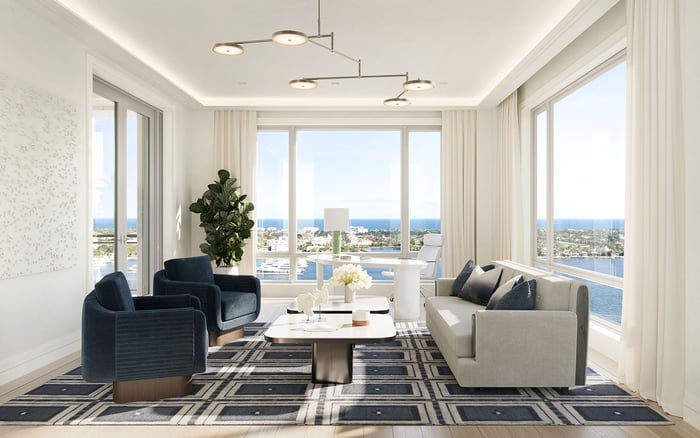
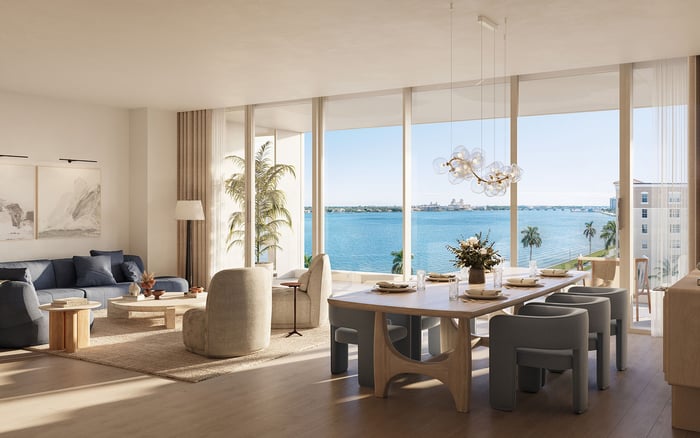
The Bristol Palm Beach offers separate owner and service elevators, chef’s kitchens, and private dining amenities. For buyers who entertain, the decisive review concerns ventilation, vendor access, and written coordination of event spaces and service routes.
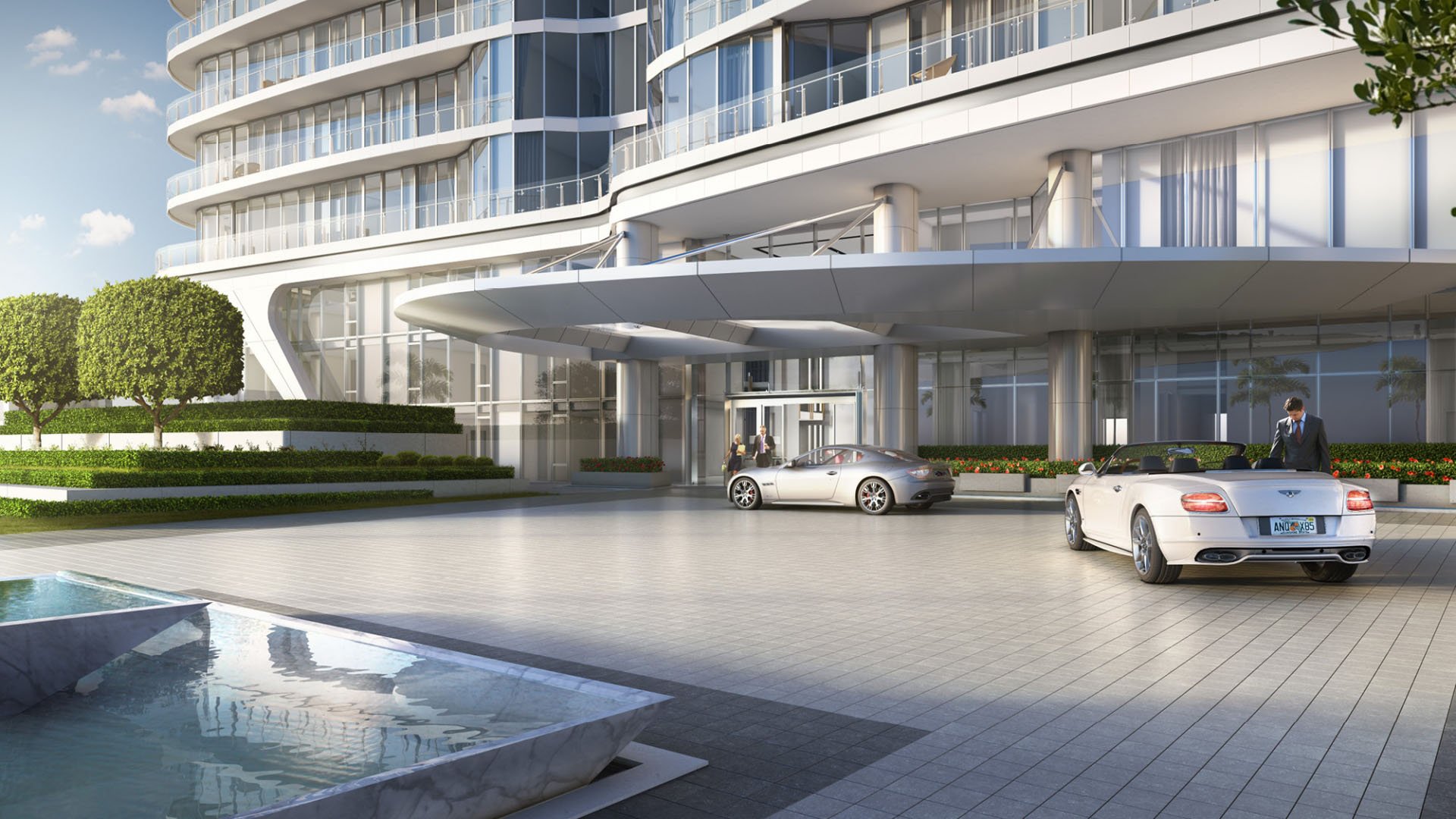
For an owner who entertains with a private chef, luxury is measured partly by what guests never notice: provisions arriving, staff moving discreetly, and equipment leaving quietly. At The Bristol Palm Beach, the advertised separation of owner and service circulation is a meaningful starting point. It does not, by itself, establish how a dinner or catered reception will operate.
The address is 1100 South Flagler Drive, West Palm Beach, on the Intracoastal Waterway-not Palm Beach Island. The building is described as 25 stories with 69 residences. Flow-through layouts offer east-facing views toward the ocean and Palm Beach Island, with west-facing views toward the downtown skyline.
Those qualities establish the setting. An ownership review must then distinguish physical features from operating permissions. Separate elevators, a catering kitchen, and concierge service are relevant advantages; ventilation performance and event procedures require their own examination.
The residences are described as having chef’s kitchens. That designation does not confirm external exhaust, commercial-grade ventilation, a secondary kitchen, or permission for high-heat cooking. For a buyer whose chef regularly sears, fries, or prepares several courses simultaneously, the installation matters more than the label.
Begin with the kitchen in the residence under consideration. Ask a qualified professional to establish where the hood discharges, how make-up air is addressed, and whether the ventilation arrangement suits the intended cooking. Review appliance loads and ask management about cooking-equipment restrictions. A visual inspection is no substitute for understanding the system.
If the household’s intended routine requires different appliances or exhaust modifications, obtain the alteration guidelines before assuming an upgrade is possible. Ask which changes require association approval and what documentation is needed. These are due-diligence questions, not statements of Bristol policy.
Next, have the buyer’s chef review the kitchen against a representative menu. This turns an abstract specification review into a practical assessment of preparation, cooking, holding, and service.
Private elevators open directly into each residence, while separate service elevators are advertised for staff and deliveries. The distinction is central to ownership: owner arrival and service movement have separate infrastructure.
Access in practice still needs to be established. Request service-elevator dimensions and capacity, permitted delivery windows, reservation procedures, and any padding requirements. Ask how recurring household staff are registered and whether caterers follow a different process. Confirm insurance requirements before engaging vendors.
The scheduling review should cover the full event cycle, not just the first delivery. Equipment may arrive before food, staff may arrive separately, and removal may continue after guests depart. Ask management whether setup and breakdown require distinct time allocations and how competing service requests are handled.
For a buyer also considering Forté on Flagler West Palm Beach, these questions offer a useful comparison framework. They do not imply equivalent elevator arrangements or access policies between properties.
The advertised amenities include a club lounge with a catering kitchen and a separate dining area. The private dining room overlooks the Intracoastal and is expressly presented as a setting for meals prepared by an owner’s private chef. That distinction matters to buyers who want to entertain outside their residence.
Still, the name “catering kitchen” establishes neither its equipment nor its permitted uses. Obtain an inventory and ask what is available for refrigeration, preparation, dishwashing, and holding food before service. Clarify whether portable cooking equipment is permitted and how food may be transported between preparation and dining areas.
Request written guidance on waste disposal and cleanup responsibilities. Establish who removes packaging, where used serviceware is handled, and when the space must be returned to its required condition.
Most importantly, ask whether the dining space, loading access, and service elevator require separate reservations. A room booking does not confirm that every supporting service has been arranged.
Full-time concierge service, 24-hour front-desk staff and security, valet service, and a scheduled house car are advertised. These services matter to daily ownership, but their presence does not establish that staff will manage a catered event or guarantee vendor access.
Ask management to identify the appropriate contact for each stage: vendor registration, arrival, elevator use, amenity access, and final collection. Clarify which responsibilities remain with the owner or caterer. A single written event plan can reveal gaps between separate approvals.
Private two- and three-car air-conditioned garages are also advertised. Buyers should not assume that every residence includes one or that a garage may serve as a caterer’s loading area. Confirm the arrangements attached to the residence and, separately, the permitted delivery route.
The most revealing exercise is a walkthrough with the proposed caterer, subject to management’s permission. Trace the route for food, carts, serviceware, and waste-not just the guest-facing spaces.
Request current condominium documents, house rules, alteration guidelines, and written management confirmation of catering and service-elevator procedures. Read them against the household’s actual plans: regular private-chef meals, occasional private dining, and larger catered gatherings may raise different operational questions.
A comparison with Alba West Palm Beach should follow the same discipline. Evaluate each property’s documented kitchen capabilities and service procedures independently, rather than carrying assumptions from one address to another.
For The Bristol Palm Beach, the supported distinction is clear: separate owner and service elevators, chef’s kitchens, and shared entertaining amenities provide a credible foundation for further review. They do not settle ventilation specifications, vendor availability, or booking terms. Unconfirmed details should remain questions-not presumed restrictions or promised privileges.
The Bristol’s appeal for a household that entertains rests on both its waterfront setting and its separation of residential and service circulation. The prudent buyer tests that promise against a real menu, a real vendor team, and a complete arrival-to-cleanup schedule.
The objective is not to impose commercial expectations on a residence. It is to establish whether the building and the particular home can support the owner’s preferred style of hospitality within current rules. Written clarity before closing is more valuable than an elegant assumption afterward.
For a discreet conversation about South Florida ownership priorities, connect with MILLION.
If branded residences are on your mind — as a home or as an allocation — we would be glad to share what we are seeing, privately.
Begin a quiet conversationNo. It is at 1100 South Flagler Drive in West Palm Beach, on the Intracoastal Waterway.
The building is described as having 69 residences across 25 stories.
Yes. Private elevators open directly into each residence, providing an owner-arrival route distinct from the advertised service elevators.
Yes, separate service elevators are advertised for staff and deliveries. Their availability, reservation procedures, and access conditions should be confirmed with management.
No. The chef’s kitchen designation does not establish commercial-grade ventilation, external exhaust, or permission for high-heat cooking.
Verify hood discharge, make-up air, appliance loads, and cooking-equipment restrictions. Ask whether appliance or exhaust changes require association approval.
The private dining room is expressly presented as a setting for meals prepared by an owner’s private chef. Confirm current booking and operating requirements before arranging an event.
Request the equipment inventory and rules for refrigeration, preparation, dishwashing, portable cooking equipment, food transport, waste disposal, and cleanup.
The advertised garages do not establish permission for catering deliveries or loading. Confirm the approved delivery route and the garage arrangements associated with the residence.
Request current condominium documents, house rules, alteration guidelines, and written management confirmation of catering and service-elevator procedures.