For globally mobile buyers, the right South Florida residence is not simply the most dramatic address. It is the building whose culture, privacy rhythm, service style, governance, and neighborhood cadence support ordinary full-time life with ease.
For a buyer moving from Singapore to South Florida, the most important question is not simply where the view is best. It is where daily life will feel legible, private, and well managed after the first season of novelty has passed. A residence can be beautiful and still be wrong if the building culture does not match the way you live.
Building culture is the sum of small signals: how residents use the lobby, how guests are received, how staff communicate, how quiet the pool deck feels on a weekday, how boards treat rules, and whether the property behaves like a resort, a private club, a family building, or a discreet pied-à-terre address. For full-time living, those nuances become the real luxury.
This is especially true for buyers accustomed to polished vertical living. South Florida offers many versions of that experience, from Surfside calm to Brickell energy, from Bay Harbor discretion to Coconut Grove softness. The correct choice begins with the rhythms you want to repeat every morning, not with the marketing image you admire once.
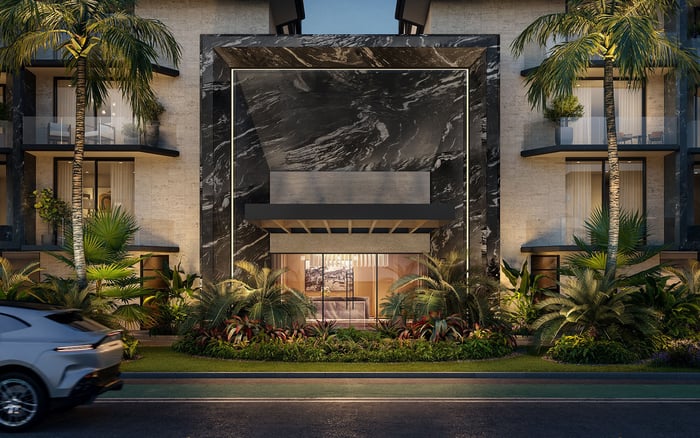
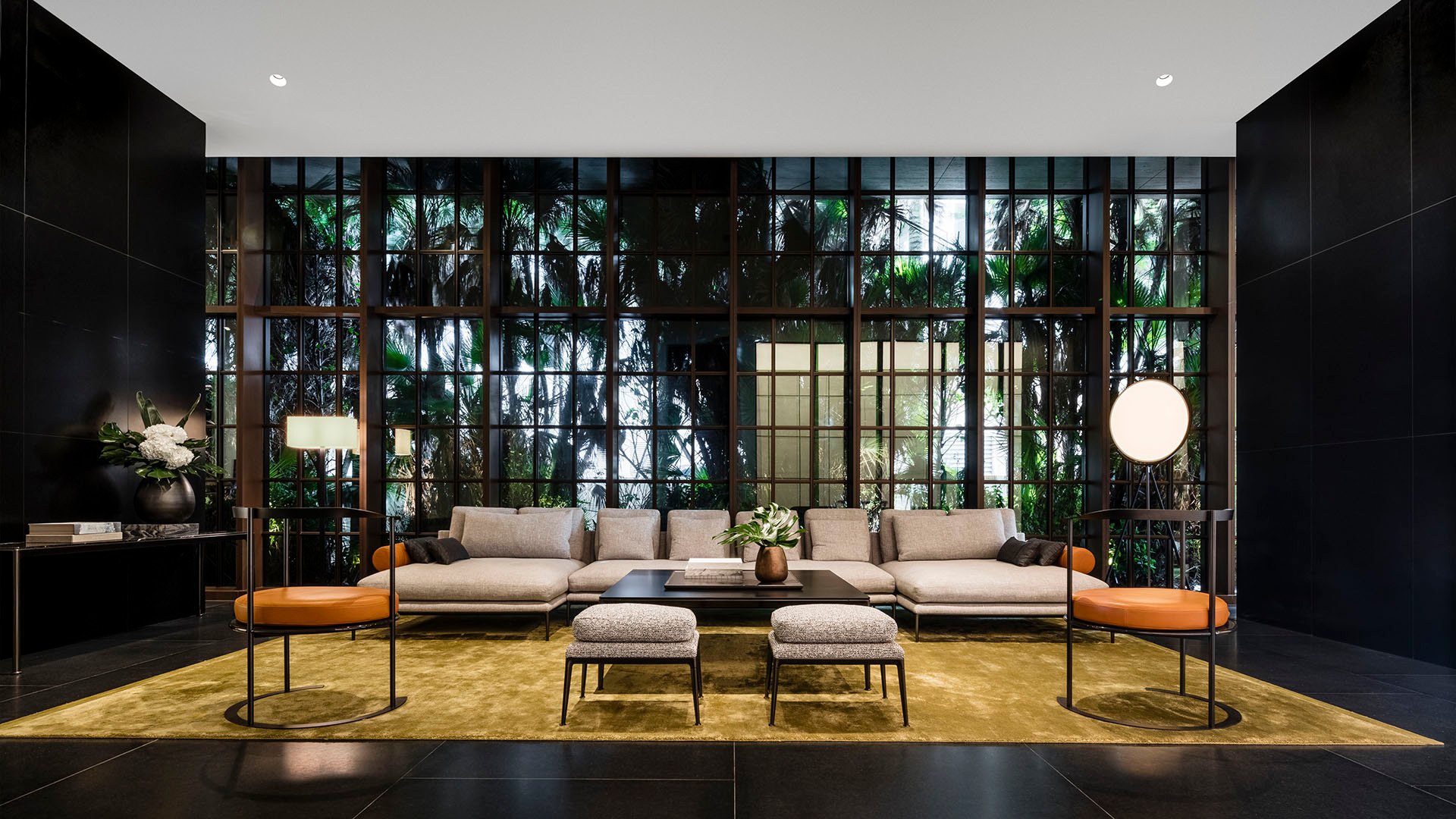
A floor plan tells you how a residence will host dinner. A lobby tells you how the building will host your life. Before weighing finishes or views, spend time observing the arrival sequence. Is the staff formal or warm? Do residents linger or pass through quietly? Does the porte-cochère feel theatrical, residential, or hotel-like? Is the building’s social temperature compatible with your preferred level of visibility?
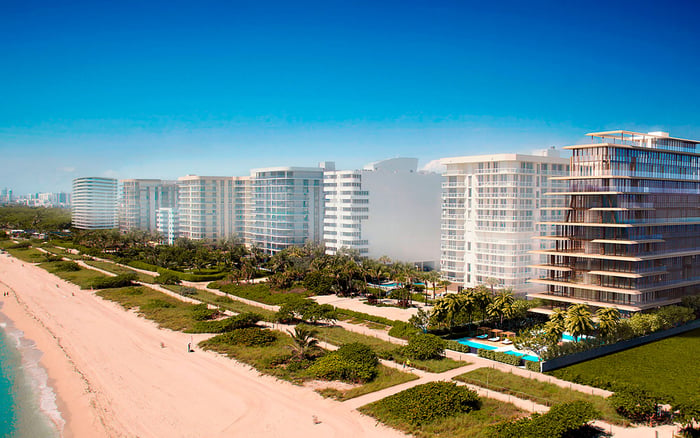
In Surfside, a buyer considering Arte Surfside or The Delmore Surfside should evaluate more than the address. The question is whether the building’s mood supports a daily routine of privacy, beach access, family visits, remote work, and quiet evenings. The right oceanfront residence should feel composed even when fully occupied.
For buyers who value discretion, the best test is often simple: imagine returning home after a long flight. If the arrival feels effortless, protected, and unforced, the building may be aligned with full-time life. If it feels performative, it may be better suited to shorter stays.
Service is not one idea. Some owners want a highly staffed environment with a strong hospitality cadence. Others prefer a smaller residential culture where staff know names, patterns, and preferences without making the building feel public. Neither approach is inherently superior. The right one depends on how visible you want your household to be.
A full-time owner should ask practical questions. How are packages handled? How are contractors approved? How does the building manage private events, extended guests, drivers, pets, and deliveries? Does the service style anticipate needs, or does it require constant instruction? A polished building culture reduces daily friction without making residents feel observed.
In Brickell, the appeal may be proximity to a more urban routine, but the building’s internal culture still matters. A residence such as 2200 Brickell belongs in a comparison for buyers who want the convenience of a city setting while still examining how residential, calm, and controlled the property feels day to day.
Neighborhoods are not interchangeable, even when they share water, views, and luxury pricing. Surfside suggests a quieter coastal pattern. Brickell supports a more urban, vertical routine. Bay Harbor can appeal to buyers seeking a lower-key residential atmosphere near the beach without choosing the most visible oceanfront setting. Coconut Grove often attracts those who want greenery, village texture, and a less corporate mood.
The phrase Bay Harbor may sound informal, but the decision it represents is serious: do you want a building that feels tucked away, or one that announces itself? A buyer comparing The Well Bay Harbor Islands should focus on the everyday experience around wellness, neighbors, mobility, and quiet use of shared spaces, rather than treating the address as a weekend compromise.
Coconut Grove raises a different question. If your household wants softness, shade, and a more residential tempo, Four Seasons Residences Coconut Grove may be part of a broader conversation about how much hospitality, privacy, and neighborhood intimacy you want in one place.
The most elegant building can become difficult if governance and owner culture are misaligned. Full-time owners should review rules not as legal paperwork alone, but as a portrait of the community. Rental policies, renovation procedures, guest access, pet protocols, noise expectations, elevator reservations, and amenity rules all reveal how the building protects daily life.
For internationally mobile owners, clarity is especially valuable. A well-run building should make it easy to understand what is permitted, what is discouraged, and how decisions are made. Ambiguity can be costly in time, mood, and convenience. The strongest building cultures are not necessarily the strictest. They are the most consistent.
Ask how the building behaves in ordinary moments: when an elevator is reserved, when a family arrives for a month, when a resident hosts a dinner, when service staff coordinate with household teams. Full-time luxury is often a question of choreography.
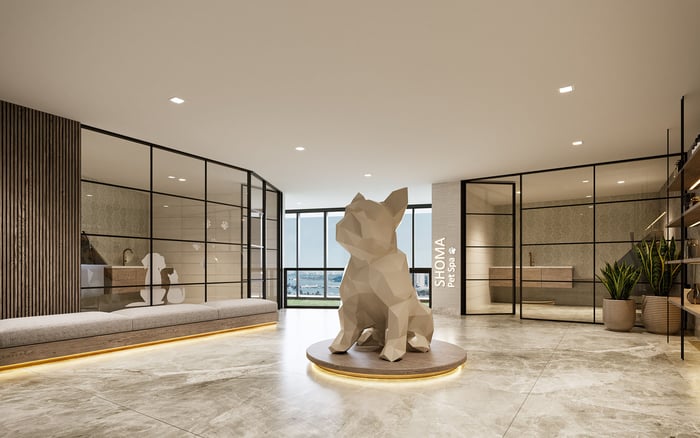
Amenity volume can distract from livability. For a primary residence, the better question is which spaces you will use weekly. A large fitness center is less meaningful if the route to it feels exposed. A dramatic pool is less useful if the culture around it is too social or too transient for your taste. A lounge can be a pleasure or a nuisance depending on how residents actually use it.
Tour at different times if possible. Morning, late afternoon, and early evening can reveal three different buildings within the same address. Notice sound, scent, lighting, seating behavior, and staff presence. Full-time life rewards amenities that are beautifully maintained, intuitively accessed, and culturally aligned with the residents who use them.
A South Florida residence may succeed for holidays and fail for Tuesdays. Before choosing, script an ordinary week. Where do you take calls? Where does a driver wait? How does a visiting relative arrive? Where do children, pets, staff, or friends fit? How does the building feel after dinner, during rain, on a quiet morning, or when you want to be completely unseen?
For the Singapore-to-Surfside buyer, the best home is not merely a South Florida trophy. It is a building culture that makes life feel orderly, gracious, and private without requiring constant management. When the address, staff, neighbors, rules, and neighborhood tempo all support the same rhythm, the residence begins to feel less like an acquisition and more like home.
What does building culture mean in South Florida luxury real estate? It means the daily social and operational character of a building, including service style, privacy, rules, resident behavior, and amenity use.
Why is building culture important for full-time owners? Full-time living magnifies small frictions. A well-matched building culture makes ordinary routines feel calm, efficient, and protected.
Should I choose Surfside if I want a quieter lifestyle? Surfside can suit buyers seeking a calmer coastal rhythm, but each building should be judged individually by its staff, residents, rules, and atmosphere.
How should I compare Brickell with beachfront neighborhoods? Compare the routine first. Brickell may suit a more urban day, while beachfront settings may suit buyers who prioritize water, privacy, and slower pacing.
Are branded residences always more service-oriented? They often suggest a hospitality mindset, but buyers should still evaluate how service is delivered and whether it feels natural for full-time life.
What should I observe during a property tour? Watch the arrival sequence, lobby behavior, staff communication, amenity use, elevator flow, and how residents interact with shared spaces.
How do building rules affect daily comfort? Rules shape noise, guests, renovations, pets, rentals, and privacy. Clear rules can protect calm when they are applied consistently.
Is a larger amenity package always better? Not necessarily. The best amenities are those you will use often and that fit the building’s social tone.
Can a second-home building work as a primary residence? It can, but only if the culture remains comfortable year-round and does not feel too transient for your household.
What is the best way to shortlist comparable options for touring? Start with location fit, delivery status, and daily lifestyle priorities, then compare stacks and elevations to validate views and privacy.
If you'd like a private walkthrough and a curated shortlist, connect with MILLION.
If branded residences are on your mind — as a home or as an allocation — we would be glad to share what we are seeing, privately.
Begin a quiet conversation