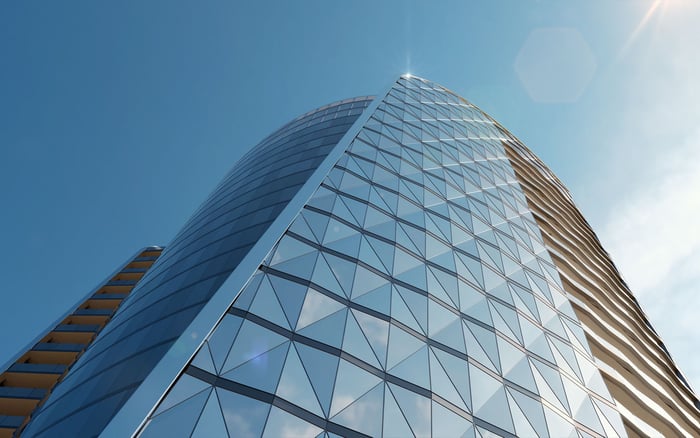
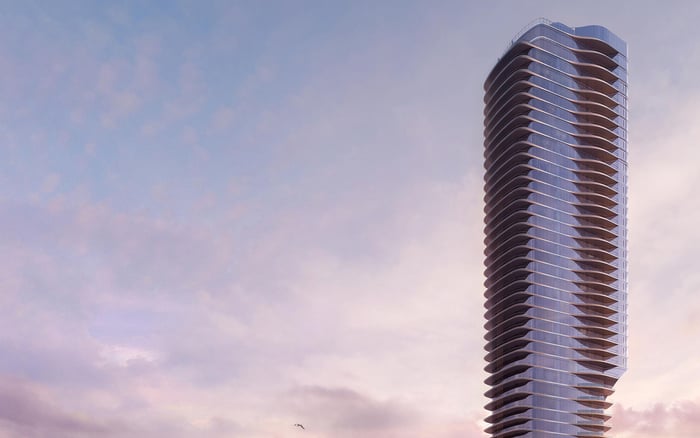
A discreet ownership and circulation framework for buyers comparing Shorecrest Flagler Drive West Palm Beach, The Perigon Miami Beach, and The Ritz-Carlton Residences® Pompano Beach through the lens of elevator quiet, corridor privacy, and daily exposure from lobby to front door.
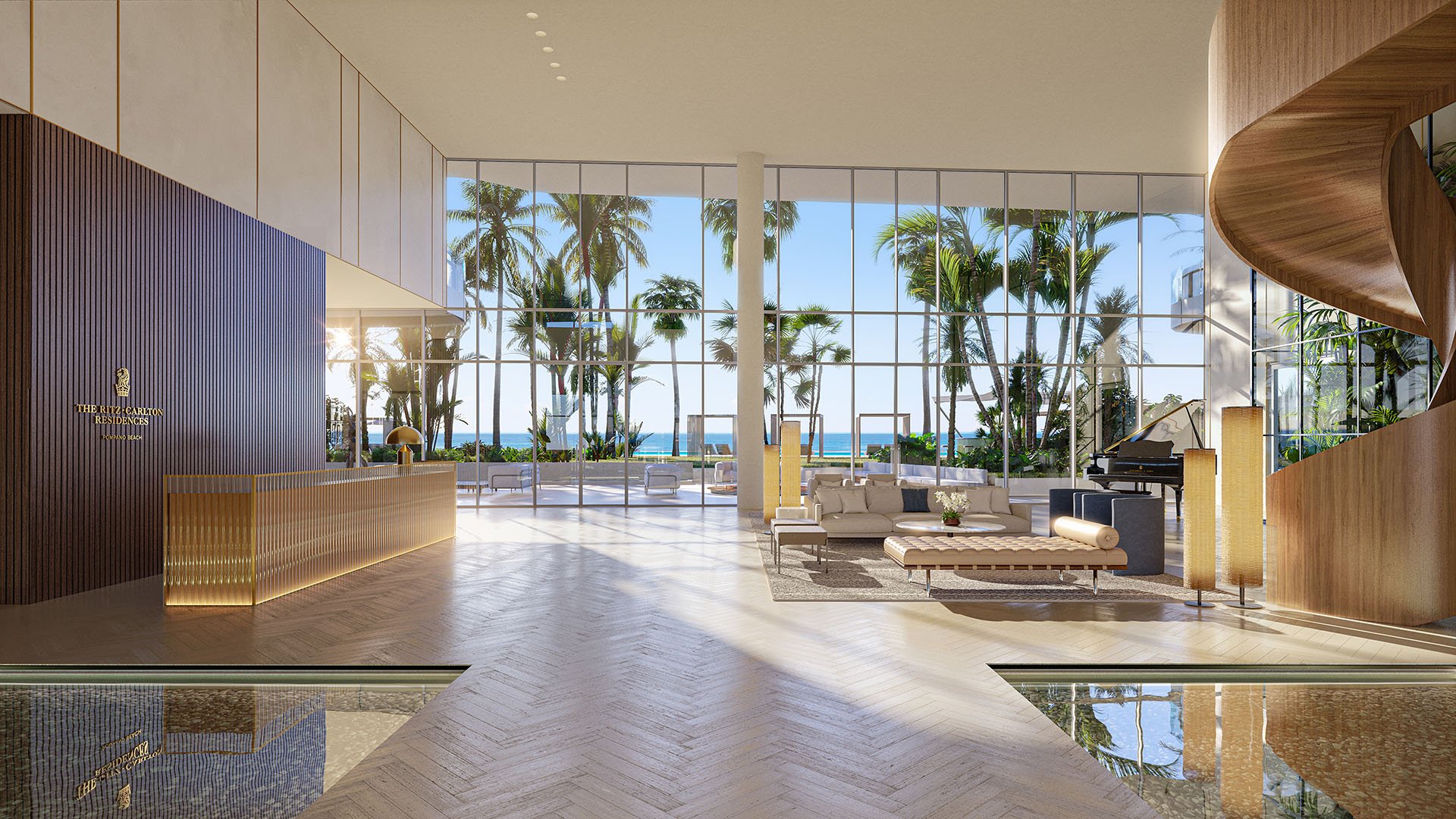
For a certain South Florida buyer, the most meaningful luxury is not the view, the stone selection, or the name on the canopy. It is the absence of friction between arrival and home. Quiet elevators and minimal hallway exposure shape how a residence lives every day, especially for owners who value discretion, low-contact circulation, and a calm return from the porte cochère to the front door.
That is the useful lens for comparing Shorecrest Flagler Drive West Palm Beach, The Perigon Miami Beach, and The Ritz-Carlton Residences® Pompano Beach Pompano Beach. Each sits in a distinct South Florida market context: West Palm Beach on Flagler Drive, Miami Beach, and branded residential Pompano Beach. Yet the central question is the same. How many people are likely to use the same elevator path, how long is the shared route from elevator to residence entry, and what rules determine whether those users are primarily residents, guests, staff, or more transient occupants?
For readers comparing privacy rather than only finishes, this is a West Palm Beach, Miami Beach, and Pompano Beach circulation question before it is a design question.
“Quiet elevator” is often misunderstood. Buyers tend to ask whether the cab feels refined, or whether the doors open softly. Those details matter, but they are only one layer.
The first layer is mechanical quietness: the sound and vibration profile of the elevator system itself. The second is traffic quietness: how often the elevator is called, how many users share it, and whether service, guest, and resident patterns overlap. The third is experiential quietness: whether the owner feels exposed while waiting, riding, exiting, or walking the final steps to the residence.
A building can have handsome elevators and still feel busy. Another can have a simple arrival sequence that feels serenely private because user load is low and the shared path is short. The strongest fit for a buyer who needs quiet elevators is likely to be the property with the lowest practical elevator-user load, the shortest shared path to the front door, and the strictest limits on transient use.
Shorecrest Flagler Drive West Palm Beach belongs in this comparison because its Flagler Drive, West Palm Beach setting makes arrival choreography central to due diligence. For privacy-sensitive buyers, the key is not simply whether the building feels polished at entry. It is how the resident moves from lobby to elevator to residence threshold.
The buyer should ask direct questions about vertical circulation. Are there private elevator foyers, semi-private landings, short corridors, or conventional shared hallways? Does the entry sequence create a moment of separation before the residence door, or does it place owners in a more visible corridor condition? These distinctions can meaningfully change daily life, even when two residences appear comparable on paper.
The ownership model also matters. A building with a predominantly permanent-resident culture can feel different from one with more frequent guest turnover. For Shorecrest, the most persuasive privacy case would come from a combination of restrained elevator demand, a short common path, and governing documents that support residential consistency.
The Perigon Miami Beach invites a different kind of scrutiny. Miami Beach luxury buyers are accustomed to evaluating architecture, finishes, amenities, and outdoor living. Yet for someone who needs elevator calm, the more precise questions concern corridor configuration, elevator design, and any restrictions that may affect day-to-day use patterns.
The Perigon Miami Beach should not be judged only by the caliber of the residence. It should be examined through the experience of movement: how residents arrive, where they wait, whether they share elevators broadly, and how exposed they feel after the elevator doors open. A residence with exceptional interiors can still feel less private if the path from elevator to front door is lengthy or heavily shared.
This is where architectural privacy and legal-use privacy diverge. Floor plans determine hallway exposure. Condominium rules influence who is using the elevators. A buyer who values quiet should review both with equal seriousness, because the elevator experience is shaped as much by building behavior as by building design.
The Ritz-Carlton Residences® Pompano Beach introduces the branded-residence question. A brand can imply service polish, hospitality training, and a more managed residential environment. For a buyer sensitive to elevator noise, however, the brand itself is not the answer. The question is how resident-only circulation, guest movement, staff movement, and service logistics are organized.
This is especially important because elevator quiet is not only mechanical. It is also the practical quiet created by who is moving through the building and when. In a branded residential setting, buyers should distinguish the serenity of service from the traffic that service may require. Deliveries, housekeeping-related movement, amenity access, guests, and residents can all create different elevator rhythms if they are not carefully separated.
The best version of this ownership model for a privacy-driven buyer would be one where the brand supports orderly operations while resident circulation remains protected. The Ritz-Carlton Residences® Pompano Beach should therefore be evaluated not just as a branded property, but as a circulation system.
The cleanest framework is to separate two privacy categories.
Architectural privacy is physical. It includes the number of residences served by an elevator bank, the length of corridors, whether the elevator opens into a private or semi-private zone, and how visible the residence entry is from shared space. It answers the question: how much hallway exposure is built into the plan?
Legal-use privacy is behavioral. It includes rental restrictions, guest policies, access controls, service protocols, and the degree to which the building is oriented toward long-term residents rather than transient use. It answers the question: who will actually be sharing the elevator with me?
A buyer focused on quiet should not accept either category as a substitute for the other. A short hallway can still feel active if use rules allow frequent turnover. Strict rules can still leave exposure if the residence opens onto a conventional shared corridor. The ideal fit aligns both.
There is not enough grounded detail to declare a definitive winner among Shorecrest Flagler Drive West Palm Beach, The Perigon Miami Beach, and The Ritz-Carlton Residences® Pompano Beach. A buyer should instead identify the ownership model that produces the calmest practical experience.
A permanent-resident-oriented condominium may be the best fit if the buyer’s priority is predictable elevator use and familiar faces. A branded residence may be the best fit if service is important, provided staff and service movement are thoughtfully managed away from resident circulation. A building with more transient use is usually the model that requires the most careful scrutiny, because turnover can create more frequent elevator calls, more unfamiliar users, and more corridor encounters.
The right answer is the one that combines three conditions: low elevator-user load, short shared circulation, and strict use controls. If one of the three is missing, the buyer should understand exactly what tradeoff is being accepted.
During a private tour, the buyer should walk the arrival path slowly. Begin at the lobby, pause where elevator waiting occurs, ride to the residential level, and time the walk to the front door. Notice whether voices carry, whether elevator doors are close to residence entries, and whether there are sightlines into hallways from common areas.
Then review documents and operations. Ask how elevator banks are assigned, whether service traffic is separated, how guests access residential floors, and what restrictions govern rentals or transient use. For this buyer profile, a floor plan without the governing rules is incomplete, and governing rules without a physical walkthrough are abstract.
What does quiet elevator mean in this comparison? It means mechanical quietness, traffic quietness, and experiential quietness from lobby arrival to residence entry.
Is there a clear winner among the three projects? No definitive winner can be declared from the available grounded details. Buyers should compare circulation plans and use rules before deciding.
Why does ownership model affect elevator quiet? Different ownership and use patterns can change how many residents, guests, staff, and service providers share the elevators.
What should Shorecrest buyers focus on first? Shorecrest buyers should study the vertical circulation sequence from lobby to elevator to residence entry.
What should The Perigon buyers verify? The Perigon buyers should verify elevator design, corridor configuration, and any rules that affect day-to-day occupancy patterns.
What is the key question for The Ritz-Carlton Residences® Pompano Beach? Buyers should ask how branded service traffic is separated from resident-only circulation, if at all.
Are private elevator foyers always necessary? Not always, but they can reduce hallway exposure when paired with low user load and strong access controls.
Can a beautiful elevator still feel noisy? Yes. High traffic, frequent stops, and mixed guest or service movement can make an elegant elevator feel busy.
What documents matter for privacy due diligence? Condominium rules, rental restrictions, access policies, and service protocols help clarify who uses the elevators and how often.
What is the simplest decision rule? Favor the project with the lowest practical elevator-user load, shortest shared path, and strongest limits on transient use.
For a confidential assessment and a building-by-building shortlist, connect with MILLION.
If branded residences are on your mind — as a home or as an allocation — we would be glad to share what we are seeing, privately.
Begin a quiet conversation