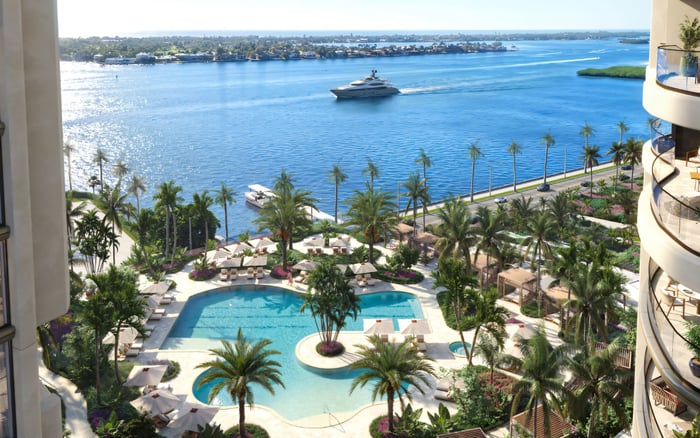
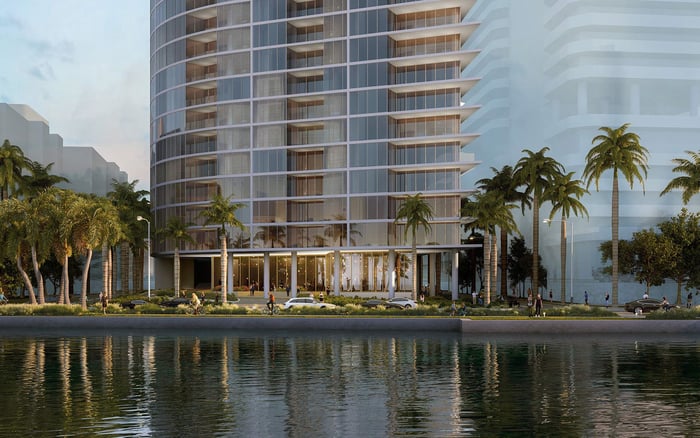
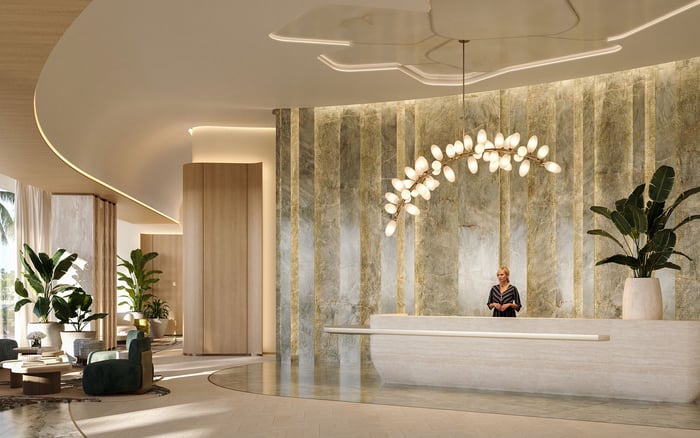
A buyer-focused look at Shorecrest on Flagler Drive as a boutique-scale waterfront alternative for experienced luxury condo owners leaving large South Florida towers.
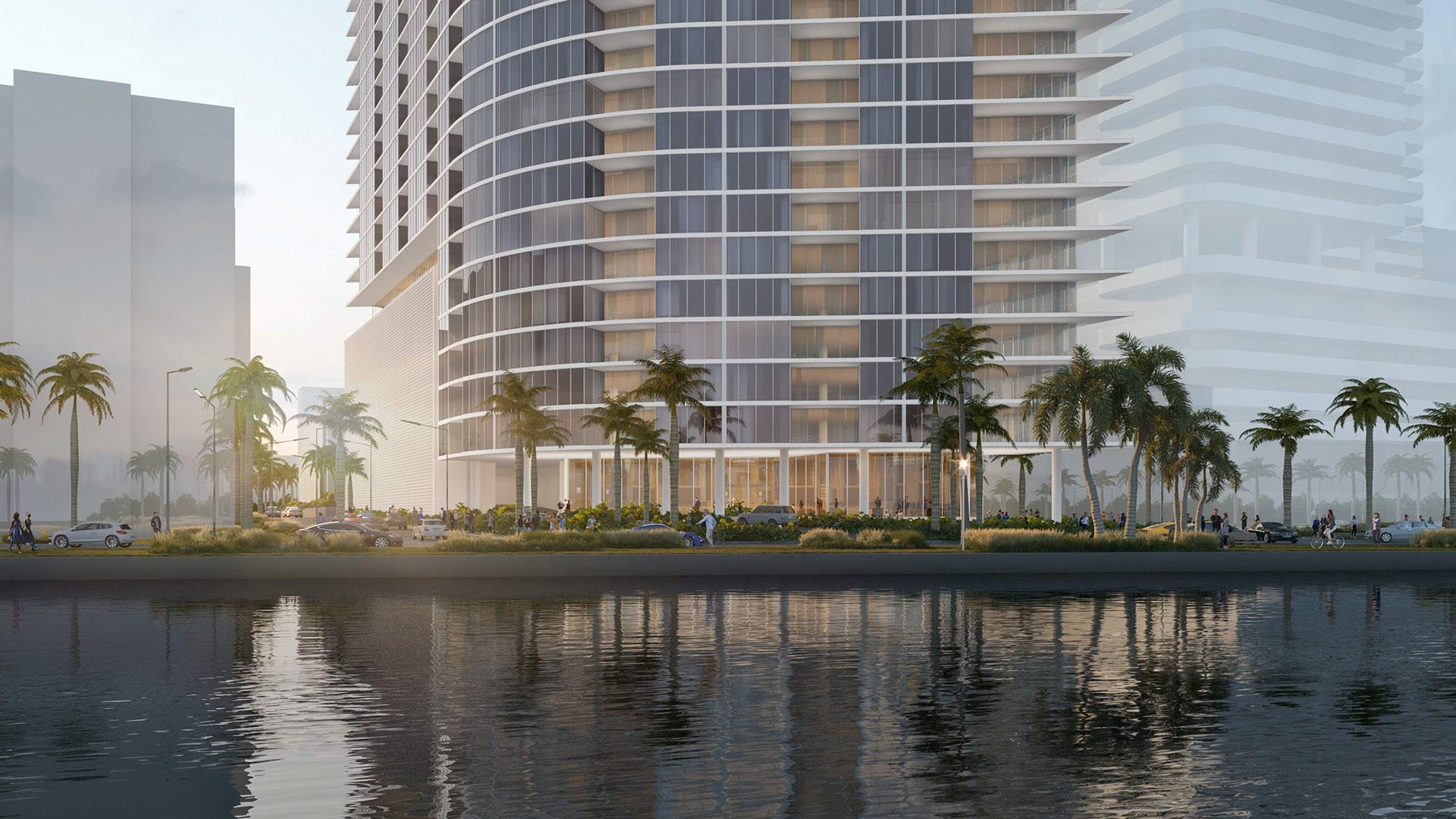
For a certain South Florida buyer, leaving a large tower is not a retreat from luxury. It is a refinement of it. After years in buildings defined by grand lobbies, layered amenity decks, valet choreography, and a constant pulse of arrivals, many experienced owners begin to prize a different kind of privilege: proportion, privacy, and a building that feels residential before it feels performative.
Shorecrest Flagler Drive West Palm Beach belongs in that conversation. It is positioned as a boutique-scale waterfront condominium option along Flagler Drive, the corridor that gives West Palm Beach its most recognizable relationship with the water. Its relevance is not simply that it feels smaller than a mega-tower. It is that its scale speaks to buyers who already understand what large high-rise living delivers, and what it can complicate.
These buyers are not new to amenities. They have used the club rooms, gyms, pools, lounges, private dining rooms, and guest suites. They know the pleasure of convenience, but they also know the friction that can emerge when a building begins to operate like a vertical resort. At Shorecrest, the appeal is the possibility of waterfront living without the sense of checking into a hotel every time one comes home.
The most sophisticated condominium buyers rarely make decisions on spectacle alone. In Miami, Brickell, Sunny Isles, and Downtown West Palm Beach, large towers can deliver drama and energy, but daily life is shaped by more than the view. Elevator timing, crowded amenities, transient occupancy patterns, garage flow, staff familiarity, and the tone of building governance all become part of the ownership experience.
For some owners, the turning point is subtle. A lobby feels less personal. The pool deck becomes harder to enjoy without planning. Elevators begin to feel like public transit at peak hours. A building that once seemed glamorous starts to feel operationally busy. None of this necessarily diminishes the value of a large tower, but it clarifies the appeal of boutique scale for owners who want fewer layers between private life and the water.
Boutique does not mean less elevated. For the right buyer, it can mean fewer compromises. It can mean a more predictable daily rhythm, a service model that feels observant rather than theatrical, and a resident culture that is easier to understand over time. In private searches, shorthand can become oddly literal: West-palm-beach for access, Palm-beach for proximity, Brickell for what some owners are leaving, Boutique for scale, and Waterview for the emotional priority.
Flagler Drive gives Shorecrest its essential context. The waterfront corridor in West Palm Beach is not merely a location marker; it is a lifestyle filter. Buyers drawn here are often comparing different versions of South Florida luxury. One version prizes height, amenity volume, and social energy. Another prizes light, water, ease, and a setting that supports routine without demanding constant participation.
That distinction matters. A waterfront address can feel very different depending on the building that frames it. In a large tower, the water may be part of a broader resort narrative. In a boutique-scale building, the water can become more personal, tied to morning rituals, quiet evenings, and the sense that the residence belongs to an established daily cadence rather than a stage set.
For buyers leaving larger towers, the Flagler Drive question is not only, “What is the view?” It is also, “How does the building behave around the view?” The answer involves circulation, privacy, staffing, security, arrival sequence, and the predictability of common spaces. A calm building can make a waterfront residence feel larger emotionally, even when the headline amenity count is more restrained.
Shorecrest is best understood by owners who have already lived the high-rise proposition. They are not impressed by amenity lists for their own sake. They ask how often those amenities are truly used, how crowded they become, how they are staffed, and whether the building’s operational style supports a long-term home or a seasonal spectacle.
This is where governance becomes part of luxury. In a smaller residential environment, the personality of the association, the clarity of rules, the approach to maintenance, and the quality of security can matter as much as finishes. Buyers should examine how the building is expected to function in ordinary weeks, not just how it presents in a sales setting. Long-term livability often reveals itself in the quiet details.
Privacy is another central issue. In a large tower, anonymity can be useful, but it can also create a more transient atmosphere. Boutique scale can establish a different equilibrium, where residents recognize the patterns of the building and staff understand the preferences of the ownership base. For high-net-worth buyers, that kind of predictability is not incidental. It is part of the value proposition.
The most important question is not whether boutique scale is better in the abstract. It is whether it is better for the way the buyer actually lives. A frequent traveler may prioritize security and lock-and-leave confidence. A full-time resident may care more about service consistency, storage logic, guest access, and how the building feels on ordinary weekdays. A downsizing owner may be seeking simplification without a loss of dignity.
Buyers should also be clear about what they will not miss. If the appeal of a former tower was primarily its social infrastructure, a quieter building may feel too restrained. But if the pain points were elevator congestion, crowded amenity areas, and a hotel-like operating rhythm, Shorecrest’s boutique positioning may feel less like a compromise and more like a correction.
The strongest argument for boutique Flagler Drive living is not scarcity for its own sake. It is the possibility of a more composed ownership experience. Luxury, at this level, is measured in friction removed: fewer unnecessary encounters, fewer crowded transitions, fewer operational surprises, and a home environment that lets the water remain the central event.
Shorecrest belongs in the conversation because it addresses a specific migration within South Florida luxury real estate. It is for the buyer who has experienced scale and now wants calm. It is for the owner who still values waterfront living, but no longer wants the density and tempo of a large amenity tower. It is for the household that sees privacy, proportion, and predictability as luxury features in their own right.
The move from a large tower to boutique scale is not about giving something up. It is about choosing which forms of luxury still matter after the novelty of spectacle has faded. For many seasoned buyers, the next chapter is less about being impressed and more about being at ease.
Who is the ideal buyer for Shorecrest on Flagler Drive? The ideal buyer is an experienced luxury condo owner seeking waterfront living in a more intimate residential setting.
Is boutique scale a downgrade from a large tower? Not necessarily. For many buyers, boutique scale can improve privacy, predictability, and day-to-day livability.
Why are some owners leaving large South Florida towers? Common reasons include crowded amenities, elevator congestion, transient occupancy, and a hotel-like building rhythm.
What makes Flagler Drive important for Shorecrest? Flagler Drive provides the waterfront context that shapes the building’s appeal within West Palm Beach.
Should buyers compare Shorecrest with Brickell or Sunny Isles towers? Yes, especially if they are deciding between high-density tower living and a quieter waterfront setting.
What should buyers study beyond the residence itself? They should evaluate privacy, security, service model, staffing, governance, and long-term building operations.
Does Shorecrest suit full-time residents or seasonal owners? It may appeal to both, provided the buyer values calm, waterfront access, and a more residential atmosphere.
Is Shorecrest mainly about amenities? Its core positioning is more about boutique scale, serenity, proportion, and privacy than amenity volume.
How does Waterview living differ in a boutique building? The water can feel more personal and less tied to the energy of a vertical resort environment.
Is this a New Project search for a Palm-beach oriented buyer? It can be part of that search when the priority is waterfront calm near the broader Palm Beach lifestyle.
When you're ready to tour or underwrite the options, connect with MILLION.
If branded residences are on your mind — as a home or as an allocation — we would be glad to share what we are seeing, privately.
Begin a quiet conversation