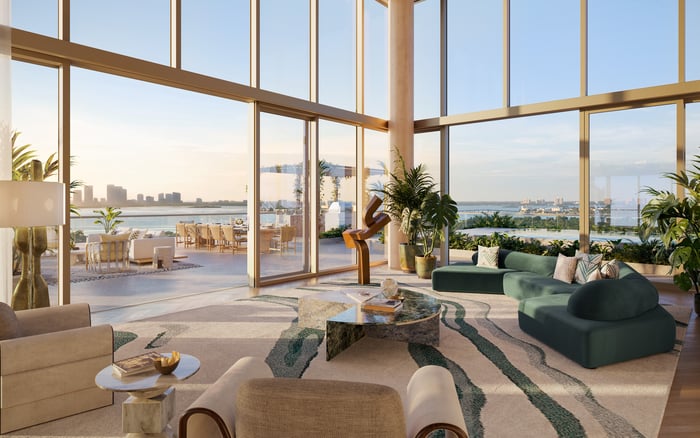
Shore Club and W Pompano invite a closer look at what residential service actually delivers. For buyers, the meaningful comparison turns on dedicated staffing, included versus billable services, gratuity policies, and a fully itemized annual ownership budget.

For a buyer weighing Shore Club against W Pompano, the meaningful comparison begins after the amenity tour. Who answers a request, who performs the work, and what appears on the owner’s statement? The distinction between access to hospitality and dependable residential operations is where service becomes ownership value.
Shore Club Private Collections Miami Beach presents a boutique residential proposition integrated with Auberge hospitality. W Pompano Beach Hotel & Residences is marketed as a W-branded oceanfront hotel-and-residential project. Both warrant the same disciplined questions, but their advertised services should not be mistaken for equivalent operating commitments.
A sound purchase decision separates four matters: the advertised experience, the staffing behind it, the rules for discretionary charges, and the annual cost of ownership. A brand name alone settles none of them.
Shore Club is planned with 49 private residences at 1901 Collins Avenue in South Beach, alongside a 75-key Auberge hotel. Its positioning pairs boutique residential privacy with five-star hotel service. That language is a marketing promise, not an independently verified rating or a measurable response standard.
The advertised residential program is specific about hospitality. Auberge-managed services include a Director of Residences and Resident Concierge Team. Offerings extend to in-residence butler service, dining and catering, spa treatments, housekeeping, laundry and dry-cleaning, and valet parking. Charging privileges for incidentals add convenience; they do not establish that those charges are included in maintenance.
Privacy also takes physical form: a private residential entrance and lobby in Cromwell House, a residents’ library lounge, private meeting and dining space, and a driver/chauffeur room. A residents-only pool sits within a broader program of lap and leisure pools. Wellness amenities include a spa, Beauty Atelier, private fitness facilities, and training suites. Beach amenities include a Residents’ Beach Club, dedicated cabana service, and private beach access.
For an owner, the next question is operational: which spaces and personnel are exclusively residential, and which services depend on hotel capacity? Residents-only amenities do not, by themselves, establish resident-dedicated staffing.
W Pompano’s described household services address another dimension of convenience: maintenance coordination, light-bulb replacement, furniture assembly, cleaning and repair, and bulk or move-in trash removal. Touch-up painting, electronics hookup, and picture hanging also appear on its service menu.
These tasks are worth testing against an owner’s actual routine. Preparing a residence for arrival or managing a small repair from elsewhere can matter as much as arranging dinner. Yet a listed task is not necessarily complimentary, and coordination does not necessarily mean the work is performed by an on-site employee.
The household-support menu does not establish W’s complete hospitality offering. It would therefore be misleading to call Shore Club the comprehensive option and W merely the practical one. The defensible distinction is narrower: Shore Club explicitly advertises bespoke in-residence hospitality, while W’s described service categories cover practical household assistance. Buyers need the complete included-versus-billable schedule for each.
No numerical staff-to-residence ratio is established for either project. Shore Club’s residence and hotel counts cannot be used to derive one, and a concierge title does not reveal how many people are on duty.
Even a disclosed ratio needs a definition. Does it count full-time equivalents or individual employees? Does it include hotel staff, contractors, management, and employees who never handle residential requests? Does it measure total payroll or actual coverage during the hours owners use services?
Request a staffing plan organized by function and shift. Identify dedicated residential positions, hotel-shared roles, overnight coverage, absence coverage, and seasonal adjustments. Then ask how simultaneous requests are prioritized and how unresolved issues reach the Director of Residences or the relevant residential manager.
For buyers also considering Setai Residences Miami Beach, these questions provide a consistent basis for comparison without assuming that different properties share staffing models. The useful measure is not simply how many people are employed, but who is available to the residence when needed.
Neither project has an established project-specific tipping schedule or automatic service-charge policy in the described terms. Buyers should not assume a percentage, a no-tipping culture, or a brand-wide rule that applies to every residential interaction.
Ask for written policies covering in-residence dining, spa appointments, housekeeping, valet, butler assistance, and beach or cabana service where offered. Distinguish service charges from gratuities, and confirm whether an additional tip is optional. Ask how charges are disclosed before an owner approves a service.
For households with visiting family, personal assistants, or private staff, billing permissions deserve attention. Clarify who may authorize expenses, whether spending limits can be set, and how itemized statements are delivered. Discreet service should come with clear accounting.
W Pompano has an advertised residential maintenance estimate of $1.81 per square foot, including reserves. The billing period is unspecified. The estimate should not be presented as a monthly charge or converted into annual ownership cost without confirmation.
Only if $1.81 is confirmed as monthly would it equal $21.72 per square foot annually. Even then, it remains an estimate, not a guaranteed assessment. Confirm the applicable area measurement and reserve contribution before applying it to a particular residence.
No Shore Club HOA estimate, reserve breakdown, or owner food-and-beverage minimum is established here. There is therefore no grounded basis for declaring W the lower-carry choice.
Build the comparison in separate layers: association maintenance and reserves; property taxes, insurance, and utilities; then billable services, dining, wellness, and discretionary gratuities. Request current budgets, fee schedules, and hotel/residential cost allocations. Where costs are shared, ask which allocation formula applies and how owners can review it.
Give each sales team the same proposed stay: an arrival, a household repair, a private dinner, a beach afternoon, and departure housekeeping. Ask who handles each step, what notice is required, what is included, and what requires separate payment. This turns an attractive service menu into an ownership routine buyers can compare.
The right choice is the residence whose documented service arrangements fit the way you live, with annual carry you can understand before committing.
For a discreet conversation about matching residential service to your ownership priorities, connect with MILLION.
If branded residences are on your mind — as a home or as an allocation — we would be glad to share what we are seeing, privately.
Begin a quiet conversationShore Club is planned with 49 private residences at 1901 Collins Avenue in South Beach, alongside a 75-key Auberge hotel.
Offerings include in-residence butler service, dining and catering, spa treatments, housekeeping, laundry and dry-cleaning, and valet parking. Availability on a service menu does not establish inclusion in maintenance.
Yes. Its program includes a private residential entrance and lobby, a residents-only pool, and private residential fitness facilities.
Its service menu includes maintenance coordination, light-bulb replacement, furniture assembly, cleaning and repair, touch-up painting, electronics hookup, picture hanging, and bulk or move-in trash removal.
The described terms do not establish which tasks are included versus separately charged. Buyers should request an itemized service and fee schedule.
No numerical ratio is established for either project. Request dedicated residential staffing, shared hotel roles, and coverage by shift rather than inferring staffing from amenities.
No project-specific gratuity or automatic service-charge schedule is established here. Obtain written policies and confirm whether any additional tip is optional.
The estimate is $1.81 per square foot, including reserves, but its billing period is unspecified. It is not a guaranteed assessment.
Only if the estimate is confirmed as monthly would it equal $21.72 per square foot annually. That conditional calculation excludes other ownership expenses.
No. Without a Shore Club HOA estimate and comparable confirmed budgets, a cost advantage is not established; taxes, insurance, utilities, and discretionary spending also require separate assessment.