At Shell Bay, the first deposit is only one part of a larger capital plan. Buyers should coordinate currency conversion, Florida transfer taxes, financing costs, contract deadlines, and closing liquidity before initiating the first wire.
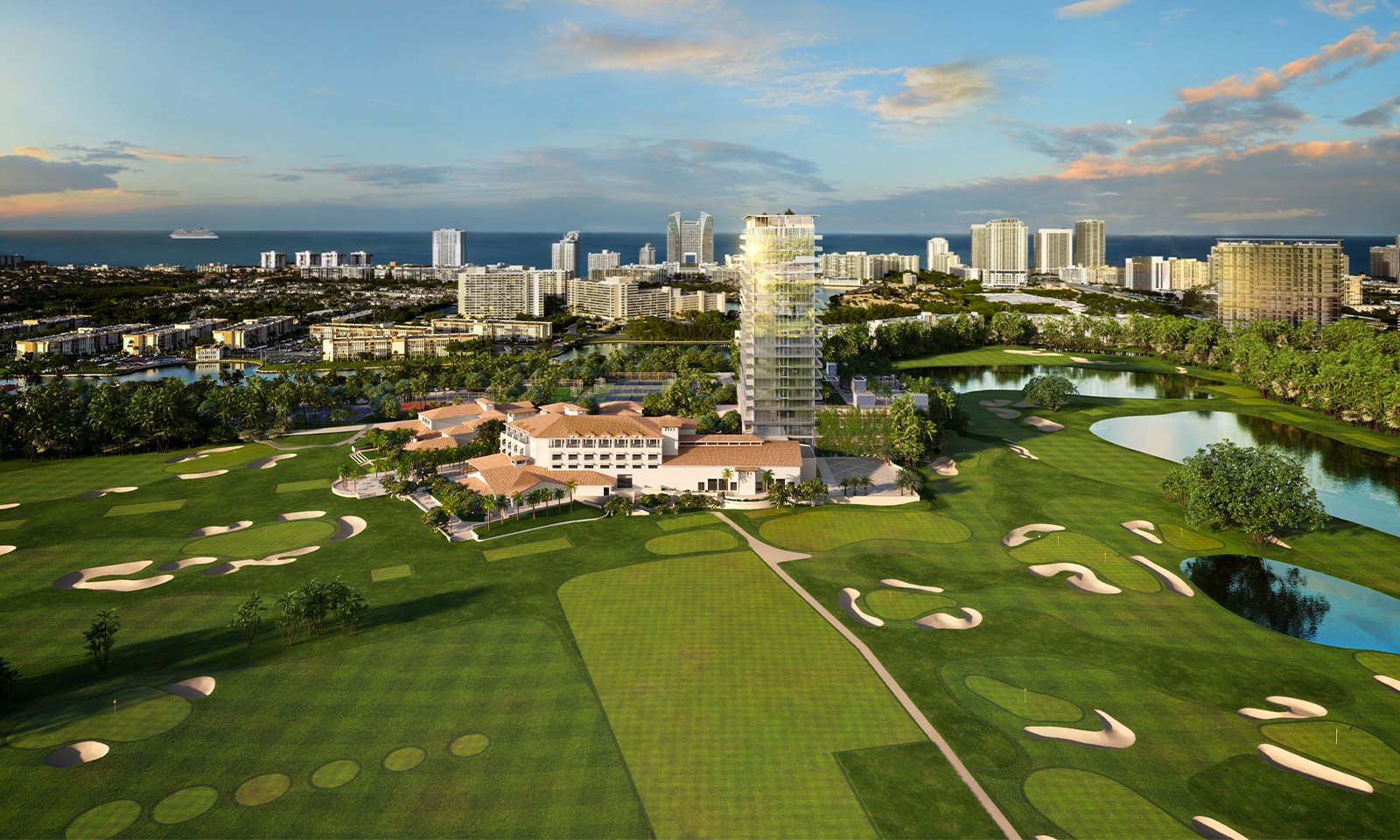
For an international or multi-jurisdictional buyer, acquiring a residence at Shell Bay by Auberge Hallandale is not simply a matter of reserving a home and funding a deposit. It is a sequence of interdependent decisions encompassing contract timing, US dollar liquidity, tax estimates, financing, and closing mechanics.
The prior payment schedule included a 10% top-off and 60% due at closing. Together, those milestones represent 70% of the purchase price, excluding any earlier deposit, closing costs, upgrades, association charges, lender reserves, or negotiated fees. The practical lesson is clear: the first wire should be the final step in the initial planning process, not the first.
That schedule referenced a Q3 to Q4 2024 top-off and a late-2025 closing. Those dates should now be treated as historical. Before moving funds, buyers should obtain the current developer schedule and ask counsel to confirm deadlines, refundability, escrow provisions, default remedies, and the allocation of closing expenses under the operative agreement.
A disciplined acquisition model begins with a single calendar that shows every contractual payment as both a percentage and a projected dollar amount. For each milestone, the buyer should identify the intended funding source, transfer lead time, account ownership, and any internal approval required by a family office, trust, company, or lender.
This is particularly important in Pre-Construction purchases, where the interval between reservation and completion can create a false sense of flexibility. A substantial closing balance may come due alongside taxes, title charges, financing expenses, and other contractually allocated costs. A Florida planning range of 2% to 5% of the purchase price is commonly used for total closing costs, but it is not a Shell Bay quote. The actual amount depends on financing, title work, taxes, negotiated terms, and the final closing statement.
Buyers comparing Hallandale Beach opportunities such as 2000 Ocean Hallandale Beach should resist applying one development’s schedule to another. Even within the same market, deposit timing, escrow terms, included charges, and cost allocations can differ. Sophisticated Buyer's Guides therefore begin with the contract, not a generalized market convention.
When wealth is held in euros, pounds, Canadian dollars, Swiss francs, or another currency, the economic purchase price remains unsettled until the required US dollars are secured. A buyer who converts only the initial deposit remains exposed to exchange-rate movements on every subsequent installment, including the potentially significant sum due at closing.
A more disciplined approach is to calculate the USD requirement for each milestone, add an appropriate planning allowance for closing costs, and determine in advance how the currency will be sourced. This may involve staged conversions, pre-positioned dollars, or another strategy selected with the buyer’s regulated financial and tax advisers. The objective is not to predict exchange rates, but to avoid executing a major conversion under deadline pressure.
Wire execution also warrants a dedicated protocol. Account names, intermediary banks, transfer limits, compliance reviews, time zones, and fraud controls can all affect delivery. Escrow instructions should be independently authenticated through trusted channels before any transfer begins. The amount, beneficiary, deadline, and confirmation procedure should be documented for every payment.
Shell Bay is in Hallandale Beach, within Broward County, making the standard Florida framework outside Miami-Dade the relevant starting point for deed-tax estimates. Documentary stamp tax on a deed is $0.70 per $100, or portion thereof, of consideration-equivalent to 0.70%, or $7 per $1,000.
This geographic distinction matters. Miami-Dade has a base deed-tax rate of $0.60 per $100, and many transfers there, other than single-family residences, also incur a $0.45-per-$100 surtax. Buyers considering properties in both Broward and Miami-Dade should not carry a tax assumption from one county into the other.
A headline rate alone does not establish which party is responsible for a particular expense. The purchase agreement and closing statement govern the transaction’s actual allocation. For Investment planning, counsel and the closing team should translate the contract into a buyer-specific estimate well before the funds are due.
Financing adds another layer. Florida documentary stamp tax on a buyer’s promissory note is $0.35 per $100 of the loan amount, or $3.50 per $1,000 financed. The mortgage amount therefore matters independently of the purchase price.
A new mortgage can also attract Florida’s separate nonrecurring intangible tax. A financed acquisition may consequently require distinct calculations for the deed transfer, promissory note, and mortgage intangible tax, subject to the contract’s allocation of costs. Loan fees, title requirements, reserves, and timing conditions can create additional cash needs, but no unsupported allowance should replace the lender’s current estimate.
The same discipline applies when evaluating other branded residences in Broward, including Auberge Beach Residences & Spa Fort Lauderdale and St. Regis® Residences Bahia Mar Fort Lauderdale. Brand affiliation does not standardize contracts, financing costs, deposit calendars, or closing allocations. Each acquisition requires its own coordinated model.
The most effective structure assigns one lead adviser to maintain the closing calendar while legal counsel, the closing agent, lender, tax adviser, foreign-exchange provider, and wealth team work from the same assumptions. The file should include the current contract, amendments, payment confirmations, verified wire instructions, loan estimate, title information, entity documents, and a live sources-and-uses schedule.
Three figures, at minimum, should remain visible throughout: total USD contract payments still due, estimated buyer closing costs, and immediately available contingency liquidity. Each should be refreshed whenever financing, contract terms, currency values, or closing timing changes.
The result is more than administrative order; it preserves choice. A buyer with dollars positioned, documents approved, and tax estimates reconciled can respond deliberately to a closing notice rather than assemble capital against the clock.
Why plan beyond the initial Shell Bay deposit? The prior schedule included a 10% top-off and 60% at closing, making later obligations potentially far larger than the first wire.
Is the published Shell Bay payment schedule current? Its referenced 2024 and 2025 milestones are historical, so buyers should obtain the current schedule and rely on the operative contract.
How much should a buyer reserve for closing costs? A commonly used Florida planning range is 2% to 5% of the purchase price, but the actual amount depends on financing, taxes, title charges, and negotiated terms.
What is the Broward County deed-tax starting rate? The standard non-Miami-Dade rate is $0.70 per $100, or portion thereof, of consideration.
Does Miami-Dade use the same deed-tax calculation? No. Miami-Dade has a different base rate, and many transfers other than single-family residences also face a surtax.
What tax applies to a financed buyer’s promissory note? Florida documentary stamp tax on the note is $0.35 per $100 of the loan amount.
Is mortgage intangible tax the same as documentary stamp tax? No. Florida’s nonrecurring intangible tax on a new mortgage is a separate financing-related consideration.
Why should currency planning begin early? Buyers funding from another currency remain exposed on later USD installments and closing costs until those dollars are secured.
What contract terms should counsel confirm before wiring? Counsel should confirm current deadlines, refundability, escrow provisions, default terms, and closing-cost allocations.
Who should coordinate the closing process? A designated lead adviser should maintain one calendar and reconcile inputs from counsel, the closing agent, lender, tax adviser, and currency provider.
For a confidential assessment and a building-by-building shortlist, connect with MILLION.
If branded residences are on your mind — as a home or as an allocation — we would be glad to share what we are seeing, privately.
Begin a quiet conversation