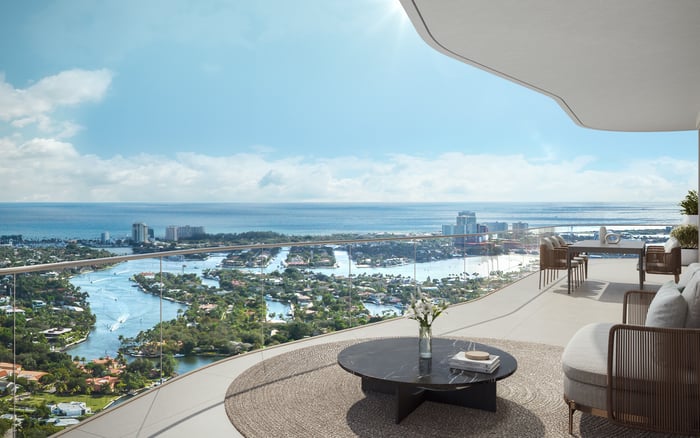
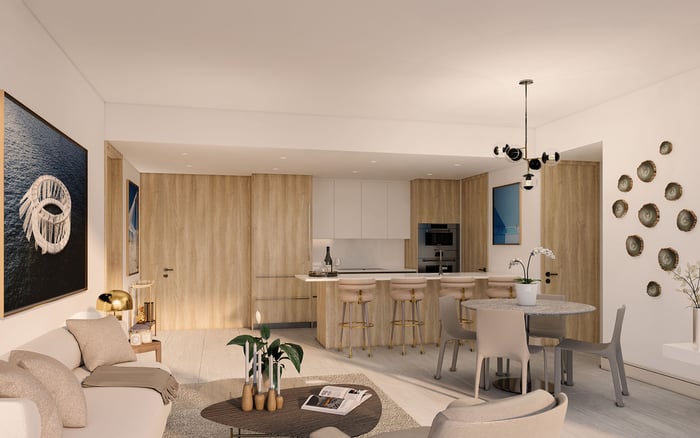
At Shell Bay, the essential ownership questions sit behind the amenity offering: who funds replacements, who sets refurbishment standards, and who can approve spending. Buyers should reconcile those obligations with the latest approved project configuration before committing.

For a buyer considering Shell Bay by Auberge Hallandale, the most consequential ownership questions extend beyond architecture. They concern the durability of the experience: how furniture, fixtures, and equipment are replaced, how refurbishment decisions are made, and how much control an owner retains over the resulting expense.
The community is at 501 Diplomat Parkway in Hallandale Beach, with a fully gated setting and golf, racquet, yacht-club, spa, and fitness facilities. One- to four-bedroom residences are advertised from $2 million-a marketing starting point, not confirmation of current availability.
That offering warrants a disciplined reading of the underlying agreements. A project-specific FF&E reserve amount, contribution percentage, funded replacement schedule, mandatory refurbishment interval, and binding owner-voting threshold remain unestablished in the materials reviewed. This does not mean those provisions are absent. Buyers should obtain them from the documents that govern the purchase and ongoing ownership.
The project includes a planned intimate hotel managed by Auberge alongside private club amenities. The developer, not Auberge, is identified as the entity owning, developing, offering, and selling the project. That distinction matters when determining who promises delivery, who sets operating standards, and who can authorize changes.
Sales disclaimers allow proposed renderings, plans, specifications, terms, and conditions to be modified, revised, or withdrawn at the developer’s sole discretion without prior notice. Buyers should have counsel reconcile that language with the purchase agreement and its exhibits rather than assume a presentation creates an enforceable commitment.
When considering Auberge Beach Residences & Spa Fort Lauderdale alongside Shell Bay, keep the comparison document-specific. A shared brand reference does not establish identical reserve rules, refurbishment obligations, or owner protections.
FF&E means furniture, fixtures, and equipment. At Shell Bay, the diligence question is both financial and organizational: which assets belong to the residence, association, hotel, club, or shared facilities, and which owner or entity must fund their replacement?
Request the declaration, offering documents, annual budget, reserve schedule, hotel-management agreement, rental-program agreement, and shared-facilities agreements applicable to the purchase. These are diligence requests, not a statement that every agreement applies to every residence.
Distinguish annual budgeted contributions from actual account balances. A contribution line does not establish whether money is already held, restricted to particular assets, available for other uses, or sufficient for upcoming replacements. Ask for a reconciliation of balances, planned expenditures, and unfunded obligations.
For each relevant reserve, seek written answers to three practical questions: who contributes, who controls withdrawals, and who covers a shortfall? If a contribution is calculated as a percentage, verify the calculation base and any authority to adjust it. No Shell Bay percentage has been established in the materials reviewed.
A buyer also evaluating 2000 Ocean Hallandale Beach should compare documented funding responsibilities, not merely headline ownership costs.
No numerical refurbishment cycle should be treated as a confirmed Shell Bay obligation on the evidence available. Mandatory intervals for residences, hotel rooms, club spaces, or other amenities remain unestablished.
Instead, request a ten-year capital plan and an FF&E inventory showing useful-life assumptions, estimated replacement costs, inflation assumptions, and the responsible payer. The ten-year horizon is a recommended planning request, not a verified contractual requirement.
Separate three concepts: a forecast of when an asset may need replacement, an operating standard that may trigger intervention, and a contractual requirement to refurbish. Each can create a different cost exposure. A calendar-based refresh and a condition-based replacement are not interchangeable.
If rental participation is contemplated, ask whether the applicable agreement requires a furniture package, inspections, alteration approvals, or replacement to preserve eligibility. Examine potential reserve deductions, wear-and-damage charges, and suspension provisions as well. These are questions to resolve, not confirmed Shell Bay terms.
Legally binding owner-consent rights and voting thresholds for FF&E replacement, capital spending, or operating changes remain unestablished in the materials reviewed. Buyers should not interpret ownership itself as a veto over expenditures.
Have counsel distinguish individual-owner consent from association approval, developer authority, operator discretion, lender consent, and municipal approval. These are separate categories to verify, not an established Shell Bay governance structure.
For each spending category, request the governing provision, decision-maker, applicable threshold, notice requirement, and any exception. Review assessments, capital projects, common-element alterations, operating changes, and work within the residence separately. Ask whether authority changes at any governance transition identified in the documents.
Approval and payment are different questions. Confirm who can authorize an expense and the contractual basis for allocating it to owners. Written approval rights offer little financial clarity unless the associated payment obligations are equally clear.
The amenities include a Greg Norman-designed championship golf course and a racquet club featuring all four Grand Slam surfaces. The offering also includes a 48-slip private yacht club and a private members’ clubhouse with spa and fitness facilities.
Those facilities make capital and operating-cost allocation a material diligence issue. Their presence does not establish that residential owners pay for them-or that club or hotel operations absorb every cost.
Request the applicable allocation schedules and agreements. Ask how residential, hotel, club, and shared-facility expenses are separated, what access depends on membership, and whether allocation formulas can change. Keep operating charges distinct from capital replacement obligations.
Apply the same discipline when comparing Four Seasons Hotel & Private Residences Fort Lauderdale: review each property’s agreements without assuming equivalent hospitality or cost structures.
A developer proposal described in June 2026 would eliminate planned hotel towers and allow the residences to function as full-time homes. A proposal is not an approved change; formal modification would require Hallandale Beach’s planning-review process.
Before relying on hospitality services or rental arrangements, reconcile current city approvals with contract exhibits and condominium documents. Obtain written clarification of which configuration applies to the residence being purchased.
Marketing claims about mandatory hotel-program rentals, no blackout dates, and no minimum rental-day requirement remain unverified contractual terms. They should not underpin an income projection or personal-use plan without the applicable executed agreements.
The objective is not to eliminate every future expense. It is to understand who decides, who pays, and what happens when the operating model changes. Assemble the relevant documents, reconcile conflicting language, and obtain written clarification before making assumptions part of the purchase decision.
For a discreet perspective on South Florida luxury ownership, explore MILLION.
If branded residences are on your mind — as a home or as an allocation — we would be glad to share what we are seeing, privately.
Begin a quiet conversationPublic materials identify Shell Bay’s location as 501 Diplomat Parkway, Hallandale Beach, Florida 33009.
The public materials reviewed do not establish a project-specific reserve amount or contribution percentage. Buyers should request the applicable budget, reserve schedule, and agreements.
No mandatory numerical interval is established in the public materials reviewed. Any enforceable cycle should be verified in the applicable private agreements.
No. Reserve, refurbishment, and approval provisions may exist in private agreements even when public marketing materials do not establish them.
Request the declaration, offering documents, annual budget, reserve schedule, and applicable hotel-management, rental-program, and shared-facilities agreements.
Budgeted contributions do not establish how much money is actually held or whether it is sufficient for planned replacements. Buyers should reconcile balances, restrictions, expenditures, and unfunded obligations.
The public brochure information reviewed does not establish binding owner-consent rights or voting thresholds for FF&E replacement, capital spending, or operating changes.
The project’s website terms identify the developer, not Auberge, as the entity owning, developing, offering, and selling the project. Auberge’s project description includes management of a planned intimate hotel.
The June 2026 proposal does not establish an approved change. Buyers should verify current city approvals and reconcile them with purchase and condominium documents.
Claims about mandatory hotel-program rentals, no blackout dates, and no minimum rental-day requirement remain unverified contractual terms. Buyers should review the applicable agreements before relying on them.