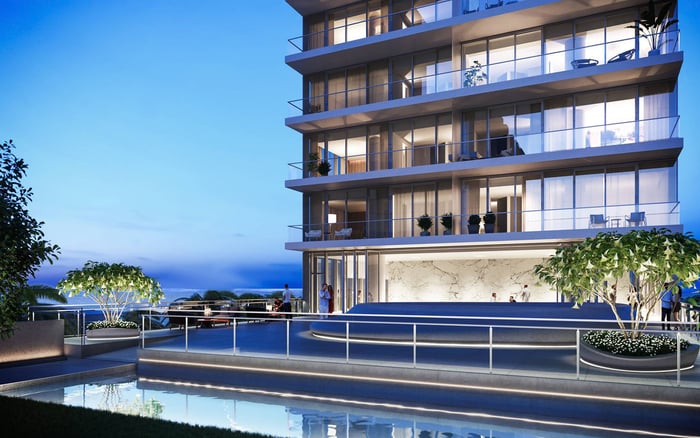
A buyer-focused look at why balcony and terrace rules can materially influence the appeal, utility, privacy, and long-term confidence of a Shell Bay by Auberge Hallandale purchase.

For the buyer considering Shell Bay by Auberge Hallandale, the balcony is not a decorative afterthought. In a luxury branded residence, private outdoor space can function as part living room, part breakfast terrace, part evening lounge, and part quiet work zone. That is why balcony rules can carry more weight than many buyers initially expect.
The appeal of a branded South Florida residence often depends on the full residential experience: service expectations, amenities, privacy, design discipline, and the feeling of a controlled environment. A buyer is not simply evaluating interior square footage. The decision may include the promise of open air, long views, relaxed entertaining, and the sense that the residence expands beyond the glass line.
The key distinction is that perceived terrace value and legal terrace use are not always the same. Marketing imagery can make a terrace feel like an outdoor room, but actual use may be governed by condominium documents, rules, regulations, and operating standards. For a high-net-worth buyer, that gap can alter the decision before contract, during diligence, or later at resale.
In South Florida, outdoor space carries a psychological premium. Buyers often read a deep balcony as lifestyle infrastructure. It is where a morning call happens, where guests gather before dinner, where a laptop can move outdoors, and where the day begins or ends with privacy.
That expectation is especially relevant in Hallandale, where buyers may compare residences across nearby coastal and urban luxury markets in Miami-Dade and Broward. They are not only comparing finishes or amenity menus. They are comparing how a residence will live during season, during family visits, during remote work, and during quiet weekends.
When outdoor space is central to that vision, rules about furniture, lighting, flooring surfaces, planters, visible items, sound, cooking, storage, or temporary installations can become material. The issue is not whether rules are good or bad. It is whether they align with the buyer’s intended use.
Branded residences are built on trust. Buyers expect an elevated environment that feels refined from the lobby to the pool deck to the private residence. That level of consistency often depends on visible control. Terraces contribute to a building’s architectural language, and exterior appearance can shape the entire impression of the property.
For that reason, branded residential communities may manage exterior-facing elements with particular care. A bright umbrella, mismatched flooring surface, visible storage box, or nonconforming light fixture can change the façade. Even when an individual owner views an item as harmless, the association or operator may see it as part of a broader design and risk-management framework.
This is the central tension for a buyer evaluating Shell Bay by Auberge Hallandale. Buyers want flexibility, especially when a residence is positioned around lifestyle. The building, meanwhile, may need to protect privacy, aesthetics, safety, operations, and long-term presentation. Both interests are legitimate. The question is whether the buyer understands that balance before making the purchase.
Specific Shell Bay balcony rules should be confirmed in the condominium declaration, rules, regulations, and any governing documents delivered to buyers. Assumptions are not enough, particularly when outdoor living is part of the value proposition.
A careful buyer should ask several practical questions. What furniture types are permitted? Are there approval requirements for terrace furnishings or floor coverings? Are exterior lights, lanterns, fans, planters, shades, umbrellas, rugs, or art pieces restricted? Can anything be attached, hung, mounted, or placed against the railing or exterior walls? Are there quiet-hour rules that affect entertaining? Are grills, heaters, or other equipment allowed or prohibited?
The answers can influence which residence line is most appealing, which floor level feels right, and whether a buyer chooses Shell Bay over another luxury option in Broward or Miami-Dade. Outdoor rules can also affect how a second-home owner prepares the residence for seasonal use, how staff maintain the terrace, and how often the space is realistically used.
Balcony-use limitations tend to feel minor until they conflict with a buyer’s plans. A purchaser who imagined a dining table for ten, a private outdoor office, or a fully styled lounge may react differently if the rules narrow those options. At the ultra-premium level, inconvenience is not measured only in dollars. It is measured in the loss of intended experience.
Late discovery can create hesitation, renegotiation pressure, or cancellation risk when terrace lifestyle is a central reason for the purchase. It can also affect resale conversations. A future buyer may ask the same questions about outdoor utility, and a well-informed seller is better positioned when the answers are already clear.
This is why balcony diligence belongs early in the decision process. It should sit alongside questions about views, privacy, amenities, service standards, maintenance obligations, parking, access rights, and long-term building operations.
Hallandale has a distinctive position on the South Florida luxury map. It sits within Broward while remaining connected to nearby Miami-Dade destinations. That geography matters because buyers often compare different versions of the same lifestyle: coastal energy, privacy, service, outdoor space, and ease of movement.
Shell Bay is evaluated through a lifestyle lens. The residence is not only a place to sleep between appointments, dinners, or shopping. For many buyers, it is judged as a complete environment where privacy, service expectations, amenity access, and outdoor rituals should reinforce each other.
In that context, the terrace is not simply a balcony. It is part of the daily choreography. A buyer who starts the morning outdoors, hosts family, or uses the terrace as a quiet retreat will naturally place a premium on usability. Rules that clarify or constrain that use can therefore influence perceived value.
The most sophisticated buyers do not treat rules as an obstacle. They treat them as part of the asset. Strong rules can protect aesthetics, preserve privacy, and maintain a polished atmosphere. Weak or unclear rules can create inconsistency. Overly restrictive rules can reduce the utility of outdoor space.
The practical approach is to define personal use first. Will the terrace be primarily for morning coffee, private lounging, entertaining, work, or visual enjoyment? Will the owner be seasonal or full time? Will family members, guests, or staff use the space often? Once that lifestyle profile is clear, the governing documents can be tested against real behavior.
For Shell Bay by Auberge Hallandale, the buyer decision should not turn on a generic idea of having a balcony. It should turn on whether the specific terrace experience aligns with the buyer’s expectations for privacy, design, service, and flexibility.
Balcony and terrace rules can change the buyer decision because they translate lifestyle marketing into daily reality. At Shell Bay, where the residential proposition is connected to a refined South Florida lifestyle, outdoor use deserves close attention.
The right rules can enhance confidence. They can keep the building visually coherent, protect neighboring residents, and preserve the branded environment. The wrong fit can reduce perceived utility, particularly for buyers who see the terrace as an essential outdoor room.
For a luxury purchase, the strongest position is clarity before commitment. Know what can be placed outside, how the space can be used, and where the association’s control begins. In a market where lifestyle is often the deciding factor, the balcony may be one of the most important rooms in the residence.
Do balcony rules matter in a luxury condo purchase? Yes. They can affect how outdoor space functions for lounging, dining, working, privacy, and entertaining.
Are specific Shell Bay balcony rules publicly confirmed here? No. Buyers should verify the exact rules in the condominium declaration, rules, regulations, and sales documents.
Why do branded residences control terrace appearance? Visible exterior elements can influence the building’s façade, design consistency, and overall brand presentation.
What terrace items should buyers ask about? Furniture, lighting, floor coverings, planters, umbrellas, storage, mounted items, and any equipment should be reviewed.
Can balcony rules affect resale value? They can affect buyer perception, especially when future purchasers view outdoor space as essential usable living area.
Why is this especially relevant at Shell Bay? Shell Bay by Auberge Hallandale is a luxury branded residence, so buyers may place added importance on design consistency and outdoor expectations.
Should buyers rely on renderings for terrace use? No. Renderings can suggest lifestyle possibilities, but governing documents define what is actually permitted.
How early should terrace rules be reviewed? They should be reviewed before a buyer treats the balcony as a core reason for purchase or pricing confidence.
Can strict rules be beneficial? Yes. Thoughtful rules may protect privacy, aesthetics, safety, and the long-term quality of the residential environment.
What is the best buyer strategy? Define the intended terrace lifestyle first, then confirm whether the building rules support that use.
If you'd like a private walkthrough and a curated shortlist, connect with MILLION.
If branded residences are on your mind — as a home or as an allocation — we would be glad to share what we are seeing, privately.
Begin a quiet conversation