A buyer-focused due diligence guide to elevator wait-time questions at Shell Bay by Auberge Hallandale, framed around documented assumptions rather than assumptions of luxury.
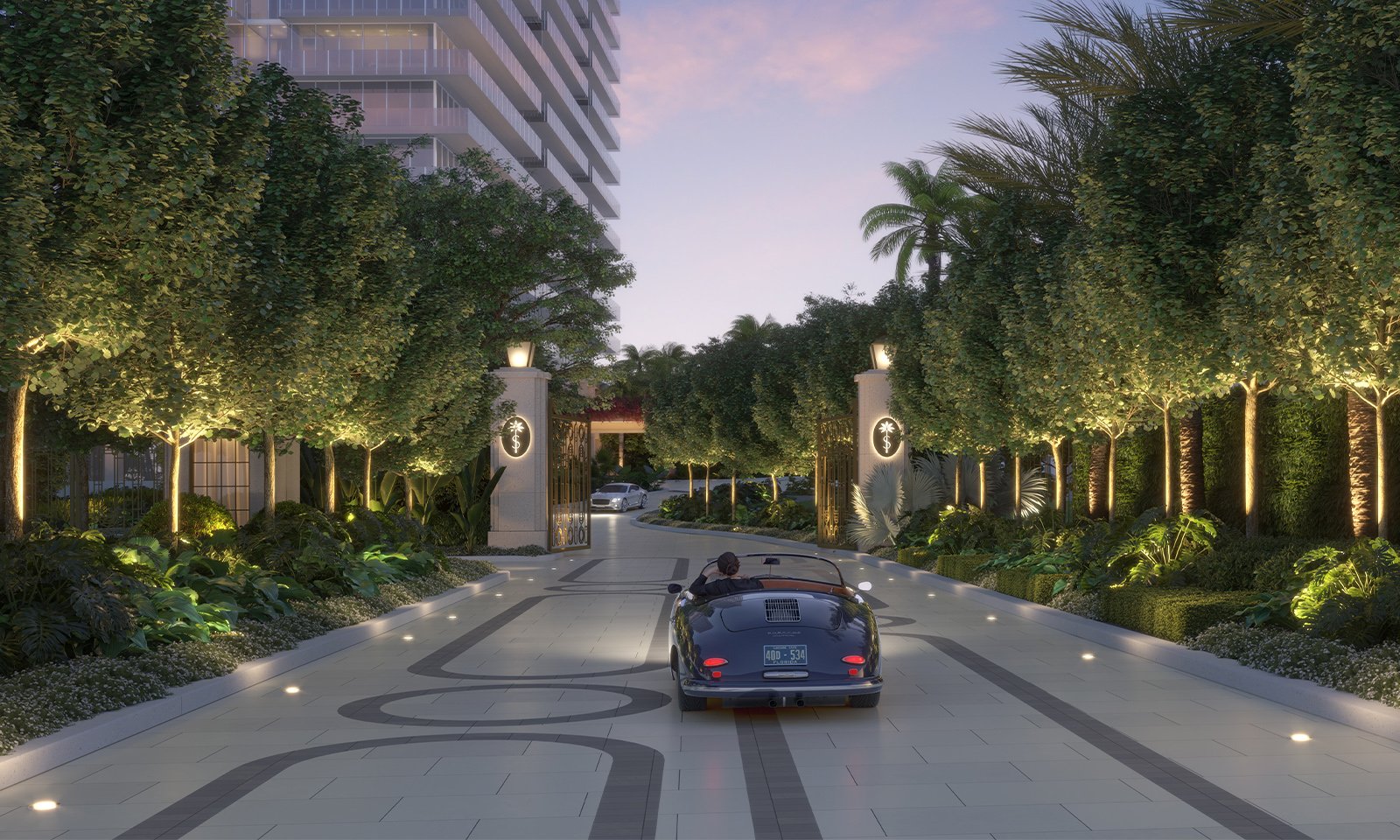
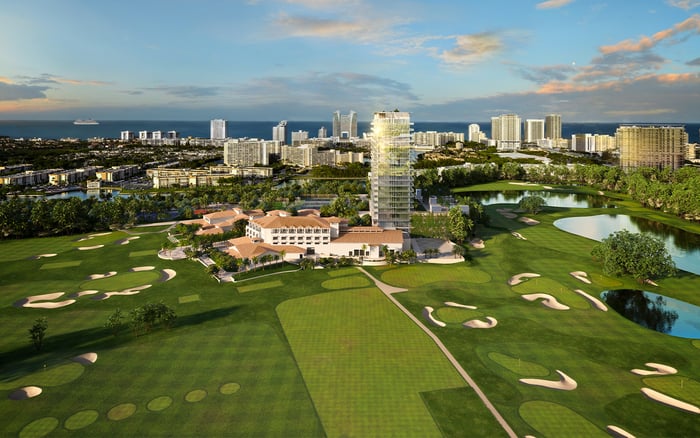
Shell Bay by Auberge Hallandale sits within one of South Florida’s most closely watched branded-residence conversations: a luxury Hallandale Beach development associated with the Auberge name and identified as a 52-story tower with 146 residences. That combination offers buyers a familiar promise: privacy, service, vertical drama, and a lifestyle experience designed to feel considered from arrival to residence.
For sophisticated purchasers, however, the daily luxury experience is not defined only by views, finishes, club access, or brand affiliation. It is also defined by the friction between the porte cochère and the front door. In a tall residential tower, elevator performance can shape morning routines, dinner departures, staff flow, guest arrivals, service calls, move-ins, and high-season weekends.
The point is not that Shell Bay by Auberge Hallandale has a documented elevator problem. The more precise point is that publicly available buyer-facing materials emphasize height, residence count, and luxury branding more than elevator performance specifics. No verifiable public elevator wait-time projections or detailed elevator-system specifications-such as the number of cars, elevator banks, speeds, or destination-dispatch details-are available in the provided buyer-facing record. That makes elevator performance a due-diligence topic, not a rumor.
For MILLION readers, the standard should be simple: do not let the word luxury substitute for documented operational performance.
A 52-story, 146-residence configuration is not automatically inefficient, and it is not automatically seamless. The answer depends on design, elevator count, zoning, cab speed, dispatch technology, service separation, staffing patterns, amenity demand, and redundancy when one car is offline.
Buyers should ask whether elevator traffic has been modeled for peak occupancy, not only average occupancy. Average use can look elegant on paper; peak use reveals the lived experience. Morning departures, evening returns, weekend amenity traffic, high-season occupancy, move-ins, deliveries, housekeeping, maintenance, and guest arrivals can create very different demand profiles.
The request should be direct and written: provide the elevator consultant’s traffic study or, at minimum, a written summary of handling capacity, interval, projected average waits, travel-time assumptions, and redundancy scenarios. If the response is only conversational, buyers should continue asking. A residence at this level deserves a documented answer.
This is especially relevant for buyers comparing Hallandale with other South Florida submarkets, where new-construction and pre-construction buyers increasingly scrutinize operational details before signing. For Shell Bay by Auberge Hallandale, the elevator question belongs beside views, parking, club programming, and residence layout.
Start with the basic system architecture. How many passenger elevators are planned? How many service elevators are planned? Are there dedicated private or residential elevator zones? Are the elevators grouped into separate banks for lower, middle, and upper floors, or do residents share broader vertical circulation?
Then move from hardware to performance. What are the projected average wait times during morning peak, evening peak, weekends, move-ins, and high-season occupancy? What are the assumptions for full or near-full residential use? How does the model change when residents have guests, staff, vendors, or deliveries moving through the building at the same time?
Service separation is a central luxury issue. Buyers should ask whether staff, deliveries, housekeeping, maintenance, and resident moves share the same elevator cores as residents. In a branded environment, operational polish is often most visible when residents do not see the complexity behind the scenes. If those flows overlap, the buyer should understand when and how that overlap occurs.
Redundancy is equally important. What happens when one elevator is offline for inspection, repair, modernization, or emergency service? A system can feel generous when every car is running and constrained when one is out. The due-diligence question is not merely how the system performs in ideal conditions; it is how gracefully it performs under stress.
For buyers focused on high floors, floor-specific assumptions matter. A lower-floor owner and an upper-floor owner may experience the same tower differently. Ask for floor-specific wait-time and travel-time expectations, particularly if the residence is high in the building. The premium paid for elevation should be accompanied by clarity on vertical access.
Shell Bay’s association with the Auberge name positions it within the branded luxury-residence segment, where buyers often expect hotel-level service sensibility without hotel-level inconvenience. That expectation makes elevator planning more consequential, not less.
Buyers should clarify whether branded-hospitality operations, amenity use, events, golf activity, club programming, or guest traffic could affect residential elevator demand. If residents, invited guests, staff, vendors, and service teams are moving through the property at overlapping times, the vertical-transportation model should account for that reality.
This does not mean every event or amenity moment creates a problem. It means the building’s operating model should be reconciled with its elevator model. The best luxury buildings do not rely on residents adapting to congestion. They design circulation so the resident experience remains calm even when the property is active.
In the MILLION view, elevator questions are not impolite. They are part of disciplined purchasing. A branded residence may deliver exceptional service, but the buyer should still know how that service moves through the building.
A strong answer will be specific. It will identify the planned number of passenger and service elevators, explain any private or residential zones, summarize peak-period assumptions, and describe how service and delivery activity is separated from resident movement. It will also address what happens when one elevator is offline.
A weaker answer will rely on general language: luxury standard, best in class, sufficient capacity, or no expected issue. Those phrases may be reassuring, but they do not replace performance assumptions. Buyers should not need to become elevator engineers. They simply need enough information to understand whether the system has been modeled for the way they will actually live.
The most useful document is the consultant’s traffic study. If that is not shared, a written summary can still be valuable if it includes handling capacity, interval, wait-time assumptions, travel-time assumptions, peak occupancy assumptions, and redundancy planning. The key is that the answer be documented before contract commitment.
For a buyer considering Shell Bay by Auberge Hallandale, the issue is not whether the tower has enough elevators in the abstract. It is whether the developer will put performance assumptions in writing, including the scenarios that matter most to the buyer’s floor, lifestyle, and season of use.
Elevator wait times are rarely the first topic in a sales gallery, but they often become part of daily life after closing. In a 52-story tower with 146 residences, vertical circulation deserves the same seriousness as ceiling heights, terrace depth, exposure, valet operations, and amenity access.
The right approach is calm and precise. Ask for the system plan. Ask for peak modeling. Ask about service separation. Ask about downtime. Ask for floor-specific assumptions if buying high in the tower. Ask how branded operations, amenities, events, and club-related activity are handled.
The strongest buyers do not treat these questions as objections. They treat them as alignment. If the answers are well documented, the purchase conversation becomes cleaner. If the answers remain general, the buyer has learned something important before making a commitment.
Is Shell Bay by Auberge Hallandale confirmed to have elevator wait-time issues? No. The better framing is that verified public wait-time projections are not available, so buyers should ask for written performance assumptions.
How tall is Shell Bay by Auberge Hallandale? Shell Bay is identified as a 52-story luxury residential tower in Hallandale Beach.
How many residences are identified for Shell Bay? The development is identified as having 146 residences.
Why do elevator wait times matter in a luxury tower? They affect daily privacy, convenience, guest movement, service flow, and the ease of living on upper floors.
What elevator details should buyers request first? Ask for the planned number of passenger elevators, service elevators, elevator banks, and any dedicated residential or private zones.
Should buyers ask for peak-period modeling? Yes. Morning peak, evening peak, weekends, move-ins, and high-season occupancy can produce different results from average-use assumptions.
Why is service-elevator separation important? If residents share elevator cores with staff, deliveries, housekeeping, maintenance, or moves, the resident experience can be affected.
What should upper-floor buyers ask specifically? They should request floor-specific wait-time and travel-time assumptions, since lower, middle, and upper floors may experience the tower differently.
What happens if one elevator is offline? Buyers should ask how wait times and handling capacity change during inspections, repairs, modernization, or emergency service.
What is the most important document to request? Request the elevator consultant’s traffic study or a written summary of handling capacity, interval, peak assumptions, and redundancy planning.
For a tailored shortlist and next-step guidance, connect with MILLION.
If branded residences are on your mind — as a home or as an allocation — we would be glad to share what we are seeing, privately.
Begin a quiet conversation