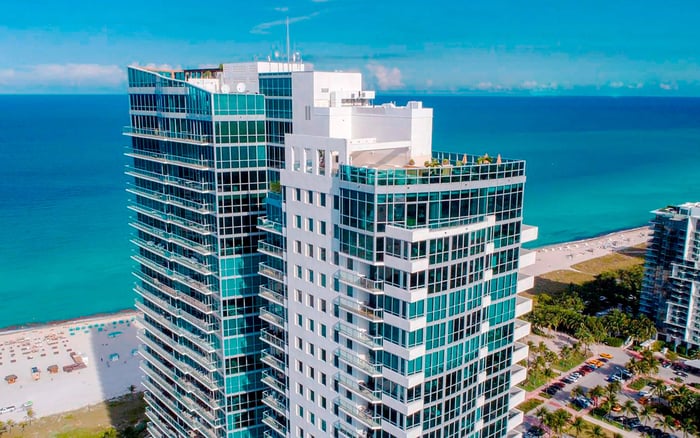
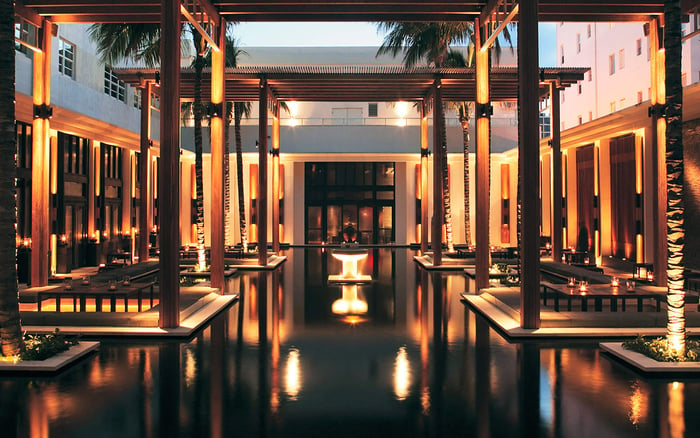
A buyer-focused comparison of Setai Residences Miami Beach and Banyan Tree Residences West Palm Beach, centered on service depth, elevator privacy, owner-only amenities, and the lifestyle differences between Miami Beach and West Palm Beach.
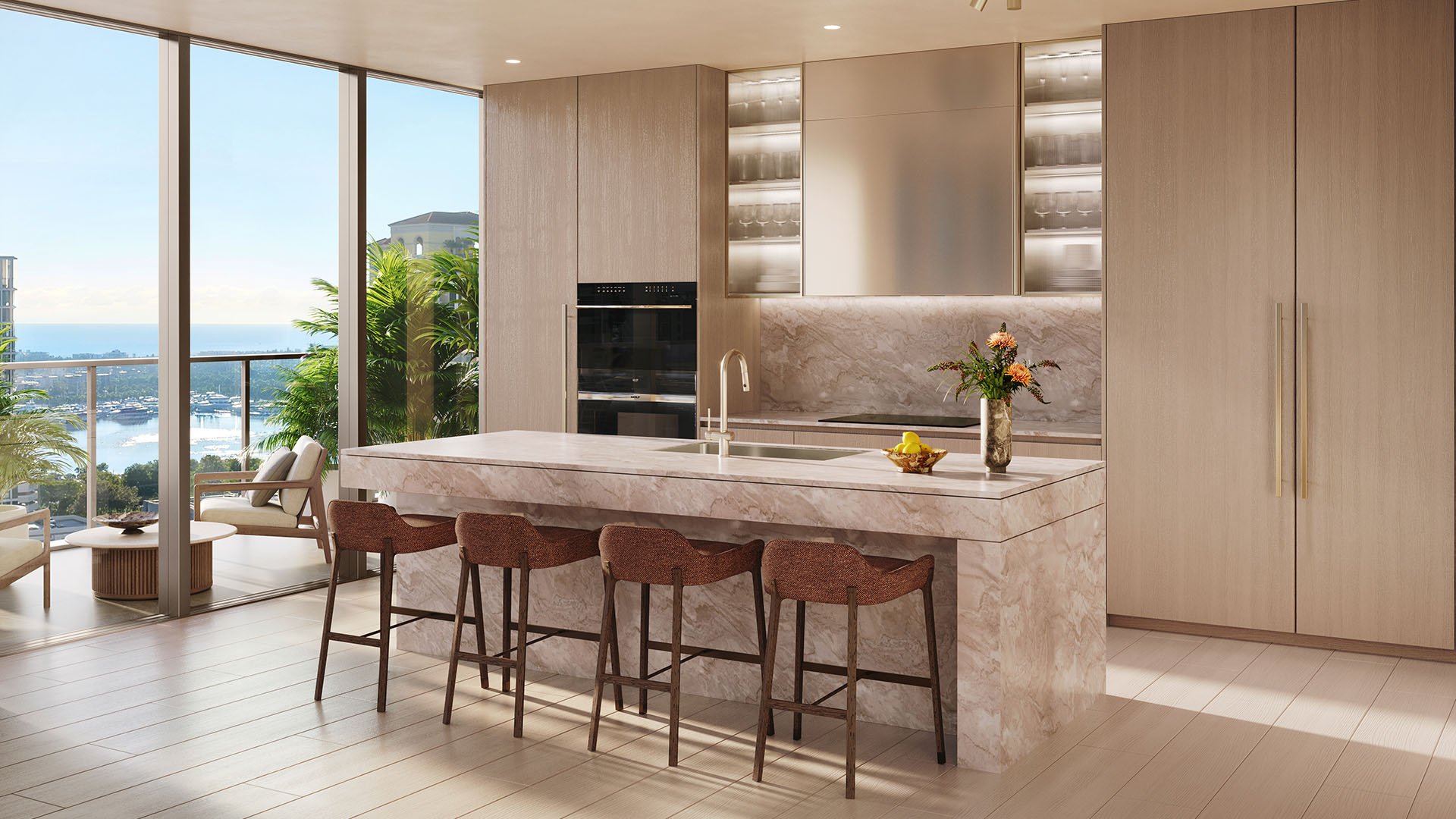
Setai Residences Miami Beach or Banyan Tree Residences West Palm Beach is not simply a question of which name sounds more rarefied. For a South Florida buyer already accustomed to private clubs, staffed homes, discreet travel, and strong building culture, the more meaningful test is how each residence performs in daily life. The distinction comes down to three areas: service depth, elevator privacy, and owner-only amenities.
Setai Residences Miami Beach carries the emotional shorthand of Miami Beach, with the energy, visibility, and coastal rhythm many buyers associate with a true resort address. Banyan Tree Residences West Palm Beach, by contrast, suggests a different tempo: a calmer Palm Beach County lifestyle, proximity to an increasingly polished urban core, and a residential cadence that may appeal to buyers who want luxury without constant spectacle.
That is why this comparison should begin not with finishes, views, or brand aura, but with habits. How often will the owner be in residence? Will the home function as a primary residence, a second home, or a lock-and-leave retreat? Does the buyer want staff to anticipate preferences in a highly visible resort setting, or does the buyer prize a quieter, more separated form of service? Those answers determine which environment feels more intuitive.
In branded luxury residences, service is often discussed as a promise. Experienced buyers know to examine how that promise is delivered. Service depth means more than a concierge desk. It involves the meaningful touchpoints between arrival and residence, the responsiveness of the team, the distinction between resident services and guest-facing hospitality, and the degree to which staff can support a household’s recurring patterns.
For Setai Residences Miami Beach, the buyer should consider whether the appeal lies in the prestige and rhythm of a Miami Beach setting. This can be compelling for owners who value beach proximity, restaurant access, cultural visibility, and the sensation of living within a known luxury ecosystem. The service expectation here is likely to be evaluated through consistency, polish, and the ability to maintain calm within a destination environment.
For Banyan Tree Residences West Palm Beach, the service question may be more residential in tone. Buyers drawn to West Palm Beach often want sophistication with slightly more breathing room. They may still expect a high-touch experience, but the ideal version may feel less performative and more private. In that case, service depth is not measured by how much is visible, but by how little friction the owner feels.
The right due diligence is direct. Ask how resident requests are prioritized, whether services are shared across different user groups, how arrivals are handled during peak periods, and which amenities are exclusively controlled for owners. Luxury service is most valuable when it preserves time, not when it merely looks ceremonial.
Elevator privacy is one of the most underestimated distinctions in the ultra-premium market. A residence can have remarkable architecture, a dramatic lobby, and beautiful amenities, yet still feel less private if the journey from vehicle to front door is too exposed. For buyers who travel with family, staff, security, pets, or guests, vertical circulation is not a minor operational detail. It is the spine of privacy.
A buyer comparing Setai Residences Miami Beach with Banyan Tree Residences West Palm Beach should look carefully at how each building separates residents from visitors, service teams, amenity users, and public-facing spaces. Private or semi-private elevators can change the tone of ownership. So can controlled vestibules, direct elevator access, and the ability to move from garage to residence without unnecessary interaction.
This is especially relevant in Miami Beach, where destination energy is part of the lifestyle. Some owners want that energy close at hand, but not at their front door. The more animated the setting, the more important the private arrival sequence becomes. In West Palm Beach, the privacy question may feel different. The city’s quieter tone can make the whole experience feel more residential, but buyers should still verify how the building handles peak amenity use, deliveries, staff movement, and guest access.
Elevator privacy is ultimately about control. The best building for a particular owner is the one where the route home feels predictable, dignified, and shielded from unnecessary contact.
South Florida buyers have become fluent in amenity language. Pool decks, wellness suites, lounges, private dining, screening rooms, spas, fitness studios, pet areas, and children’s spaces are now common in the luxury conversation. The issue is no longer whether a building has amenities. The issue is who controls them, who uses them, and whether owners can actually enjoy them when they choose.
Owner-only amenities are especially important when comparing a high-profile Miami Beach environment with a West Palm Beach residential setting. At Setai Residences Miami Beach, the buyer should understand which spaces feel purely residential and which may carry a broader hospitality rhythm. That distinction can be very attractive to owners who enjoy a resort atmosphere, but it should be intentional.
At Banyan Tree Residences West Palm Beach, the amenity decision may center on calm, wellness, and day-to-day usability. If the building’s resident-only spaces are designed to feel intimate, that may be the advantage for buyers who prefer discretion over scene. A smaller number of well-protected spaces can be more valuable than a larger collection of amenities that feel shared, busy, or loosely governed.
The best question is simple: would the owner use these spaces on an ordinary Tuesday? If the answer is yes, the amenity program has substance. If the answer depends on avoiding crowds, navigating guest traffic, or waiting for preferred times, the amenity package may be less powerful than it first appears.
Setai Residences Miami Beach speaks to buyers who want immediacy. Oceanfront energy, walkable dining, nightlife, culture, and a recognizable Miami Beach identity are part of the appeal. For some owners, that is precisely the point. The residence becomes a base for a more social, design-aware, internationally connected lifestyle.
Banyan Tree Residences West Palm Beach may appeal to the buyer who wants luxury with a softer edge. West Palm Beach has become increasingly relevant to buyers who want access to Palm Beach, private aviation, dining, galleries, and a more composed residential rhythm. It can feel easier, less congested, and more aligned with longer stays.
Neither profile is superior in the abstract. The Setai buyer may be energized by resort immediacy and the ability to move from residence to beach to dinner with minimal planning. The Banyan Tree buyer may prefer returning to a calmer environment after a day of appointments, boating, clubs, or family commitments. One is not necessarily more luxurious. They simply define luxury differently.
For a second-home buyer, the difference can be decisive. If the goal is a glamorous, high-frequency coastal retreat, Miami Beach may feel more compelling. If the goal is a refined base for longer, more restorative stays, West Palm Beach may be the better fit.
The clearest way to compare these two residences is to create a personal hierarchy. First, decide whether service should feel hotel-like, residential, or invisible. Second, determine how much elevator privacy is required for family, staff, and guests. Third, study the amenity plan through the lens of actual use, not brochure language. Fourth, choose the city that best supports daily routines.
If the owner values brand presence, beach energy, and a polished Miami Beach identity, Setai Residences Miami Beach may feel more natural. If the owner values quieter arrivals, Palm Beach County ease, and a more composed residential pattern, Banyan Tree Residences West Palm Beach may deserve priority.
The most sophisticated buyers are not asking which project is more impressive. They are asking which one will still feel effortless after the novelty fades. That is the correct standard for ultra-prime ownership.
Which residence is better for a buyer who wants a resort atmosphere? Setai Residences Miami Beach may be the more intuitive fit for buyers who want Miami Beach energy and a resort-oriented lifestyle.
Which residence may feel calmer for longer stays? Banyan Tree Residences West Palm Beach may appeal to buyers who prefer a quieter Palm Beach County rhythm and a more residential pace.
Why is elevator privacy so important? Elevator privacy affects the entire arrival experience, especially for owners with family, staff, security needs, or frequent guests.
Should buyers prioritize owner-only amenities? Yes. Owner-only amenities often matter more than the total number of amenities because they protect access, comfort, and discretion.
Is Miami Beach better for a second home? Miami Beach can be ideal for a second home if the buyer wants beach energy, dining, culture, and a more social coastal base.
Is West Palm Beach better for full-time living? It may be, especially for buyers who want a calmer daily cadence while still remaining close to Palm Beach amenities and services.
What should buyers ask about service depth? They should ask how resident requests are handled, which services are reserved for owners, and how peak periods affect response times.
Are branded residences automatically more private? Not always. Privacy depends on circulation, access control, amenity governance, and the separation between owners and other users.
Which option is better for discretion? The better option is the one with the stronger private arrival sequence, clearer resident-only spaces, and less daily friction.
What is the best way to choose between them? Rank service depth, elevator privacy, amenity exclusivity, and city lifestyle before comparing design preferences or brand perception.
When you're ready to tour or underwrite the options, connect with MILLION.
If branded residences are on your mind — as a home or as an allocation — we would be glad to share what we are seeing, privately.
Begin a quiet conversation