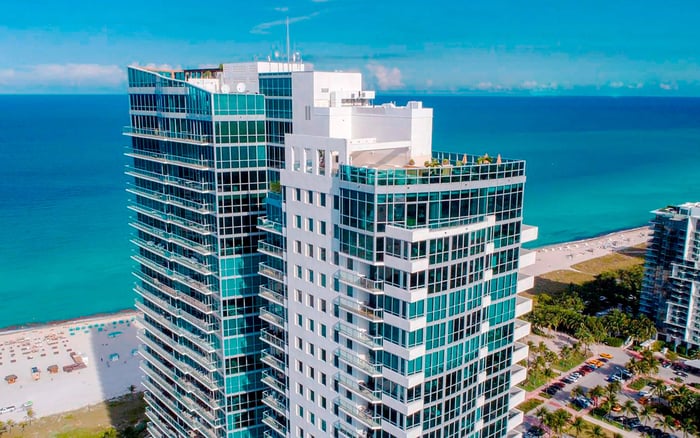
A practical due-diligence guide for luxury buyers evaluating valet capacity, parking rights, peak service performance, EV access, overflow protocols, and management accountability at Setai Residences Miami Beach.

At the highest tier of Miami Beach ownership, parking is not merely a place to leave a car. It is a service sequence: arrival, intake, storage, retrieval, security, billing, guest handling, special-event pressure, and the quiet confidence that your vehicle will be ready when you are. That distinction matters at Setai Residences Miami Beach, where the ownership experience should be evaluated as a resort-condominium environment, not a conventional residential garage.
For a Miami Beach buyer, valet capacity deserves the same scrutiny as views, floor height, finishes, and monthly carrying costs. In shorthand, this asset sits at the intersection of Oceanfront living, Beach-access convenience, Second-home use, and a Condo-hotel service rhythm. The key question is not simply, “How many parking spaces exist?” It is whether the full parking system performs when residents, hotel guests, restaurant patrons, spa users, visitors, service vehicles, and event traffic converge at the same time.
Before judging service quality, confirm what is actually being purchased. Ask whether the residence has valet-based parking rights, deeded parking, assigned use rights, or a hybrid arrangement documented in the condominium governing documents. A verbal summary is not enough. The answer should be traceable to the declaration, association rules, purchase contract, estoppel package, or other binding materials.
Then ask how many vehicles are included with the specific residence under consideration. Entitlements may vary by unit, association rule, or contract term, and a larger residence does not automatically bring a larger parking allocation unless that allocation is documented. If you expect to keep multiple cars, a driver’s vehicle, an exotic car, or seasonal guest vehicles, resolve this point before contract deadlines pass.
Buyers comparing service-driven Miami Beach residences, from Faena House Miami Beach to Shore Club Private Collections Miami Beach, should treat parking rights as both a legal and operational issue. The strongest purchase file answers both questions: what you are entitled to, and how that entitlement is delivered day to day.
A resort-style address can have several constituencies arriving at once. Residents may be returning from dinner as hotel guests check in, restaurant patrons depart, spa users retrieve vehicles, and event attendees begin to queue. Ask how parking capacity is allocated among those groups, and whether residents receive priority during peak arrival and departure periods.
The practical follow-up is physical inventory. Request a clear explanation of on-site garage capacity, any resident-reserved inventory, staging areas, valet lanes, and any contracted off-site overflow spaces. If off-site overflow is part of the system, ask when it is triggered, how vehicles are moved, who authorizes it, and how retrieval times are affected.
Do not evaluate capacity by a single garage number. The porte cochère and driveway may matter just as much. Intake capacity, lane management, stacking space, and traffic control determine whether the service feels seamless or strained. A garage can have available stalls and still produce delays if the arrival court becomes congested.
Luxury buyers should ask for average and peak valet retrieval times, especially during weekends, holidays, high season, restaurant rushes, and major Miami Beach events. A calm Tuesday afternoon is not the test. The meaningful test is a Saturday evening, a holiday departure window, or any moment when multiple user groups need the same driveway.
Ask whether the valet operator tracks service metrics such as queue length, vehicle retrieval time, staffing levels, complaints, damage claims, and overflow events. If management measures these items, ask how often the data is reviewed and who has authority to require improvement. If the answer is informal, speak with sellers, current residents, and management about real-world wait times. In a service building, lived experience can reveal more than brochure language.
This is especially relevant for buyers who split time between residences. A Second-home owner may arrive during the very weeks when demand is highest, then expect a rapid departure for the airport, dinner, or a private event. The service must be judged against the buyer’s actual usage pattern, not an average resident’s routine.
Ownership structure matters because accountability determines outcomes. Ask who manages the valet operation: hotel management, the condominium association, a third-party valet company, or a shared-management structure. Then ask who pays, who supervises, who disciplines, and who can change the arrangement.
The valet contract should be part of the due-diligence conversation. Buyers should ask whether it contains service-level standards, insurance requirements, staffing minimums, damage-claim procedures, incident-reporting protocols, and termination rights. If a car is damaged, delayed, misplaced, blocked in, or moved off-site, the owner should know the procedure before a problem occurs.
Also ask whether parking and valet rules can be changed after purchase by the board, hotel operator, or management company. Flexibility can help a building adapt, but it can also alter the ownership experience. A buyer who requires certainty should understand which rights are fixed and which are subject to future rule changes.
Modern luxury ownership often involves more than one vehicle type. Ask whether oversized vehicles, exotic cars, electric vehicles, motorcycles, guest cars, and driver or security vehicles are handled differently. Exotic and low-clearance cars may require special intake procedures. Oversized vehicles may have location limits. Security drivers may need waiting protocols that differ from guest parking.
EV access deserves a separate conversation. Ask whether charging is available through valet, whether access is included or billed separately, whether charging capacity is limited, and whether vehicles queue for chargers during busy periods. For an owner relying on an electric vehicle, charger availability is not an amenity detail. It is part of daily mobility.
Finally, ask whether owners may self-park under any circumstances, or whether all vehicle access must go through valet staff. Some buyers prefer full-service handling. Others want the option of direct access for privacy, speed, or comfort with a specific vehicle. Either preference should be matched to the building’s actual rules.
At the ultra-premium level, the driveway is a theater of service. It is where privacy is protected, luggage is transferred, guests are received, children are loaded into cars, and owners sense whether a building is calm or overextended. Buyers considering other service-forward addresses, such as The Ritz-Carlton Residences® South Beach or Five Park Miami Beach, should bring that same attention to arrival choreography.
Ask about written protocols for overflow parking, blocked access, special events, hurricane preparation, and extended vehicle storage. Ask what happens if multiple cars are requested at once from the same residence. Ask how guest vehicles are identified, billed, staged, and retrieved. The best answers are specific, operational, and documented.
For buyers at Setai Residences Miami Beach, the most refined approach is to treat valet capacity as a performance system. Legal rights, physical inventory, staffing, queue control, user priority, vehicle type, EV access, and rule-change authority all shape the experience. In a building where hospitality is part of the allure, the garage is not backstage. It is one of the places where luxury either holds its line or quietly fails.
Should I ask whether parking is deeded or valet-based? Yes. Confirm whether the right is deeded, valet-based, assigned, or hybrid, and make sure the answer is documented.
How many cars should be included with my residence? Ask about the specific unit, because vehicle entitlements may vary by residence, rules, or contract terms.
Can I keep extra vehicles at the building? Ask whether additional vehicles can be accommodated and whether monthly, seasonal, or per-use valet charges apply.
Do residents receive priority over hotel or public users? Ask this directly, especially for weekends, holidays, restaurant rushes, and major Miami Beach events.
What valet wait time should I request? Ask for both average and peak retrieval times, then compare those figures with resident and seller feedback.
Who manages the valet operation? Confirm whether it is controlled by hotel management, the association, a third-party operator, or a shared structure.
Should I review the valet contract? Yes. Look for service standards, insurance requirements, staffing minimums, claim procedures, and termination rights.
Is EV charging automatically included? Not necessarily. Ask whether charging is included, billed separately, capacity-limited, or subject to queueing.
Can owners self-park at Setai Residences Miami Beach? Ask management and review the governing documents to determine whether any self-parking rights exist.
Can valet rules change after I buy? Ask whether the board, hotel operator, or management company has authority to modify parking and valet rules.
For a discreet conversation and a curated building-by-building shortlist, connect with MILLION.
If branded residences are on your mind — as a home or as an allocation — we would be glad to share what we are seeing, privately.
Begin a quiet conversation