For Dallas households considering South Beach, the central question is not whether Miami Beach feels compelling. It is whether residency planning, family logistics, privacy, and ownership structure can support a credible daily life.

For a Dallas buyer, South Beach can represent far more than an occasional escape. The more consequential possibility is a residence that supports family routines, private entertaining, professional obligations, and a carefully documented change in domicile. Those objectives demand a more exacting search than the familiar pursuit of an impressive view.
The strongest evaluation begins with behavior. Where will the family actually spend its time? Which home will anchor school nights, medical care, business administration, personal records, and social life? How should arrivals function when children, guests, household staff, or security personnel are involved? A property becomes persuasive when the answers form a coherent pattern.
This is where second-home logic may prove insufficient. A beautiful apartment can accommodate occasional visits yet remain poorly suited to full-time rhythms. Dallas households considering a deeper relocation should assess South Beach as an operating base, not merely a destination.
Tax residency should never be reduced to the purchase of Florida real estate. It is a legal and financial question shaped by personal circumstances, conduct, documentation, and connections across jurisdictions. Buyers should coordinate qualified tax, legal, estate-planning, and insurance advice before determining how a South Beach acquisition fits within a broader strategy.
The real-estate search can then follow that plan. Ownership structure, intended occupancy, timing, financing, and the treatment of another home may all shape the questions advisers need to address. The objective is alignment between the residence selected and the life the household genuinely expects to lead.
A useful discipline is to create a private residency calendar before touring. Map expected nights, family travel, board commitments, holidays, and periods in Dallas. This exercise does not determine legal status, but it can reveal whether the proposed arrangement is practical enough to sustain.
Family life in Miami Beach should be examined at the level of an ordinary Tuesday. Test morning departures, after-school activities, tutoring, medical appointments, exercise, grocery routines, household staffing, and evening plans. For families undertaking private-school planning, the relevant issue is not simply preference. It is whether the entire weekday schedule remains manageable amid changing traffic, extracurricular commitments, and the needs of multiple children.
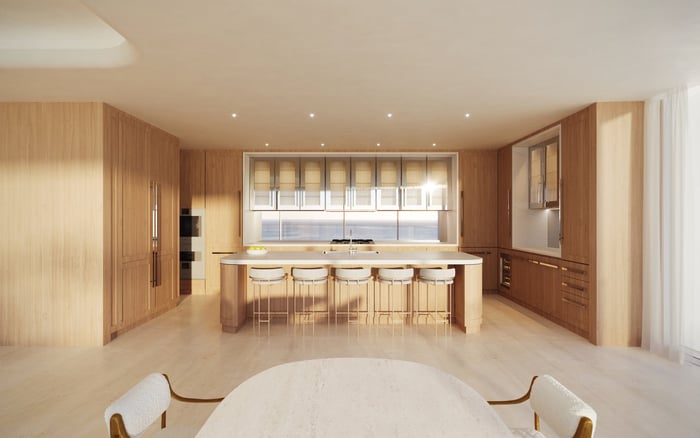
The residence itself should accommodate those patterns. Separate bedroom zones, quiet study space, storage, service circulation, and flexible rooms can matter more over time than decorative impact. Buyers expecting grandparents, caregivers, or adult children should also consider how privacy will be preserved as the household expands.
A project such as The Ritz-Carlton Residences® South Beach can be placed within this broader comparison, but no name should substitute for testing the family's actual schedule and service expectations.
Privacy is not a single amenity. It is a sequence that begins at the street and continues through arrival, parking, lobby movement, elevator access, residence entry, terraces, service visits, and departure. Dallas buyers accustomed to the separation afforded by a private home may find this sequence especially important when evaluating condominium living.
During tours, observe rather than assume. Consider whether residents and visitors share circulation, how deliveries are handled, where drivers wait, and whether household staff can work without disrupting family areas. Inside the residence, study sightlines from the entry, separation between primary and guest suites, acoustic boundaries, and the relationship between interior rooms and neighboring terraces.
Low-density options such as Apogee South Beach and Continuum on South Beach may belong in a buyer's comparative set, particularly when South of Fifth is part of the location brief. The decision should still turn on the specific residence, building procedures, and daily arrival experience-not reputation alone.
The appeal of an oceanfront address is immediate, but the best choice balances exposure to the water with the household's preferred degree of activity. Some buyers want direct participation in Miami Beach life. Others prefer to engage selectively, with the residence serving as a protected retreat.
That distinction influences floor height, orientation, terrace use, acoustic expectations, elevator strategy, and proximity to dining or cultural plans. It also affects whether the family will use the home consistently or default to another residence when the calendar becomes demanding.
For buyers considering the broader Miami Beach experience, Shore Club Private Collections Miami Beach offers another point of comparison. The useful question is not which property appears most visible, but which setting best supports the household's preferred lifestyle while preserving control over time and access.
Once the location and building shortlist is established, the review should become granular. Examine the individual floor plan, elevator relationship, service routes, views from seated positions, bedroom privacy, storage, parking arrangements, guest access, and any rules relevant to staffing, pets, renovations, or extended absences.
Buyers should also evaluate the responsibilities attached to ownership. Review governing documents and financial materials with appropriate counsel and advisers. Address insurance, estate planning, security, property management, and maintenance before treating the residence as a dependable base.
A measured process does not diminish the emotional appeal of South Beach. It protects it. When residency objectives, family routines, privacy, and ownership obligations reinforce one another, the result can feel less like a strategic compromise and more like a deliberate next chapter.
Does buying a South Beach residence establish tax residency? A purchase alone should not be treated as determinative. Buyers should obtain advice tailored to their facts, conduct, documentation, and connections to other jurisdictions.
When should tax and legal advisers become involved? Ideally, advisers should be consulted before ownership structure, timing, financing, or occupancy assumptions are finalized.
Can a South Beach home work for a family with school-age children? It can be evaluated for that purpose, but families should test the complete weekday schedule rather than focus only on distance.
What does daily privacy mean in a condominium? It encompasses street arrival, parking, lobby and elevator movement, guest access, deliveries, staffing, interior sightlines, and acoustic separation.
Should Dallas buyers prioritize a branded residence? Branding may help frame service expectations, but the specific residence, operating procedures, governance, and household fit deserve independent review.
Is an oceanfront home automatically the best choice? Not necessarily. Orientation, wind exposure, terrace habits, acoustics, floor plan, and access patterns may matter more to daily satisfaction.
How should buyers compare South of Fifth with other parts of Miami Beach? Compare each area through the family's recurring routes, desired atmosphere, privacy threshold, and preferred relationship to dining and social activity.
What should be tested during a private showing? Walk the full arrival sequence, inspect service circulation, assess room separation, study terrace relationships, and imagine the home at different times of day.
What documents deserve review before a condominium purchase? Appropriate advisers should review governing, financial, insurance, title, ownership, and other transaction documents relevant to the property and buyer.
How can a buyer decide whether South Beach should become the primary base? Build a realistic annual calendar, model the family week, and confirm that professional, personal, and advisory plans point in the same direction.
To compare the best-fit options with clarity, connect with MILLION.
If branded residences are on your mind — as a home or as an allocation — we would be glad to share what we are seeing, privately.
Begin a quiet conversation