A discreet 2026 guide to evaluating luxury condos for private dinners, larger gatherings, chef service, guest flow and the operational details behind effortless hosting.
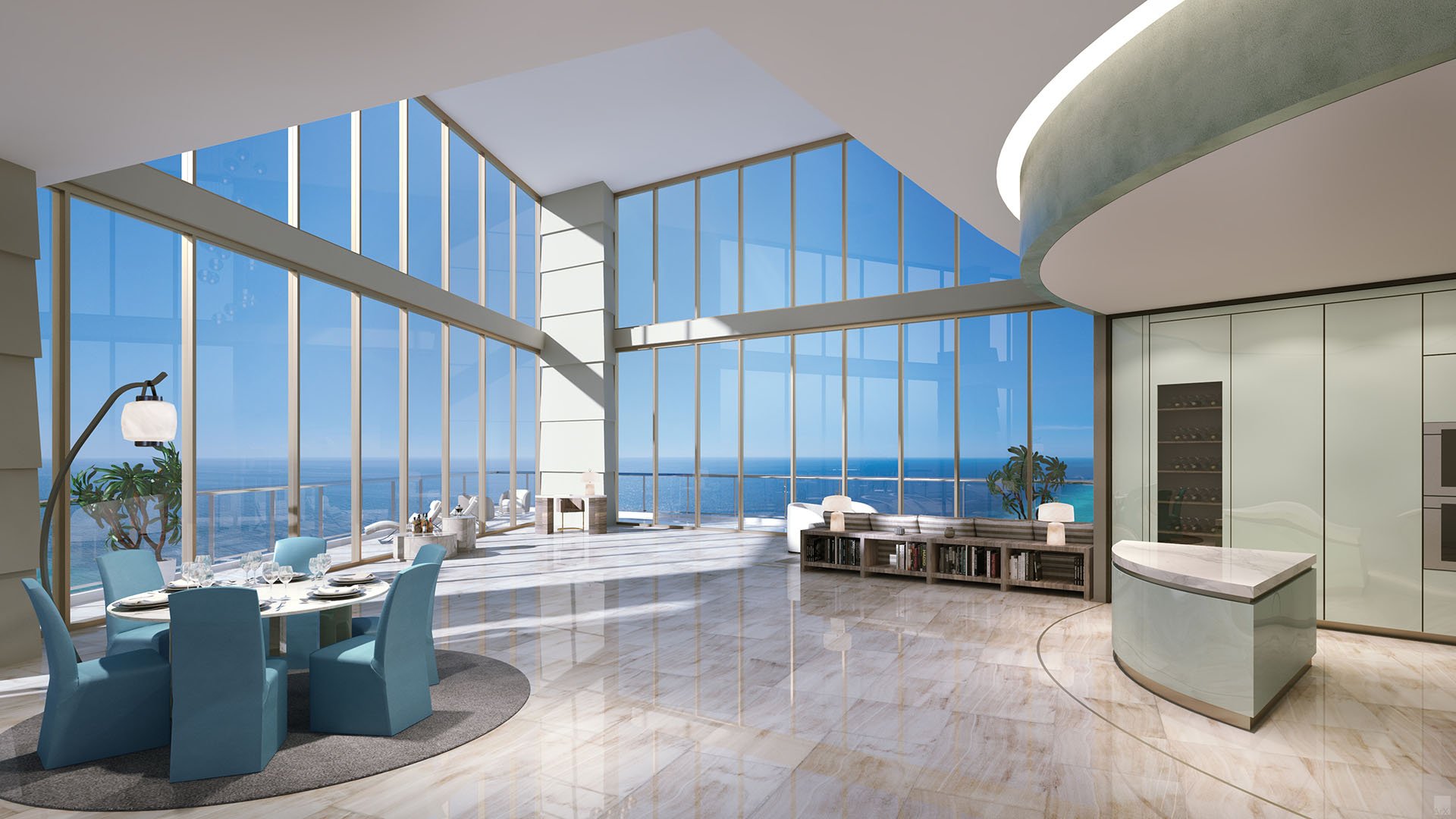
For buyers who host frequently, square footage is only the beginning. The most compelling South Florida condominium moves guests gracefully from arrival to cocktails, dinner and departure without compromising the household’s privacy. That requires a coordinated mix of thoughtful residence planning, reservable amenity space, attentive service and sensible building rules.
A formal dining room is valuable, but flexibility matters more. Buyers should look for a generous great room, a kitchen equipped to support either an owner or a private chef, a terrace that functions as an additional salon and a discreet route for catering staff. Powder rooms should be readily accessible, while bedrooms and family spaces remain visually removed from the evening’s activity.
This is as much a lifestyle decision as a real-estate decision. A couple hosting monthly dinners for eight has different requirements from an owner planning charitable receptions, multigenerational holidays or boating weekends. The best choice aligns the residence, shared spaces and management culture with the owner’s actual social calendar.
South Florida offers distinct settings for entertaining, and the right search begins by matching the location to the occasion. In Brickell, buyers can consider ORA by Casa Tua Brickell within a city-centered comparison. The essential questions are practical: where guests arrive, how catering is handled, which spaces may be reserved and how much notice is required.
For a Miami Beach search, Shore Club Private Collections Miami Beach offers another point of comparison. Buyers should determine whether their preferred entertaining style is primarily indoors, on a private terrace or in a shared dining setting, then examine weather contingencies and guest-access procedures.
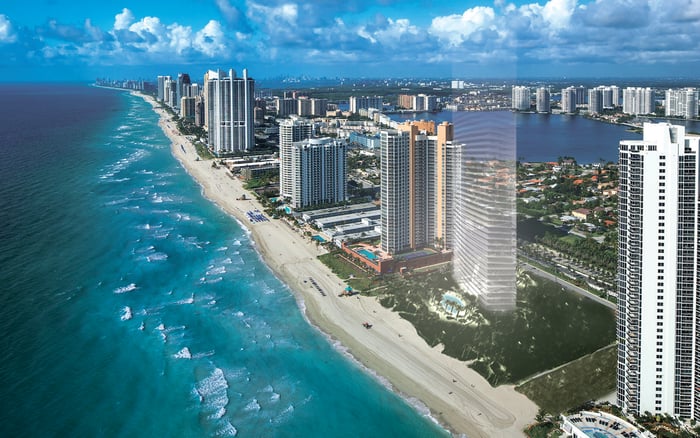
Farther north, Bentley Residences Sunny Isles can be considered within the Sunny Isles Beach field. Buyers prioritizing an intimate urban-waterfront atmosphere may also explore Villa Miami, while an island-oriented search can include The Residences at Six Fisher Island. These profiles are starting points for comparison-not substitutes for reviewing current plans, disclosures and operating documents.
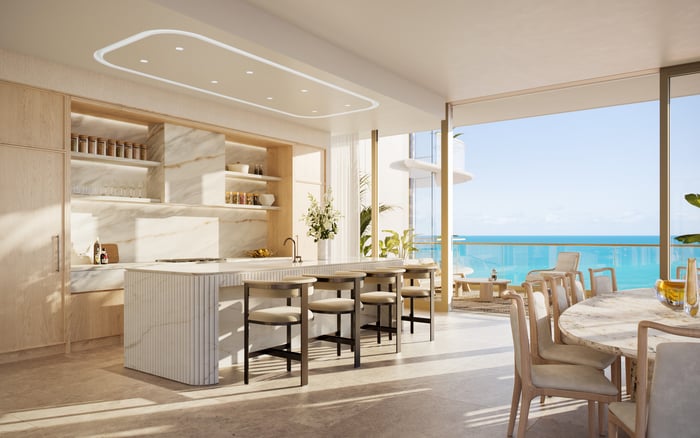
A residence designed for entertaining should perform beautifully even when a shared dining room is unavailable. Begin with circulation. Guests should not have to cross a bedroom corridor to reach the terrace or powder room. A kitchen island should support preparation without becoming the sole buffet surface. Storage for glassware, linens, serving pieces and wine deserves the same consideration as everyday cabinetry.
Request dimensioned plans rather than relying on renderings. Test the dining area with every seat occupied, chairs pulled back and servers moving around the perimeter. Confirm where a portable bar, musicians or floral installations could be positioned without blocking doors. In a waterfront residence, assess wind exposure and shade as carefully as the view. Outdoor depth, door placement and kitchen access determine whether a terrace is genuinely useful.
Acoustics and lighting are equally important. Layered illumination should transition gracefully from arrival to dinner, while hard surfaces may call for rugs, drapery or acoustic treatments. Buyers planning substantial audiovisual systems should confirm electrical capacity, equipment locations and alteration requirements before closing.
A private dining amenity can extend a residence’s capacity, but its value depends on access and execution. Request the current reservation policy, occupancy limit, hours, fees, deposits, cancellation rules and frequency restrictions. Determine whether the room is exclusive during a booking and whether the reservation includes an adjacent lounge, terrace or kitchen.
Inspect the support kitchen rather than simply noting that one exists. Clarify whether it permits cooking or only warming and plating. Ask about refrigeration, ice, ventilation, loading access, waste removal and approved vendors. If a chef or caterer must pass through public residential corridors, the experience may feel less polished than the room itself suggests.
Guest arrival deserves equal scrutiny. Confirm valet or self-parking arrangements, guest registration, elevator access and the process for larger parties. A building may treat a dinner for twelve very differently from a reception for forty. The governing documents and management team should address these questions consistently.
Entertaining capacity carries costs beyond the purchase price. Reservation charges, staffing, security, valet, cleaning, insurance and refundable deposits can shape the economics of regular use. Some expenses may be event-specific; others may be embedded in ongoing common charges. Buyers should request a written schedule and ask which terms are subject to change.
Condominium documents warrant careful legal review. Focus on occupancy rules, noise, alcohol service, outside vendors, deliveries, decorations, music and event frequency. A beautifully designed room has limited value when its operating framework conflicts with the buyer’s intended use.
This is where disciplined buyer’s-guide thinking becomes useful. Compare every candidate through the same lens: in-home capacity, shared-room capacity, reservation certainty, service access, guest arrival, privacy, weather backup and total cost. A simple scorecard keeps an impressive presentation from outweighing everyday practicality.
The strongest purchase will not necessarily have the largest ballroom or longest amenity list. It will make the owner’s preferred gatherings feel natural. Frequent private dinners favor a capable residence kitchen, excellent storage and an intimate reservable room. Larger celebrations place greater weight on parking, security, loading and separation from residential circulation.
Before making an offer, stage a hypothetical evening from beginning to end. Map the caterer’s arrival, guest check-in, coat storage, cocktail service, dinner, music, cleanup and departure. Then repeat the exercise for rain, high wind or a conflicting reservation. A property that performs well in both scenarios offers genuine entertaining capacity rather than merely photogenic space.
What is the most important feature for private entertaining? Coherent guest flow is fundamental, connecting arrival, dining, terrace access and departure while protecting private rooms.
Is a private dining amenity better than a large residence? Neither is inherently better. Frequent hosts often benefit most when the residence functions independently and the shared room provides optional capacity.
What should buyers ask about a catering kitchen? Confirm whether cooking is permitted, which equipment is installed and how staff manage loading, refrigeration, waste and cleanup.
How should terrace entertaining be evaluated? Assess usable depth, wind, shade, kitchen access, door placement, noise rules and the indoor backup plan.
Can residents reserve amenity dining rooms whenever they wish? Availability depends on the building’s current policies. Buyers should verify notice periods, frequency limits, fees and blackout dates in writing.
Which location suits business entertaining? A central location may simplify attendance, but parking, guest registration, privacy and elevator circulation are equally important.
What documents matter before purchase? Review condominium declarations, rules, budgets, fee schedules, alteration procedures and all policies governing events or vendors.
Should buyers test furniture layouts? Yes. Dimensioned layouts reveal chair clearance, serving routes and whether the room remains comfortable at full capacity.
How important is service access? It can be decisive for larger dinners because discreet deliveries, setup and cleanup preserve both privacy and the guest experience.
What is the best way to compare shortlisted condos? Use a consistent scorecard covering residence layout, shared spaces, operations, guest arrival, weather resilience and total hosting cost.
To compare the best-fit options with clarity, connect with MILLION.
If branded residences are on your mind — as a home or as an allocation — we would be glad to share what we are seeing, privately.
Begin a quiet conversation