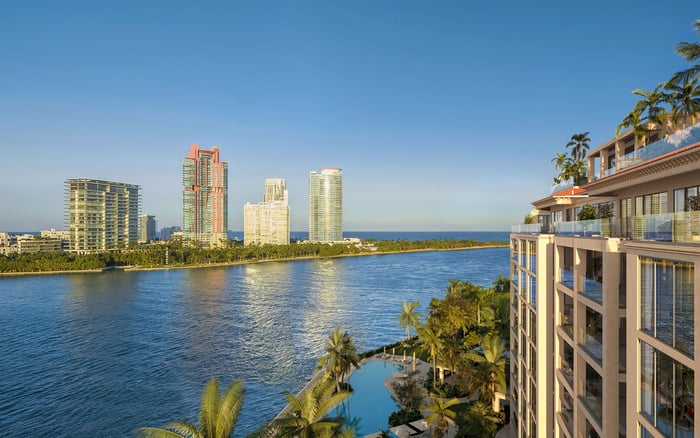
A buyer-focused framework for evaluating seasonal use, rental assumptions, private-club access, transportation logistics, and the full ownership budget at Six Fisher Island.

The Residences at Six Fisher Island is a new-build, ultra-luxury condominium development conceived for buyers who may use Miami seasonally rather than as a conventional year-round base. That orientation matters. The acquisition analysis extends beyond the residence itself to how ownership will function through arrivals, extended absences, guest visits, and any contemplated lease periods.
Fisher Island sits just off the southern tip of Miami Beach, pairing controlled access with a private-club environment. Its low-rise buildings, extensive landscaping, and secluded character contrast sharply with denser condominium districts. Yet South Beach, Brickell, and the Design District remain nearby. For a second-home buyer, that combination can be compelling-provided the island’s operating rhythm aligns with the household’s expectations.
There is no public road connection to the island. Owners arrive by private ferry, yacht, or helicopter, making transportation part of everyday planning rather than a background detail. Ferry schedules and mainland transfers should factor into airport runs, dining reservations, school visits, staff movements, and frequent meetings across Miami.
This is less a question of inconvenience than of preference. Some owners will value the clear threshold between island and city; others may favor more immediate road access. Buyers comparing established Fisher Island residences can consider Six alongside Palazzo del Sol, while those exploring a different island ownership format may also review The Links Estates at Fisher Island. The objective is to identify the setting that best reflects the intended pattern of use.
Before committing, model several realistic weeks: a quiet family stay, a full social calendar, and a visit involving guests or household staff. This exercise often clarifies whether transportation should be managed personally, delegated to a property manager, or incorporated into a broader concierge arrangement.
Fisher Island offers marina facilities, a beach club, tennis courts, a spa, and a golf course. Crucially, access to club amenities is tied to club membership rather than condominium ownership alone. Buyers should therefore regard the residence and the club relationship as connected but distinct layers.
That distinction shapes both lifestyle and budget. Confirm current membership requirements, dues, privileges, guest procedures, and any applicable approvals directly through the governing documents and relevant representatives. Marina use, sports facilities, and social spaces should never be assumed to accompany a deed automatically.
The same discipline applies when comparing Palazzo della Luna with Six. Rather than relying on a general impression of the island, examine the obligations and privileges attached to the specific condominium, club membership, and household structure under consideration.
A residence occupied for only part of the year may appear to offer rental potential during vacant periods. Keep that possibility outside the financial model until the operative documents have been reviewed. Buyers need the current declaration, bylaws, rules, association approval procedures, minimum lease terms, and any restrictions on the frequency or duration of leasing.
Tenant access warrants equal scrutiny. A lease should not be underwritten on the assumption that club privileges transfer automatically or that ferry access is unrestricted. These details can materially affect marketability, the tenant experience, management complexity, and achievable revenue.
A prudent rental analysis should also address approval timelines, cleaning and turnover standards, owner storage, staff access, security protocols, and the cost of professional oversight. Gross income is not the relevant figure. The meaningful number is net income after all ownership and leasing expenses, with a conservative allowance for vacancy and periods reserved for personal use.
The purchase price is only the opening line of a credible ownership budget. A realistic annual forecast should include condominium assessments, club dues and obligations, property taxes, insurance, routine maintenance, and absentee-owner services. Depending on the frequency of occupancy, transportation coordination and property management may also warrant dedicated line items.
No single percentage should serve as a shortcut. Obtain current figures and determine which charges are recurring, usage-based, subject to change, or potentially supplemented by special assessments. Insurance should be evaluated in relation to the residence, personal contents, improvements, liability, and any requirements imposed by the association or lender.
Buyers should prepare both a base case and a higher-cost case. The latter can account for increased insurance, repairs, additional staffing, or an unexpected assessment without attempting to predict a specific amount. This approach transforms carrying cost from a vague concern into a manageable capital plan.
Seasonal ownership works best when the residence remains attended during the owner’s absence. Fisher Island’s culture of part-time use makes property oversight especially important. The operating brief can encompass climate monitoring, leak detection, appliance checks, preventive maintenance, storm preparation, post-storm inspection, vehicle care, deliveries, housekeeping, and pre-arrival provisioning.
Responsibility should be explicit. Determine what falls to building management, what requires an outside property manager, and what remains with the owner’s family office or household team. Confirm authorization procedures and reporting expectations before an urgent decision arises.
A well-managed arrival should feel effortless, but that ease is the product of strong systems. Written checklists, approved vendors, access permissions, and a clear communication chain protect both the residence and the owner’s time.
The central investment question is not whether rent can offset every cost. It is whether the home delivers enough personal utility, privacy, and access to justify its complete annual commitment. Six is best evaluated as a layered proposition encompassing condominium expenses, club obligations, transportation, and ongoing care.
For many buyers, the decisive value may be seclusion near Miami’s principal districts rather than yield. Rental income, if permitted and operationally sensible, can remain a secondary benefit. The strongest decision aligns lifestyle expectations with verified documents, a resilient budget, and a realistic calendar of use.
Is The Residences at Six Fisher Island intended for second-home use? The development is positioned primarily for affluent second-home buyers, though each purchaser should assess whether island living suits the household’s actual calendar.
How is Fisher Island accessed? The island has no public road connection and is reached by private ferry, yacht, or helicopter.
Should ferry logistics affect a purchase decision? Yes. Owners should test how ferry schedules and mainland transfers fit airport trips, appointments, guest arrivals, and staff movements.
Does condominium ownership automatically include club access? No. Access to the island’s club amenities is tied to club membership rather than condominium ownership alone.
Which amenities are available on the island? Island amenities include marina facilities, a beach club, tennis courts, a spa, and a golf course, subject to applicable membership terms.
Can an owner lease the residence when away? Buyers should first verify the current condominium documents, association approval procedures, minimum lease terms, and all other leasing restrictions.
Do tenants automatically receive club and ferry privileges? Such privileges should not be assumed. Confirm tenant access, club eligibility, guest rules, and transportation procedures before estimating rental demand.
What belongs in the annual carrying-cost budget? Include condominium assessments, club dues, taxes, insurance, maintenance, property management, and any other absentee-owner services relevant to the household.
Why is absentee-owner management important? Seasonal homes require continuing oversight for maintenance, storm preparation, inspections, deliveries, housekeeping, and arrival readiness while the owner is away.
What documents should a buyer request before signing? Request the current declaration, bylaws, rules, financial materials, assessment information, insurance requirements, lease provisions, and relevant club documents.
For a tailored shortlist and next-step guidance, connect with MILLION.
If branded residences are on your mind — as a home or as an allocation — we would be glad to share what we are seeing, privately.
Begin a quiet conversation