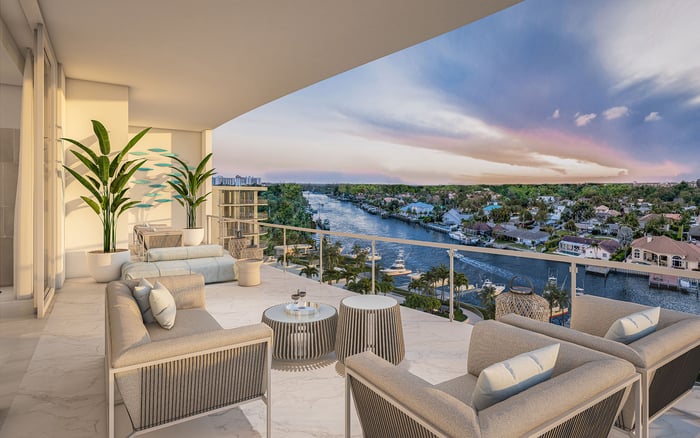
For seasonal buyers, the most consequential features of a preconstruction purchase may sit inside the contract. Deposit timing, notice procedures, closing readiness, and ownership logistics deserve disciplined review before design details take center stage.

A preconstruction purchase can be visually seductive. Renderings establish atmosphere, material palettes convey permanence, and service concepts make ownership appear effortless. For a seasonal buyer, however, the practical character of the acquisition is often defined elsewhere: in the deposit schedule, milestone language, notice provisions, inspection process, and closing obligations.
That distinction matters in Palm Beach Gardens, where a residence may be intended for only part of the year. A buyer can be fully committed to the architecture yet poorly aligned with the transaction calendar. Capital may be called while the owner is traveling, notices may arrive at an out-of-season address, or closing preparations may coincide with an extended absence.
The objective is not to diminish the amenity brochure, but to place it in the proper order. Within a disciplined Buyer's Guides framework, the contract determines how the buyer reaches the lifestyle being presented.
The headline deposit is only the beginning. Buyers should map every potential payment from signing through closing, identifying the trigger for each installment and the time available to respond. That calendar should then be considered alongside other planned acquisitions, portfolio commitments, tax obligations, and travel.
This is particularly relevant for a second-home buyer coordinating multiple residences. Liquidity reserved for a future installment should remain distinct from furnishing, carrying, insurance, moving, and advisory budgets. A polished acquisition plan anticipates both contractual payments and the costs surrounding delivery.
When considering The Ritz-Carlton Residences® Palm Beach Gardens, the first useful question is not simply which residence or view is preferred. It is whether the buyer's capital plan, ownership calendar, and decision-making structure can support the applicable agreement from execution through closing.
A clear milestone calendar converts dense provisions into an operating document. It can include deposit triggers, amendment windows, selection deadlines, notice periods, inspection steps, financing decisions, entity documentation, insurance preparation, and the anticipated sequence leading to closing. The contract and legal advice should control; the calendar serves as a management tool.
Responsibility should also be assigned. One adviser may track contractual notices, another may coordinate funds, and a property representative may manage access or delivery logistics. Buyers using an entity or trust should confirm early who is authorized to execute documents and whether additional approvals could delay a time-sensitive response.
The same discipline can guide comparisons beyond Palm Beach Gardens. A buyer evaluating The Ritz-Carlton Residences® West Palm Beach or Mr. C Residences West Palm Beach can compare not only design preferences, but also how well each proposed transaction fits the buyer's seasonal routine.
Seasonal ownership introduces a straightforward risk: important moments do not necessarily occur while the owner is in Florida. Buyers should establish reliable methods for receiving notices, reviewing documents, authorizing payments, and reaching advisers from another state or country. Contact details should remain current, and backup decision-makers should understand the limits of their authority.
A closing-readiness file can reduce last-minute friction. Depending on the transaction and professional advice, it may organize identity documents, entity records, funds-transfer protocols, insurance contacts, lender information, and preferred signing arrangements. Buyers should verify requirements rather than assume remote execution or scheduling flexibility will be available.
Security deserves equal attention. Payment instructions-and any changes to them-should be independently verified through trusted channels. Convenience should never replace a controlled process when substantial funds are involved.
A meaningful comparison places contract architecture beside residence architecture. Buyers can create parallel columns for deposit timing, purchaser deadlines, change provisions, inspection procedures, closing mechanics, transfer or assignment language, and remedies. These matters require review by qualified counsel because the wording of the actual agreement governs.
For an investment-minded purchaser, flexibility may carry a different weight than it does for an owner planning long-term personal use. Likewise, a waterfront preference may narrow the emotional shortlist, but it should not suspend scrutiny of obligations. The strongest fit balances place, residence, capital, and control.
A broader regional comparison might include The Residences at Mandarin Oriental Boca Raton. The purpose is not to treat distinct projects as interchangeable, but to test whether the buyer's priorities remain consistent across different locations, brands, and ownership propositions.
Before becoming absorbed in finishes and hospitality concepts, a buyer can ask for the transaction sequence in plain language. What event prompts each payment? How is notice delivered? Which dates are fixed, estimated, or dependent on another event? What must the purchaser provide before closing? What happens if the purchaser is away?
The answers should be reconciled with the contract, not treated as substitutes for it. A concise written checklist, reviewed with counsel and relevant advisers, can expose assumptions early. That is especially valuable in preconstruction, where a meaningful interval may separate the purchase decision from the ownership experience.
For the seasonal owner, luxury is partly the absence of avoidable disruption. A thoughtfully managed contract can preserve that quality long before the first arrival.
Why do deposit milestones matter to a seasonal buyer? They can create funding and response obligations while the buyer is away, making advance planning essential.
Should an amenity package influence the purchase decision? Yes, but it should be evaluated alongside the contract, capital schedule, and intended pattern of use.
What belongs in a milestone calendar? Include payment triggers, notices, document deadlines, inspections, closing preparation, and assigned responsibilities.
Can a buyer rely on a sales summary of the deposit structure? A summary may provide orientation, but the executed agreement and advice from qualified counsel should guide decisions.
How should funds for future deposits be managed? Buyers can discuss a dedicated liquidity plan with their financial and legal advisers before committing.
What if the owner expects to be outside Florida near closing? Confirm signing, funding, notice, and representation procedures early rather than assuming remote flexibility.
Why review notice provisions closely? They define how important communications may be delivered and can affect the buyer's ability to respond promptly.
Does entity ownership change the preparation process? It may require additional records, authorizations, or signatures, which should be organized with counsel in advance.
How can buyers compare several developments fairly? Use the same matrix for obligations, timing, flexibility, ownership goals, location, and residence preferences.
Is this review a substitute for legal advice? No. Buyers should have qualified counsel review the specific contract and explain its implications.
For a discreet conversation and a curated building-by-building shortlist, connect with MILLION.
If branded residences are on your mind — as a home or as an allocation — we would be glad to share what we are seeing, privately.
Begin a quiet conversation