For Seattle buyers, a Fort Lauderdale residence makes its strongest case as a complementary winter base. A considered purchase also accounts for summer heat, terrace usability, indoor comfort and the practical responsibilities of seasonal ownership.
For a Seattle buyer, Fort Lauderdale’s most persuasive luxury is not simply warmth. It is the opportunity to arrange the year differently: a winter morning outdoors in Florida, followed months later by a Pacific Northwest summer worth returning to. The strongest purchase rationale treats the two homes as complementary, rather than assuming one city offers an unconditional improvement over the other.
Seattle has mild, rainy winters and mild, fairly sunny summers. Fort Lauderdale offers a generally mild, dry November through April, followed by a hot, humid May through October. These are distinct living experiences, not interchangeable versions of the same lifestyle.
The buying question is precise: does this residence improve the months you intend to spend in Florida while remaining practical during the months you may spend elsewhere? An inviting January viewing can answer only part of that question.
Seattle’s reputation for rain can obscure its seasonal appeal. Its generally sunny, dry period runs from late June through late September, with summer sunshine supported by Pacific high pressure. Average rainfall is approximately 0.7 inches in July and 0.9 inches in August. Leaving that season behind is not necessarily a climate upgrade.
Fort Lauderdale’s winter contrast is more compelling. January averages approximately 76°F during the day and 61°F at night, with about 2.5 inches of rain. For buyers seeking relief from Seattle’s winter conditions, those figures explain the attraction without promising uninterrupted sunshine or uniform comfort.
Start with a calendar, not a floor plan. Mark the months you genuinely expect to occupy each home, including family visits and work commitments. A residence intended primarily for January through March should be judged differently from one expected to accommodate extended stays into May or October.
Fort Lauderdale’s July and August average highs are around 90°F, with lows near 77°F. Those warm nights matter: summer does not reliably provide the evening relief a Seattle buyer may associate with the season. Annual rainfall is roughly 61 inches, concentrated in the wetter part of the year.
A summer visit before purchase is a useful test, even for buyers planning predominantly winter occupancy. Walk the routes you would use for ordinary errands. Spend time outside at midday, then return in the evening. Notice whether your preferred routine still feels appealing or requires substantial adjustment.
When considering Andare Residences Fort Lauderdale, for example, make the surrounding daily routine part of the evaluation rather than relying exclusively on the property presentation. Apply the same principle across your shortlist: assess how you would actually spend a warm, humid day, not simply how the property photographs.
Do not treat the shoulder months as extensions of winter. Heat and humidity become more noticeable in May, while October remains wetter than winter. A flexible departure date is more realistic than expecting the climate to follow a fixed seasonal schedule.
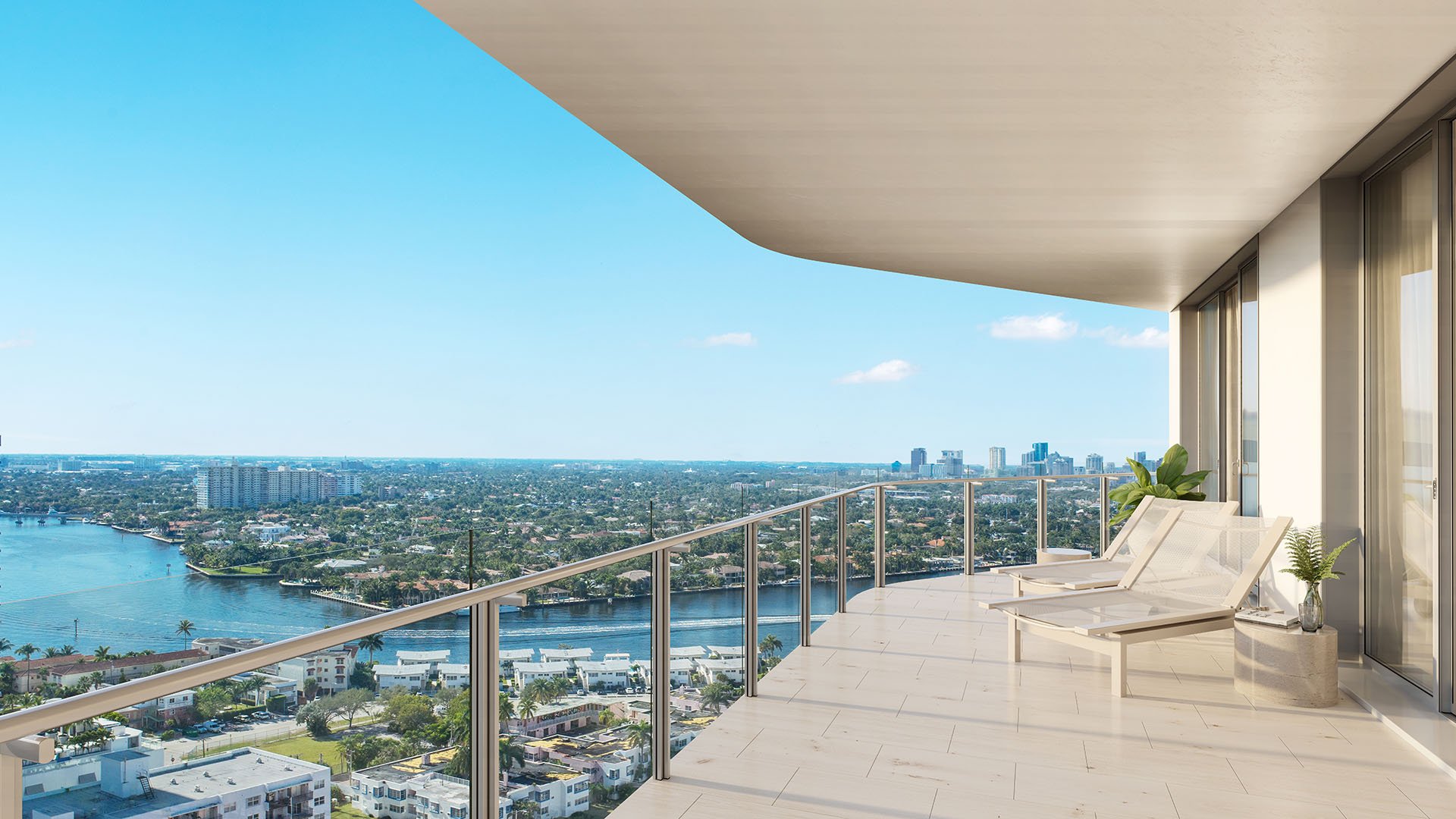
Outdoor space can be central to a Florida purchase, but its value is personal and seasonal. A generous terrace that feels indispensable in January may serve a different purpose in August. The question is not merely how large it is, but how comfortably you would use it during your intended stays.
During viewings, examine shade at different hours, the relationship between outdoor seating and interior rooms, and the route back into conditioned space. Ask what modifications are permitted rather than assuming shading or other changes can be added later. Verify each point for the particular residence.
A buyer exploring Auberge Beach Residences & Spa Fort Lauderdale should apply that same discipline to the individual home under consideration. A project name cannot establish a particular unit’s exposure, shade or comfort. Treat the outdoor room as living space to be tested, not a photograph to be admired.
A winter-focused search can place disproportionate emphasis on views and outdoor entertaining. A complete evaluation also asks whether the interior remains satisfying when heat or rain changes the day’s plans. Consider where you would read, work, exercise or host guests without relying on outdoor space.
At Four Seasons Hotel & Private Residences Fort Lauderdale, as with any residence on the shortlist, separate the appeal of the name from the particulars of ownership. Ask which services and spaces are available to the residence under consideration, what they cost and which conditions govern their use. Confirm rather than infer.
Evaluate cooling and humidity management with qualified professionals. Ask how the home should be operated during absences, who would monitor it and how access would be arranged if attention were needed. These questions help turn an appealing seasonal retreat into a considered ownership decision.
Climate averages describe a city, not a building’s condition or a parcel’s exposure. They cannot establish flood exposure, insurance terms, condominium reserves, inspection findings or potential assessments. Those issues require their own documentation and professional review.
A shortlist that includes Sixth & Rio Fort Lauderdale should therefore be assessed property by property. Request the relevant records, clarify the obligations attached to ownership and obtain advice specific to the transaction. Do not substitute a general impression of an area for an examination of the home and its ownership structure.
Keep the financial case equally distinct. Build an annual budget around verified costs and your expected use. Do not assume rental income will cover expenses or that a residence can be rented on your preferred schedule. Any rental strategy requires separate confirmation of permissions, restrictions and realistic economics.
The most convincing Seattle-to-Fort Lauderdale plan preserves what each city does well. It welcomes Florida’s winter warmth without overlooking its summer humidity, and values Seattle’s dry summer without minimizing the appeal of a winter escape.
Before committing, revisit the calendar, the summer experience and the responsibilities of absence. If the home still suits your routine after those tests, the decision rests on more than a memorable winter weekend. It rests on an understanding of how you intend to live throughout the year.
Explore a considered Fort Lauderdale second-home search with MILLION.
If branded residences are on your mind — as a home or as an allocation — we would be glad to share what we are seeing, privately.
Begin a quiet conversationSeattle offers mild, fairly sunny summers, while Fort Lauderdale’s November through April is generally mild and dry. Pairing the two can suit buyers who prefer different locations for summer and winter.
January averages approximately 76°F during the day and 61°F at night, with about 2.5 inches of rain. These averages describe seasonal conditions, not a guarantee for an individual stay.
No. Seattle’s generally sunny, dry period runs from late June through late September, with approximately 0.7 inches of rain in July and 0.9 inches in August.
July and August average highs are around 90°F and lows near 77°F. Warm nights offer limited relief from daytime heat.
Yes. A summer visit helps test comfort, outdoor routines and the residence’s suitability beyond an appealing winter stay.
Not reliably. Heat and humidity become more noticeable in May, and October remains wetter than winter.
Examine shade, exposure and its connection to indoor space during the hours you expect to use it. Confirm any rules governing proposed modifications.
Ask qualified professionals about cooling, humidity management, monitoring and access during absences. Verify arrangements for the particular residence rather than assuming they are included.
No. Property-specific exposure, insurance, building condition and condominium obligations require separate documentation and professional review.
No. Build the ownership budget around verified costs, and evaluate any rental plan separately for permissions, restrictions and realistic economics.