A furnished Palazzo del Sol resale calls for two distinct evaluations: the condominium itself and the movable collection within it. Clear inventories, disciplined comparable-sale analysis and carefully coordinated agreements help buyers distinguish enduring property value from personal taste.
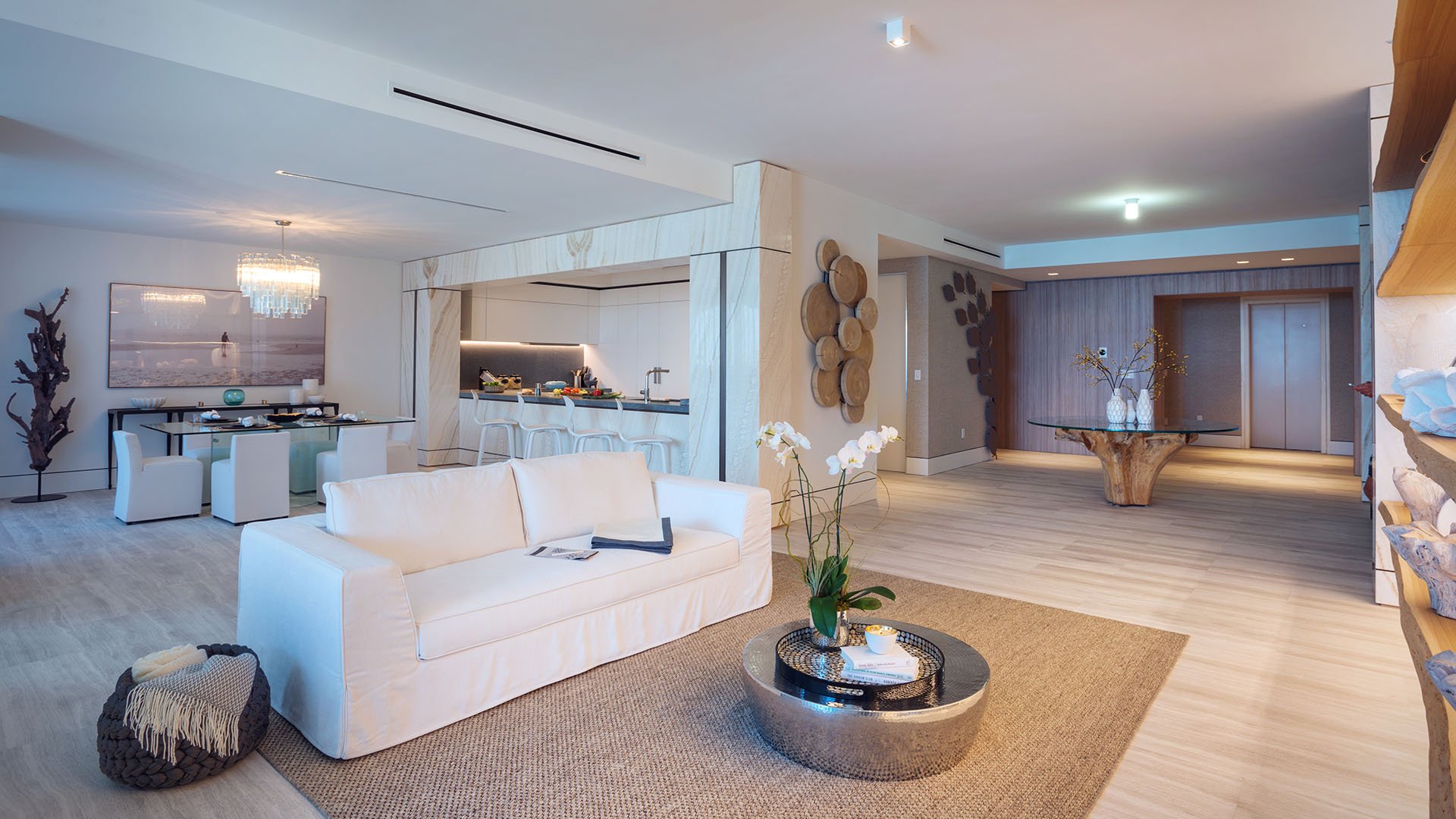
A beautifully furnished residence can make a decision feel immediate. Rooms appear resolved, proportions feel intuitive, and the prospect of arriving with little more than luggage is persuasive. At Palazzo del Sol, the essential discipline is to separate that emotional appeal from the value of the condominium itself. The home and the seller’s movable collection deserve distinct evaluations, even when negotiated together.
That distinction does not diminish exceptional interiors. It gives them a clearer place in the transaction. A buyer may value the convenience of a completed setting while assigning little personal value to particular artwork or furniture. Neither response should determine what the underlying real estate is worth.
The objective is straightforward: establish a defensible property price, identify precisely what stays, and decide separately what the collection is worth to you.
Palazzo del Sol is a 50-residence condominium on Fisher Island in Miami Beach. Residences range from approximately 3,724 to 10,194 square feet, with three to seven bedrooms. These are substantial homes, but scale alone does not establish the value of their contents.
The building’s services and amenities belong on the property side of the analysis. Concierge, security, valet parking and a butler-serviced aperitivo lounge are distinct from anything the seller has selected for an individual apartment. So are the fitness center, treatment suites, library, and sunrise and sunset infinity pools.
Begin by imagining the residence without its movable objects. Assess its layout, condition, attached improvements and the building’s services before returning to the furnished presentation. For buyers also considering Palazzo della Luna, the same discipline applies: compare the homes first, then examine the personal property offered with each. This is a purchasing framework, not a claim that the two buildings have equivalent values.
A limited market snapshot placed average Palazzo del Sol asking prices at approximately $3,797 per square foot. It also recorded two closed sales averaging approximately $3,733 per square foot and 98% of the last asking price. These figures do not represent verified current pricing or a valuation of any particular residence.
Two distinctions matter. Asking prices express seller expectations; closed prices reflect completed negotiations. And two transactions are too small a sample to establish a building-wide benchmark, much less a furnished-resale premium. The available evidence does not establish a verified Palazzo del Sol premium for furnished versus unfurnished homes.
A useful counterpoint is the full-floor residence at 7043 Fisher Island Drive, Unit 7043. It was publicly marketed for $36 million with seven bedrooms, seven bathrooms and two powder rooms, yet identified as unfurnished. That was an asking price, not a completed sale. Its relevance is narrow but important: even an exceptional price does not tell a buyer what furniture is included.
Comparable-sale analysis should therefore examine transaction details, including personal-property allocations that could distort the apparent real-estate price. An appraiser may adjust a comparable sale to remove the amount attributable to furniture.
Not everything visible during a showing belongs in the same category. Built-in cabinetry, attached shelving, certain lighting and window treatments may be treated differently from freestanding furniture and artwork. Rather than relying on appearance, ask the transaction team to clarify the treatment of each ambiguous item.
A room-by-room inclusion and exclusion schedule is a useful buyer safeguard, not a universal legal requirement. It should distinguish attached improvements, movable pieces offered for purchase, and items the seller intends to remove. Photographs and specific descriptions help both parties identify the same object without relying on shorthand such as “living-room contents.”
Pay particular attention to pieces whose absence would change the room’s composition. Ask whether a light fixture stays, whether an artwork is excluded, and what removal obligations apply. The aim is not paperwork for its own sake. It is to ensure that the setting a buyer expects is the setting the agreement delivers.
Once the real-property analysis is established, assess the proposed furnishings independently. Ask which pieces you would deliberately choose, which merely suit the existing arrangement, and which you would replace. A cohesive interior can be appealing without making every object equally valuable to its next owner.
For valuable furniture and artwork, consider appropriate specialist review of condition, authenticity and ownership. Discuss insurance and removal obligations as well. These are recommended diligence steps, particularly when the collection carries a meaningful separate price-not a suggestion that every furnished resale requires the same investigation.
Keep convenience distinct from collection value. Avoiding an immediate furnishing project may justify a personal willingness to pay, but it does not prove a transferable market premium. Equally, a seller’s attachment to a collection is no substitute for an agreed valuation. The strongest negotiation gives both parties room to distinguish sentiment, utility and price.
Separate personal-property agreements are a recommended way to address furniture and other movable possessions, rather than simply adding their value to the residential real-estate contract. Have counsel coordinate the documents so that inclusions, exclusions, pricing and delivery expectations remain consistent.
An “AS IS” residential contract provision describes personal property covered by its inclusion terms as included in the purchase price, having “no contributory value,” and remaining for the buyer. That language is not an independent appraisal declaring a seller’s collection worthless. Nor does it mean every furnishing visible in a residence automatically transfers. The applicable wording and negotiated schedules require careful review.
A separate agreement should not be treated as an automatic route to tax, financing or insurance advantages. Those consequences require transaction-specific advice. The immediate benefit is clarity about what is being purchased and on what terms.
Before committing, reconcile the inventory with the offer, confirm excluded items, review the collection’s condition, and agree on removal responsibilities. At the final walkthrough, use that same inventory-not memory-to check the expected contents.
For buyers whose search also includes The Residences at Six Fisher Island, apply this framework consistently without assuming identical furnishing arrangements. A residence can be the right property even when its collection is not the right purchase.
The most considered outcome is not necessarily to buy everything or exclude everything. It is to acquire the home on sound real-estate terms and retain only the collection that genuinely serves your life.
For a considered approach to your next South Florida residence, connect with MILLION.
If branded residences are on your mind — as a home or as an allocation — we would be glad to share what we are seeing, privately.
Begin a quiet conversationPalazzo del Sol is a 50-residence luxury condominium on Fisher Island in Miami Beach, not in Sunny Isles Beach.
Residences are described as approximately 3,724 to 10,194 square feet, with three to seven bedrooms.
The available evidence does not establish a verified furnished-versus-unfurnished resale premium. Evaluate the condominium and the movable collection separately.
The residence at 7043 Fisher Island Drive, Unit 7043, was publicly marketed for $36 million and identified as unfurnished. That figure was an asking price, not a closed-sale result.
No. The approximately $3,797-per-square-foot asking average and two-sale closed average of approximately $3,733 per square foot are limited snapshot figures, not a property-specific valuation.
A separate personal-property agreement is a recommended approach for movable furnishings. Counsel should coordinate it with the real-estate contract and the inclusion and exclusion schedules.
No. The phrase is contract language concerning covered personal property, not an independent appraisal of the seller’s furniture or artwork.
Not necessarily. Built-in cabinetry, attached shelving, certain lighting and window treatments may be treated differently, so clarify their status in the transaction documents.
Consider an itemized inventory and review of condition, authenticity, ownership, insurance and removal obligations. Valuable pieces may warrant appropriate specialist evaluation.
No. Any tax, financing or insurance consequences require transaction-specific professional advice.