Miami Tropic and Casa Bella advertise services that may simplify seasonal ownership, but household oversight requires a separate conversation. Compare their stated offerings, then establish written terms for inspections, emergency entry, deliveries, and vendor supervision.
For a seasonal owner, the most consequential luxury may be confidence that the residence is being looked after when no one is home. A stocked pantry and a seamless arrival are welcome conveniences. Neither answers who notices a leak, authorizes a repair, or confirms that a contractor has left the apartment secure.
Miami Tropic Residences and Casa Bella by B&B Italia offer distinct starting points for that conversation. Casa Bella explicitly advertises an absence-related service. Miami Tropic advertises concierge services, delivery infrastructure, and provisioning, without establishing an equivalent home-watch program. That distinction is not a verdict on service quality. It tells buyers where to begin their diligence and which responsibilities require written definition.
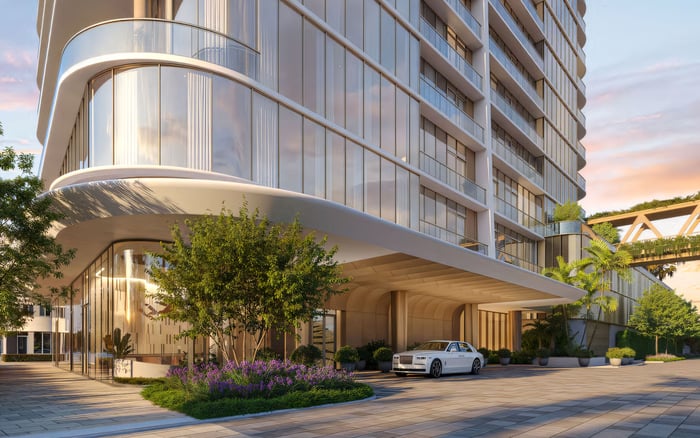
At 3600 NE 1st Avenue in the Design District/Midtown area, Miami Tropic Residences advertises 24/7 concierge and valet services, reception, a mailroom, and a secured package room. Its private second-level drive-up porte-cochère has dedicated valet service. These features support arrivals and deliveries; they do not establish permission to enter or inspect a residence.
The Jean-Georges food-and-beverage program advertises pantry stocking, catering menus, and in-residence dining, alongside an on-site mini-market. Returning owners should clarify the provisioning arrangements: how much notice is required, who receives the order, and whether staff are authorized to place purchases inside the apartment before arrival.
Keep absence management a separate question. Does anyone conduct scheduled interior visits? Can an owner appoint an outside home-watch provider, and what access arrangements apply? A staffed concierge desk or secured package room is not evidence of preventive maintenance, humidity monitoring, or emergency keyholding.
At 1444 Biscayne Boulevard, Casa Bella by B&B Italia Downtown Miami advertises butler and “While You’re Away” services. This is a more explicit absence-related offering, but the name alone does not define inspections, response obligations, or liability.
Casa Bella also advertises 24/7 valet parking, security, and maintenance staff, plus a multilingual on-site team. Pre-arrival grocery shopping and delivery, housekeeping, dry cleaning, and laundry expand the household-service menu. Other advertised concierge offerings include childcare, pet care, courier services, personal IT support, and translation.
The buyer’s task is to turn that menu into a defined arrangement. Ask whether building employees or outside providers perform absence services, whether enrollment is separate, and which tasks require additional authorization. Around-the-clock staffing is not a promise of round-the-clock in-residence maintenance or a guaranteed response time.
For either property, request a written scope that distinguishes observation, notification, and corrective action. A visit to identify a problem is different from authority to hire a technician or approve spending. Owners should know exactly where one responsibility ends and another begins.
Ask for confirmation of:
Visit frequency, inspection areas, and the record supplied after each visit.
HVAC and humidity checks, including how abnormal conditions are escalated.
Leak-detection arrangements and who receives any alerts.
Storm preparation, post-storm visits, and limits on service during an emergency.
Fees, exclusions, liability terms, and authorization thresholds for repairs.
Neither property’s advertised services establish all of these terms. A useful proposed arrangement would name a primary owner contact and an alternate decision-maker, and set a spending limit for urgent work. Have management confirm whether it can accommodate that arrangement. Do not assume a concierge can accept those duties informally.
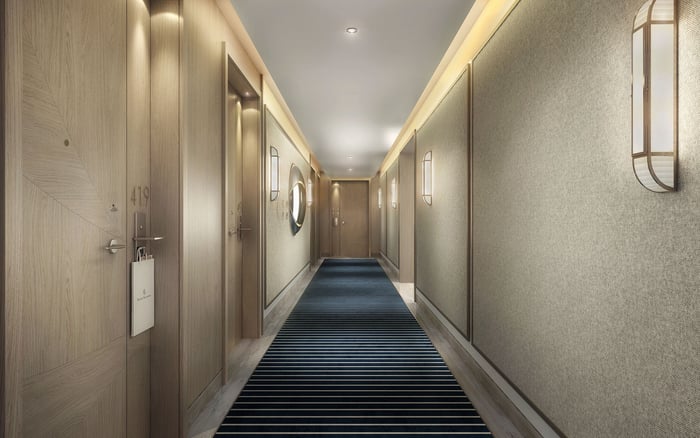
Casa Bella’s advertised residential access design includes two private elevators, a private vestibule, and biometric access control. These features shape the arrival experience. They do not, by themselves, explain how management, household employees, contractors, or emergency responders reach the residence.
Ask both properties to explain emergency-entry procedures for a leak, fire alarm, HVAC failure, or suspected intrusion. Who determines that entry is necessary? When is the owner contacted, and what happens if the owner cannot be reached? Which credentials or keys are held, who controls them, and how is access revoked?
Clarify entry logs and incident documentation, including whether owners receive the reason for entry, personnel identities, timing, and follow-up actions. Distinguish management’s emergency authority from permission granted to a cleaner or repair vendor. Convenience should not depend on undefined arrangements for sharing access credentials.
For seasonal households, the critical distinction is whether staff merely admit a vendor or oversee the work. A contractor’s arrival at the apartment does not establish that anyone has checked the work, protected furnishings, or confirmed the residence was secured afterward.
Before appointing a housekeeper, technician, or installer, confirm requirements for preregistration, certificates of insurance, licensing, and any background checks. Ask about permitted work hours, elevator reservations, escort requirements, and access to the private vestibule or residence. Establish whether an owner’s representative must attend when the owner is away.
Then define completion. Who confirms departure, checks that doors are locked, and alerts the owner to unfinished work? Who can approve an additional charge? These questions deserve the same attention whether the provider is independently selected or arranged through a concierge. A referral should not be assumed to include supervision or responsibility for performance.
A secured package room and pre-arrival shopping address different needs. At Miami Tropic, ask what the package facility may receive and how long items may remain. At Casa Bella, ask how grocery delivery is coordinated with residence access and storage. In both cases, confirm responsibility for perishables and purchases requiring an owner’s signature.
Furniture, artwork, and repair materials warrant separate authorization. Ask whether staff may accept them during an absence, inspect visible damage, coordinate installation, or admit a delivery team. Establish which steps remain the owner’s responsibility, along with any charges and scheduling restrictions.
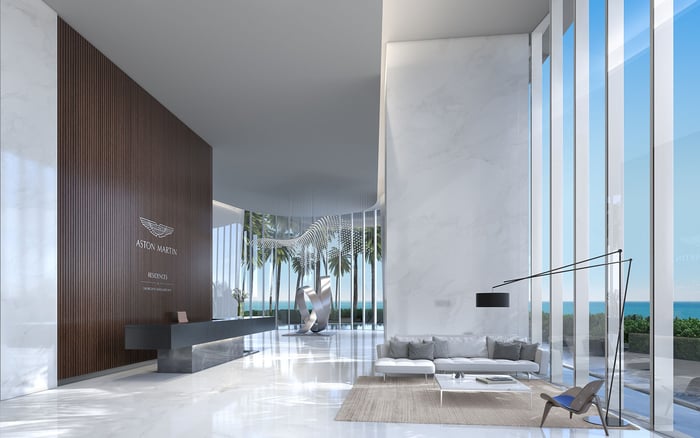
Buyers also considering Aston Martin Residences Downtown Miami can apply the same questions without presuming equivalent services. Compare written duties, not the length of an amenity menu.
Request the declaration, bylaws, access rules, emergency-entry policy, and vendor rules. Review vacancy-related insurance requirements with the appropriate adviser. For both Miami Tropic and Casa Bella, advertised offerings are not proof of current availability, contractual guarantees, or inclusion in monthly assessments. The stronger fit for seasonal ownership is the residence whose confirmed arrangements match the owner’s expectations for care, privacy, and accountability.
Explore your next South Florida residence with MILLION.
If branded residences are on your mind — as a home or as an allocation — we would be glad to share what we are seeing, privately.
Begin a quiet conversationIts advertised concierge, package handling, and provisioning services do not establish a defined home-watch program. Buyers should request written confirmation of any inspection or absence-management duties.
Casa Bella advertises butler and While You’re Away services. Their inspection scope, pricing, and responsibilities need written confirmation.
Inclusion in monthly assessments is not established. Confirm separate fees, enrollment requirements, and contractual terms before relying on a service.
Request inspection frequency, HVAC and humidity checks, leak procedures, storm preparation, and post-storm visits. The agreement should also define notification, repair authorization, fees, and liability.
No. Its advertised biometric access arrangement does not establish how management, vendors, or emergency responders obtain residence access.
Ask who authorizes entry, how keys or credentials are controlled, and what happens if the owner cannot be reached. Confirm which entry logs and incident documentation the owner receives.
Supervision should not be assumed. Confirm whether staff screen credentials, escort vendors, monitor work, or simply provide authorized admission.
Miami Tropic advertises pantry stocking, catering menus, and in-residence dining through its Jean-Georges program, plus an on-site mini-market. Confirm pre-arrival access permissions and ordering arrangements separately.
Casa Bella advertises pre-arrival grocery shopping and delivery, housekeeping, dry cleaning, and laundry. Availability, scheduling, access authorization, and charges should be confirmed.
Request the declaration, bylaws, access rules, emergency-entry policy, and vendor rules. Review vacancy-related insurance requirements before finalizing a household-care arrangement.