LILLI Miami and EDITION Edgewater offer distinct wellness propositions, but seasonal buyers should distinguish planned amenities from enforceable access. Booking capacity, guest eligibility, treatment charges, and independent-practitioner permissions require written confirmation.
For a seasonal owner, the most valuable wellness amenity is not necessarily the most photogenic. It is the appointment that fits a brief stay, the treatment a visiting family member can actually reserve, and the ability to maintain an established relationship with a trusted practitioner. Those distinctions deserve attention before a residence becomes part of a winter routine.
LILLI Miami and EDITION Edgewater present different propositions: one centers residential health, wellness, and longevity; the other more explicitly incorporates hospitality-style services and an EDITION-serviced spa program. Neither, by itself, establishes appointment availability during a preferred week. The buyer’s task is to separate the physical offering from the rules governing its use.
Planned for 717 NE 27th Street, Lilli Miami Edgewater is a 53-story waterfront development with 117 residences. Its wellness program is organized around Movement, Recovery, Nourishment, and Connection, giving the residential concept a defined framework rather than simply a collection of fitness amenities.
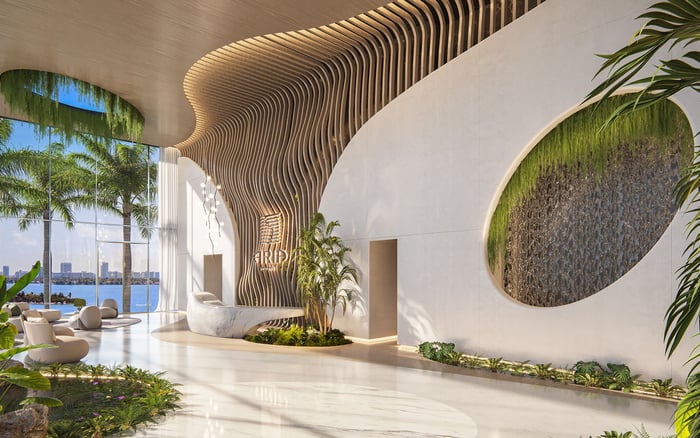
Planned facilities include a movement studio, treatment facilities, infrared saunas, cold plunges, a waterfront garden, and a rooftop saltwater pool. Approximately 22,000 square feet of indoor and outdoor amenities supports the broader offering. That figure represents total amenity space-not treatment-room area or appointment capacity.
A dedicated Director of Lifestyle and Wellness is also planned. The role suggests a point of coordination, not a guarantee of practitioner availability or individualized scheduling. Simultaneous wellness bookings, daily appointment throughput, and practitioner-session capacity remain unspecified. A fixed practitioner roster, appointment pricing, and resident booking priority are likewise not established.
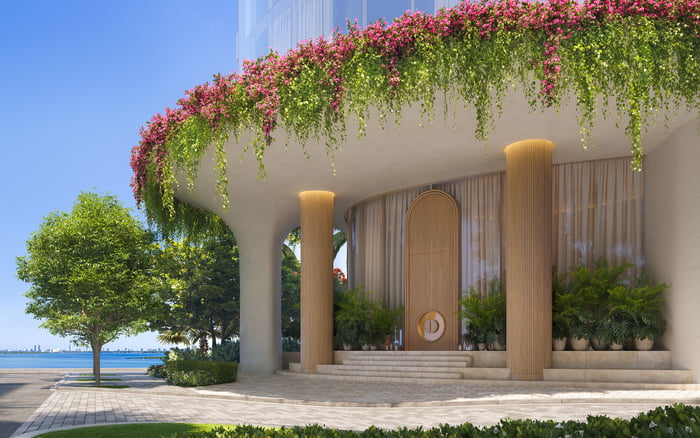
At 2121 N Bayshore Drive, EDITION Edgewater presents a more explicitly hospitality-oriented service concept. Its concierge offering includes hotel and guest-suite reservations, restaurant reservations, and tour reservations, alongside a full spa treatment program serviced by EDITION.
That is a service proposition, not a capacity commitment. Guaranteed concurrent spa appointments, resident treatment-room capacity, practitioner headcount, and seasonal booking priority remain unspecified. Preferential resident access and wellness eligibility for registered guests and outside visitors are also not clearly established.
The six guest suites available for residents to reserve are meaningful for hosting. They establish an accommodation offering, however, not a guarantee that suite occupants can book treatments. Buyers should treat suite reservations and wellness reservations as separate questions until written rules connect them. EDITION’s more explicit spa positioning does not establish superior booking capacity relative to LILLI.
A buyer expecting to spend several weeks in Miami needs more than confirmation that treatments will be offered. Request the planned opening-day treatment-room count, practitioner staffing, operating hours, and daily appointment slots. Ask which services can run concurrently and whether capacity varies by treatment type.
Reservation timing is equally important. Confirm how far ahead owners may book, whether recurring appointments are permitted, and whether reservations can be made before arrival. Ask whether residents receive priority, how waitlists function, and whether peak-season restrictions apply. These questions apply to both developments; neither operating model supplies the answers on its own.
Pricing belongs in the same discussion. At LILLI, whether appointments are included in ownership costs or separately billed remains unspecified. For either property, request an itemized distinction between amenity access and paid services, along with cancellation rules and any guest charges. A coordinator’s assistance and a confirmed treatment appointment are not interchangeable benefits.
Seasonal ownership often involves several categories of users: the owner, household members, visiting family, unaccompanied guests, and potentially tenants. Request an eligibility matrix identifying which categories may use each amenity and which may book paid services. Do not assume that permission to enter the building extends to every wellness facility.
At LILLI, equal wellness privileges for absent owners’ guests are not expressly established. At EDITION, treatment eligibility for registered guests and outside visitors is likewise not clearly defined. Those unanswered questions call for clarification, not a conclusion that access is prohibited.
For EDITION’s guest suites, confirm the reservation procedure, applicable charges, and whether the resident must be present during a guest’s stay. Separately, ask whether suite occupants can reserve spa services themselves, require owner authorization, or face different booking windows. Accommodation rights and treatment rights should be documented independently.
For an owner with an established trainer, therapist, physician, or massage practitioner, continuity may matter more than an extensive menu. At LILLI, neither a fixed provider roster nor a right to bring independent practitioners is established. EDITION’s serviced spa offering should not be interpreted as permission to introduce outside providers, either.
Ask whether independent practitioners may work inside a residence, within shared treatment facilities, or in designated fitness spaces. Those settings may be governed differently. Request any approval procedures, licensing and insurance requirements, supervision conditions, access charges, and restrictions on equipment or appointment hours.
Distinguish provider admission from facility use. Permission for a practitioner to enter the building does not, by itself, establish whether that practitioner can reserve a treatment room. A seasonal buyer should seek both answers in writing, particularly when an existing care relationship is central to the purchase decision.
LILLI’s planned rooftop saltwater pool adds another dimension to the wellness setting, but pool use and treatment appointments are separate operational matters. Request the rules for guests, household members, and unaccompanied visitors rather than carrying assumptions from the spa discussion into pool access.
The same distinction applies when a broader Edgewater search includes Aria Reserve Miami. Use a consistent set of access questions across the shortlist without treating one development’s policy as evidence of another’s. Comparable written answers are more useful than superficially similar amenity descriptions.
Request the condominium declaration, rules and regulations, relevant service agreements, any spa operating agreement, and the owner-services manual. Where operating details remain prospective, ask which commitments will be incorporated into governing documents and which remain subject to change. Have counsel reconcile purchase expectations with the documents intended to govern ownership.
The comparison is one of wellness concepts, not a verified ranking of winter treatment availability. LILLI offers a residential wellness framework; EDITION offers a more explicit hospitality-service proposition. The better seasonal fit depends on documented booking capacity, eligible users, provider permissions, and charges that support the owner’s actual routine.
For a discreet assessment of your Edgewater ownership priorities, connect with MILLION.
If branded residences are on your mind — as a home or as an allocation — we would be glad to share what we are seeing, privately.
Begin a quiet conversationLILLI centers its residential concept on health, wellness, and longevity. EDITION more explicitly presents hospitality-style services and an EDITION-serviced spa program.
Guaranteed winter appointment availability and seasonal booking priority are not established for either development. Request written capacity and reservation policies.
It measures planned indoor and outdoor amenity space, not treatment capacity. It does not establish treatment-room counts or simultaneous appointment availability.
Planned amenities include a movement studio, treatment facilities, infrared saunas, cold plunges, a waterfront garden, and a rooftop saltwater pool.
A dedicated Director of Lifestyle and Wellness is planned. That role does not establish guaranteed appointments or practitioner-session capacity.
Whether appointments are included or separately billed remains unspecified. Buyers should request a written schedule distinguishing amenity access from paid services.
Guest-suite accommodation does not establish guaranteed spa access or treatment availability. Suite reservation rules and wellness eligibility should be confirmed separately.
Equal wellness privileges for absent owners’ guests at LILLI and guest eligibility at EDITION are not established here. Request written rules for each guest category.
A right to bring independent wellness practitioners is not established for either development. Confirm permitted locations, approval procedures, and any licensing, insurance, or supervision requirements.
Request the condominium declaration, rules and regulations, relevant service agreements, any spa operating agreement, and the owner-services manual. Have counsel distinguish enforceable commitments from prospective service descriptions.