EDITION Edgewater’s planned hospitality services could simplify daily life, but aging-in-place buyers should evaluate emergency access, caregiver policies and residence accessibility separately from the amenity program.

For an aging-in-place buyer, luxury includes the freedom to preserve familiar routines as needs change. A residence should feel considered today while accommodating tomorrow’s assistance. At EDITION Edgewater, planned hospitality services make that conversation compelling, but they do not resolve the question of medical readiness.
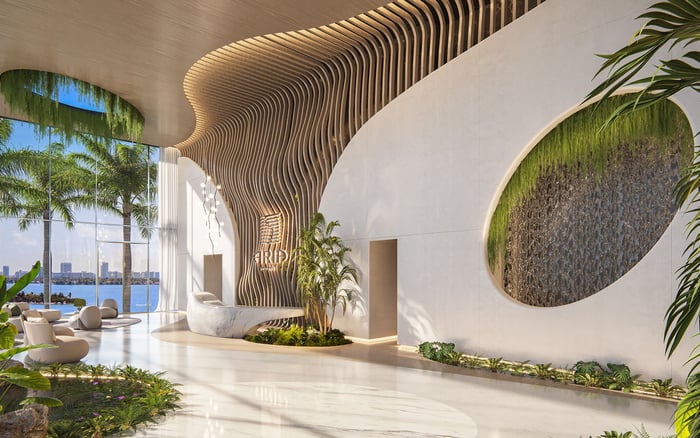
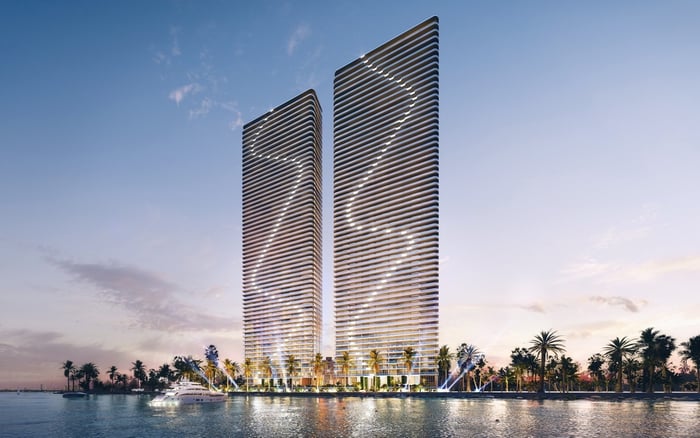
Planned at 2121 N Bayshore Drive in Miami’s bayfront Edgewater neighborhood, the property’s advertised features include a covered porte-cochère, a three-story lobby and a reception/concierge presence. The planned amenity program spans more than 45,000 square feet, with management and operation by EDITION. These remain advertised or planned offerings, not verified operating services; confirm completion and occupancy status before purchase.
The essential distinction is simple: hospitality can ease daily routines, while healthcare requires separate arrangements. Evaluate the building’s services, emergency-access procedures and the individual residence as three distinct parts of the purchase.
Advertised staffing includes 24-hour security and valet parking, alongside 24-hour butler, doorman and porter services. Those commitments cover hospitality and building operations. They do not establish nursing, hands-on personal assistance or resident monitoring.
The concierge offering centers on hotel and guest-suite reservations, restaurant and spa bookings, golf tee times and entertainment arrangements. The advertised offering does not identify an on-site medical clinic, urgent-care facility or formal concierge-medicine partnership. Buyers should plan clinical relationships independently rather than treating a staffed lobby as a substitute.
Request a written scope of service distinguishing what employees can arrange from what they personally perform. Confirm who handles overnight requests, which services require advance notice and whether outside providers carry separate charges. For someone expecting help with bathing, dressing or medication, the question is not whether a butler is available. It is whether independently engaged care can operate smoothly within the building’s rules.
The covered arrival area is a useful starting point for an access review, not proof of ambulance accommodation. Request written details on ambulance staging, after-hours responder entry, security clearance and the route from arrival to the residence. Ask who meets responders and how they obtain the necessary elevator and unit access.
AED locations, staff CPR training and a documented EMS-to-residence procedure are not established in the advertised details. Ask about each directly. Clarify backup power as well: which elevators, access systems and communications functions would remain available, and under what conditions?
No verified ambulance response times, hospital travel times or emergency-department routes are established here. Do not base a purchase decision on an assurance that care is merely “minutes away.” Review relevant care destinations and transport arrangements independently, keeping building access distinct from the journey beyond the property.
If Aria Reserve Miami is also on your shortlist, apply the same written emergency-access questions. A consistent review is more useful than assuming two Edgewater addresses have equivalent procedures.
The listed household offering includes grocery shopping, laundry and dry cleaning, personal chefs, and in-residence dining or catering. These services could meaningfully reduce errands. The planned fine-dining restaurant and catering kitchen offer further potential convenience, but neither establishes clinical nutrition support or medically prescribed meal preparation.
Other listed services include vacant-home care, plant care, mail packing and shipping, secretarial assistance, translation and travel planning. Clarify frequency, booking requirements and provider responsibility. In particular, do not interpret vacant-home care as a welfare-check program for an occupied residence.
Package delivery and storage are advertised, but specialized prescription refrigeration and medical-equipment handling are not established. Anyone relying on temperature-sensitive deliveries should separately confirm acceptance, storage conditions, notification and collection procedures.
Build a realistic service budget around the routines you intend to use. Distinguish included services from separately charged requests and third-party work. The useful comparison is not simply the breadth of the menu, but whether the support you need is available on an appropriate schedule and at a clearly understood cost.
Six guest suites are advertised for resident reservations. They may be useful for visiting family, but caregiver eligibility, pricing and maximum stays are not established. Do not build an overnight-care plan around those suites without written confirmation of reservation and occupancy rules.
Review recurring caregiver authorization, overnight assistance, shift changes and access when the resident cannot meet a visitor. Clarify equipment-delivery procedures and wheelchair or scooter storage. These operational questions can matter as much as an elegant guest arrival.
Assess the residence and the complete vehicle-to-unit route, examining thresholds, elevator dimensions and bathroom layouts. Review whether future modifications would be permitted, what approvals they would require and whether the chosen plan accommodates anticipated assistance. Luxury finishes alone do not establish accessibility.
For buyers also evaluating Villa Miami, use the same unit-level checklist rather than inferring suitability from presentation. The purpose is to select a home that fits the resident, not merely a service identity.
The advertised ninth-floor wellness center includes a full-service spa, relaxation area, steam room and sauna. Fitness offerings include a fitness center, yoga studio and personal-training studios. These are lifestyle amenities, not a disclosed clinical rehabilitation program, and they establish no particular fall-prevention outcome.
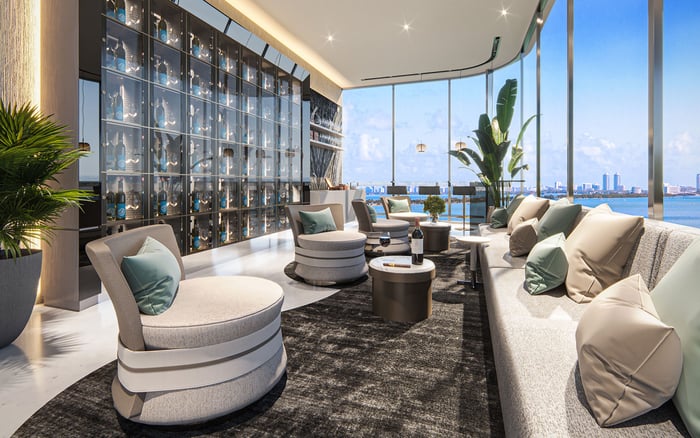
Planned social lounges, a cinema, a children’s room and a teen room offer settings for gatherings and family visits. A private dog run and grooming suite may also support everyday routines. Consider which spaces you would realistically use, and review their access routes alongside the residence itself.
The advertised 800 linear feet of bayfront contribute to the property’s residential appeal, but do not establish a medical-transport or evacuation route. Ground emergency planning in confirmed procedures, not the possibilities suggested by a waterfront location.
Before committing, assemble a purchase file containing the current service schedule, fee structure, caregiver and guest policies, emergency-access details and modification rules. Review unresolved points with the appropriate property representatives and your independent advisers. Separate contractual commitments from amenities that remain planned.
The strongest aging-in-place decision aligns three things: a residence suited to changing mobility, reliable arrangements for outside care when needed, and hospitality services that genuinely simplify daily life. EDITION’s planned offering merits consideration on that basis, without asking concierge staff to stand in for a medical team.
For a discreet conversation about your South Florida purchase priorities, connect with MILLION.
If branded residences are on your mind — as a home or as an allocation — we would be glad to share what we are seeing, privately.
Begin a quiet conversationThe project is planned at 2121 N Bayshore Drive, Miami, FL 33137, in the bayfront Edgewater neighborhood.
The amenities and services discussed are advertised or planned offerings, not verified operating services. Buyers should confirm current completion and occupancy status before purchasing.
The advertised concierge services focus on hospitality arrangements and reservations. An on-site clinic, urgent-care facility or formal concierge-medicine partnership is not identified in the offering.
The listed security, valet, butler, doorman and porter services do not establish resident monitoring, nursing or hands-on personal care.
Request written details on ambulance staging, after-hours responder entry, elevator and unit access, AED placement, staff emergency training and backup power.
No verified hospital travel times, ambulance response times or emergency-department routes are established here. Buyers should evaluate care destinations and transport arrangements independently.
Six guest suites are advertised for resident reservations, but caregiver eligibility, pricing and maximum stays are not established. Confirm those policies before relying on a suite for overnight assistance.
Listed services include grocery shopping, laundry and dry cleaning, personal chefs, and in-residence dining or catering. Confirm availability, scheduling and whether each service is included or separately charged.
The advertised spa, fitness center, yoga studio and personal-training studios are wellness amenities, not a disclosed clinical rehabilitation program.
Review the vehicle-to-unit route, thresholds, elevator dimensions and bathroom layouts against anticipated needs. Confirm permitted future modifications and caregiver access rather than inferring accessibility from luxury branding.