A buyer-oriented comparison of Rosewood Residences Hillsboro Beach and The Residences at Mandarin Oriental, Miami through the lens of terrace usability, view quality, coastal maintenance exposure, and discreet staff flow.
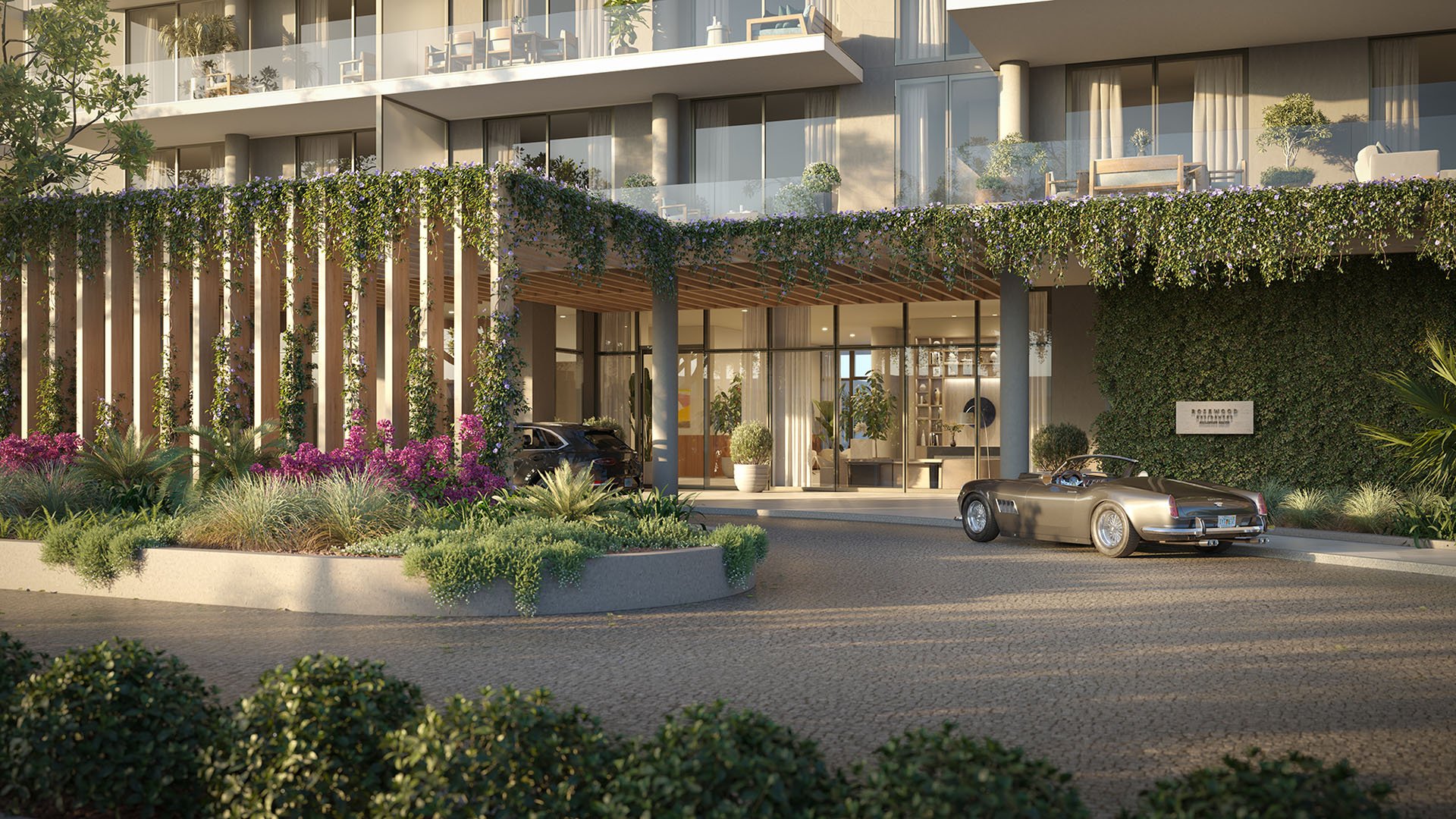
For a certain South Florida buyer, the most important amenity is not a club room, a wine wall, or a celebrity-chef concept. It is whether the residence functions quietly when the owners are home, guests arrive, a chef is working, luggage is moving, dogs return from a walk, and maintenance crews need access without disrupting the household.
That is the lens for comparing Rosewood Residences Hillsboro Beach with The Residences at Mandarin Oriental, Miami. Both occupy the upper tier of branded residential real estate, but they solve different buyer priorities. Rosewood Residences Hillsboro Beach is positioned as the quieter oceanfront option, closer in feeling to a private beach residence than a high-rise urban resort. The Residences at Mandarin Oriental, Miami is the more urban waterfront proposition, tied to Miami’s Brickell and downtown service ecosystem and integrated with a hotel-branded residential environment.
For buyers who care more about staff flow than social amenities, that distinction matters. One emphasizes residential calm and privacy. The other emphasizes access, density, hospitality infrastructure, and urban convenience.
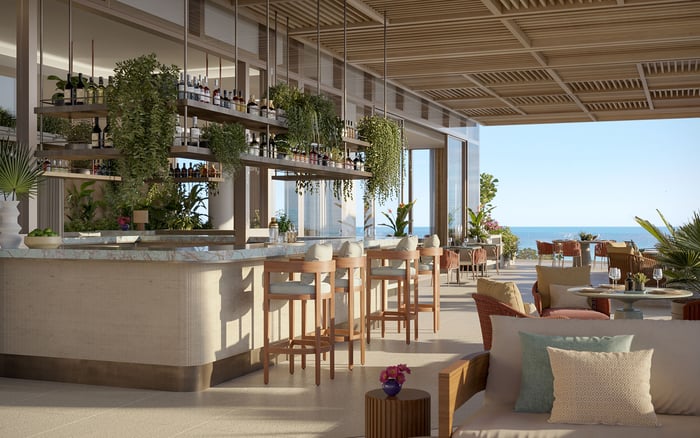
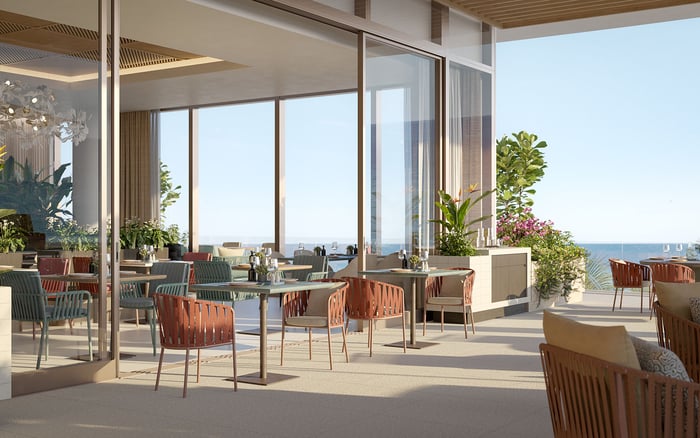
Terrace usability is not the same as having a balcony. A usable terrace has enough depth to support dining, lounging, shade planning, planting, and circulation without turning every outdoor moment into a staging exercise. It must also feel comfortable at the times of day owners actually use it, not simply photograph well.
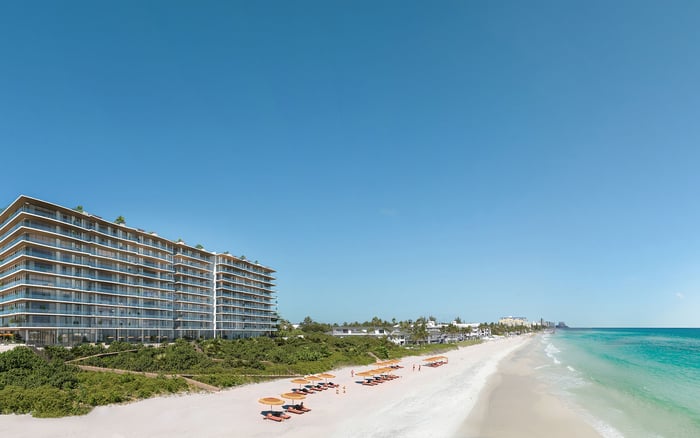
On this measure, Rosewood has the clearer conceptual advantage. Its Hillsboro Beach setting and residential tone make it better aligned with buyers who imagine the terrace as a true outdoor room. The appeal is not just exposure to the water, but the possibility of a quieter outdoor-living rhythm: breakfast outside, reading without urban noise, and entertaining without the feeling of being suspended above a dense city grid.
Mandarin Oriental Miami should be evaluated differently. Its terrace experience belongs to an urban waterfront high-rise environment. That can be compelling for owners who want skyline energy, bay light, and immediate access to Miami’s hospitality network, but it is not the same as a quiet beachfront outdoor-living compound. Buyers comparing it with other Brickell towers such as The Residences at 1428 Brickell should focus less on amenity renderings and more on depth, wind behavior, furniture layouts, and how terraces connect to kitchens, family rooms, and primary suites.
View quality is not only about what is visible. It is about interruption, density, privacy, and whether the outlook reinforces the way the buyer wants to live.
Rosewood’s primary advantage is direct oceanfront placement in the quieter Hillsboro Beach context. For buyers who want the Atlantic to dominate the experience, with less urban visual competition, that is a decisive emotional and practical advantage. Hillsboro Beach buyers are often responding to separation from busier markets as much as to the sand itself.
Mandarin Oriental Miami offers a different type of view value. Its appeal is more likely to come from skyline, bay, and urban-waterfront perspectives than from secluded beach frontage. For some buyers, that is preferable. The view contains movement, architecture, boats, city light, and proximity to Brickell. It feels connected rather than withdrawn.
The best way to frame the choice is simple. Rosewood is for buyers who want their view to calm the household. Mandarin Oriental Miami is for buyers who want their view to energize it.
Maintenance exposure is where sophisticated buyers slow down. At Rosewood, the direct coastal setting implies a direct coastal diligence list. Terrace materials, railings, glazing, exterior hardware, waterproofing, drainage, and façade systems should all be reviewed with care. Oceanfront living is beautiful precisely because it is exposed, and that exposure should be priced not only into acquisition but also into long-term ownership expectations.
At Mandarin Oriental Miami, the risk profile is different. The high-rise waterfront context points buyers toward tower systems, elevator strategy, mechanical infrastructure, hotel and residence integration, and the governance of shared service environments. The complexity is not merely coastal. It is operational.
This is where comparisons to other waterfront branded or resort-style properties can be useful, not because they answer the question for these two buildings, but because they train the eye. A buyer studying Auberge Beach Residences & Spa Fort Lauderdale or The Ritz-Carlton Residences® Pompano Beach will quickly see that beachfront ownership carries a physical maintenance dimension, while urban branded towers add another layer of shared operating systems and service choreography.
Staff flow is the most important category in this comparison, and also the one where buyers should avoid assumptions. The available project-level positioning supports broad conclusions about lifestyle fit, but it does not establish detailed floor-plan evidence for staff corridors, service elevators, back-of-house routes, or separate staff entries. Those items belong on the diligence checklist, not in the marketing imagination.
Still, the directional difference is meaningful. Rosewood’s residential format appears better aligned with discreet household operations and privacy. A quieter building culture can make everyday service feel less visible, especially for owners who maintain a chef, house manager, driver, security support, or frequent maintenance vendors.
Mandarin Oriental Miami may be stronger for owners who value proximity to dense urban hospitality infrastructure and frequent professional services. The tradeoff is complexity. Hotel and residence activity can bring convenience, but also more movement, more shared logistics, and a greater need to understand how private residential life is separated from branded hospitality operations.
The right buyer will ask practical questions. Where do deliveries go? How does staff enter? Are there service elevators serving the residence level? How are hotel guests, residents, vendors, and household employees separated? What happens during peak arrival periods? How are pets, luggage, catering, and maintenance handled on the same day?
For a buyer who places terrace depth, view calm, and household discretion above social programming, Rosewood Residences Hillsboro Beach is the more natural fit. It offers the quieter beachfront logic that supports privacy and a more residential cadence.
For a buyer who wants urban waterfront views, hotel-backed service density, and immediate access to the Brickell and downtown Miami ecosystem, The Residences at Mandarin Oriental, Miami may be the more strategic choice. It is less about retreat and more about connection.
The core tradeoff is therefore not brand versus brand. It is quiet beachfront privacy and terrace depth at Rosewood versus urban waterfront convenience and hotel-integrated service at Mandarin Oriental Miami. The more staff-dependent the household, the more important it becomes to verify the invisible architecture behind the residence: service access, circulation, elevator priority, delivery handling, and management protocols.
Which residence is better for quiet outdoor living? Rosewood Residences Hillsboro Beach is the stronger conceptual fit because its setting emphasizes beachfront calm and deeper outdoor living.
Which residence offers the more urban view experience? The Residences at Mandarin Oriental, Miami is better aligned with skyline, bay, and urban-waterfront perspectives tied to Brickell and downtown Miami.
Is Rosewood clearly better for staff flow? It appears better aligned with discreet household operations because of its residential format, but specific service routes still require diligence.
Does Mandarin Oriental Miami have an advantage for professional services? It may benefit from proximity to a dense urban hospitality ecosystem, although hotel and residence integration can add operational complexity.
What should buyers verify before choosing either building? Ask about service elevators, staff entries, delivery handling, vendor access, luggage movement, and separation between resident and guest circulation.
Is a larger terrace always better? No. Terrace depth, wind, shade, furniture placement, privacy, and connection to interior rooms matter more than size alone.
Which option has more direct coastal maintenance exposure? Rosewood’s direct oceanfront setting makes terrace materials, railings, glazing, hardware, and exterior systems especially important diligence items.
What is Mandarin Oriental Miami’s main maintenance consideration? Buyers should focus on tower systems, shared infrastructure, hotel-residence operations, and the governance of service-heavy environments.
Who is the ideal Rosewood buyer? A privacy-oriented owner who wants beachfront calm, usable outdoor space, and a residence that feels more like a private coastal compound.
Who is the ideal Mandarin Oriental Miami buyer? An owner who values urban waterfront energy, branded hospitality, and close access to the Brickell and downtown Miami service network.
If you'd like a private walkthrough and a curated shortlist, connect with MILLION.
If branded residences are on your mind — as a home or as an allocation — we would be glad to share what we are seeing, privately.
Begin a quiet conversation