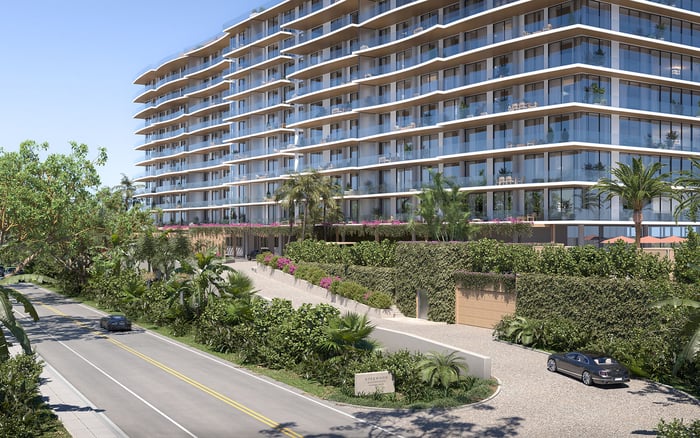
A buyer-focused look at why guest parking matters for lock-and-leave ownership at Rosewood Residences Hillsboro Beach, from family arrivals to staff access and long-weekend convenience.
At the highest end of South Florida residential design, the most revealing questions are often the least theatrical. Buyers considering Rosewood Residences Hillsboro Beach may arrive focused on architecture, service, ocean proximity, and privacy. Yet one practical issue can show how well a residence will perform as a true lock-and-leave home: guest parking.
For a primary residence, parking is usually judged through daily routine. For a second home, the calculus is more nuanced. Guests may arrive in overlapping waves. Adult children may come with their own cars. A private chef, wellness practitioner, household manager, security detail, or driver may need efficient access without disturbing the residence’s calm. The question is not simply whether a visitor can park. It is whether every arrival feels composed, predictable, and appropriately discreet.
That matters especially in Hillsboro Beach, where the residential mood is quieter than the larger coastal markets to the south. The appeal is not density or spectacle. It is an oceanfront way of living in which privacy, ease, and control matter as much as finishes. In that context, guest parking is not a footnote. It is part of the ownership experience.
A lock-and-leave buyer is often purchasing time as much as space. The residence must be ready when the owner arrives, secure when the owner departs, and intuitive when family or guests use it in between. Parking directly affects that equation because it governs the first and last moments of every stay.
When the building is quiet, guest parking may seem simple. The true test comes during holidays, long weekends, charity events, school breaks, and high season. A residence that lives effortlessly for two owners may operate very differently when it is hosting several generations, visiting friends, drivers, and service professionals.
This is where buyers should move beyond broad lifestyle language. The better inquiry is operational. How are guests received? How is temporary parking handled? What is the protocol for frequent visitors? Can household staff arrive without confusion? Is there a clear distinction between resident, guest, valet, and service movements? Those answers shape whether a residence feels private or improvised.
For Rosewood Residences Hillsboro Beach, the buyer conversation naturally sits at the intersection of Hillsboro Beach privacy, second-home readiness, boutique residential scale, oceanfront calm, and beach-access convenience. Each phrase points to a specific lifestyle expectation, not merely a marketing category.
Luxury buyers are accustomed to asking how many spaces are associated with a residence. That remains important, but it is only the beginning. In a lock-and-leave setting, the more refined question is choreography.
Choreography considers how vehicles move through the property, how guests are greeted, how waiting is managed, and how peak arrival times are handled. A single awkward moment at the curb can diminish the discretion a boutique coastal residence is meant to provide. Conversely, a clear arrival sequence can make even a busy family weekend feel civilized.
For owners who entertain, parking also influences the scale of hospitality. A dinner for six, a beach afternoon with relatives, or a small celebration may all be modest by estate standards, but in a condominium environment, the building’s systems matter. The residence is private, but arrival is shared. Buyers should understand that shared layer before assuming the home will function like a detached waterfront estate.
This is not a reason to be cautious about condominium living. It is a reason to be precise. The best coastal residences often feel effortless because they have solved small points of friction in advance. Guest parking is one of those points.
The most useful guest parking questions are practical and scenario-based. Instead of asking only whether guest parking exists, buyers should describe how they actually live.
If family members often visit independently, ask how many guest vehicles can be accommodated during the same period and how advance notice is handled. If the residence will be used seasonally, ask whether procedures change during peak months. If the owner expects regular drivers, staff, or vendors, ask where they wait, check in, and circulate.
Buyers should also ask about policy, not just courtesy. A gracious building culture is valuable, but written rules determine what happens when the property is full or when several residences are hosting at once. The distinction matters for owners who want certainty rather than exception-based accommodation.
Another useful line of inquiry concerns duration. A visitor stopping by for lunch is different from a guest staying for a long weekend. The building may treat those uses differently. Understanding that difference helps avoid surprises when the residence is being used by family members in the owner’s absence.
Finally, buyers should test the experience from the visitor’s perspective. Is the arrival intuitive? Is signage discreet but clear? Does the process feel secure without feeling cumbersome? A luxury building should protect privacy without making guests feel managed.
Hillsboro Beach is not a market that rewards excess noise. Its appeal is measured, coastal, and residential. Buyers drawn to Rosewood Residences Hillsboro Beach are often not looking for the constant motion of a larger urban tower. They are seeking a more composed waterfront life, where the beach, the residence, and the rhythm of ownership feel aligned.
That quieter context elevates the importance of everyday logistics. In a dense urban district, buyers may expect more visible traffic, more valet movement, and more mixed-use energy. In Hillsboro Beach, the standard is different. Arrival should feel calm. Guests should not make the property feel busy. Service should support the lifestyle without announcing itself.
Guest parking is therefore a measure of fit. If an owner expects frequent entertaining, a large rotating family calendar, or regular staff presence, the residence must support that pattern. If the owner’s use is more private and intermittent, the priority may be secure, easy access for occasional guests and caretakers.
Neither profile is better. The important point is alignment. The right home should match the way the owner intends to occupy it, not merely the way it photographs.
For an ultra-premium buyer, guest parking is not a minor operational question. It is a proxy for how a building handles privacy, service, hospitality, and high-season pressure. At Rosewood Residences Hillsboro Beach, the lock-and-leave question should be framed in those terms.
A beautiful residence can satisfy the eye on the first visit. The more valuable due diligence is whether it will satisfy the household over many seasons. That includes the weekend when three family members arrive separately, the evening when a driver is waiting, the morning when service professionals need access, and the holiday when several owners are entertaining at once.
The most confident buyers will ask specific questions early, listen for clear procedures, and evaluate the building as an operating environment, not just as an address. In South Florida’s luxury market, ease is never accidental. It is designed, staffed, governed, and tested in the small moments that make ownership feel seamless.
Why is guest parking important for lock-and-leave ownership? It affects how easily family, visitors, drivers, and service professionals can access the residence when the owner is present or away.
Should buyers ask only how many guest spaces are available? No. Quantity matters, but procedures, peak-period rules, waiting areas, and staff circulation can matter just as much.
Is guest parking more important for second-home buyers? Often, yes. Second-home use can involve concentrated arrivals during holidays, weekends, and seasonal stays.
What should buyers ask about frequent visitors? They should ask how recurring guests are registered, how long they may park, and whether advance notice is required.
Do household staff and vendors use the same parking process as guests? Not always. Buyers should clarify service access, check-in procedures, and any limits on waiting or loading.
Why does Hillsboro Beach make discretion especially relevant? The area’s appeal is quiet coastal living, so arrivals should feel calm, private, and well managed.
Can guest parking affect entertaining? Yes. Even modest gatherings depend on clear arrival logistics, especially during high season or holiday periods.
What is parking choreography? It is the full sequence of arrival, greeting, vehicle handling, waiting, and departure, not just the number of spaces.
Should buyers review building rules before committing? Yes. Written policies help determine what happens when the property is busy or multiple owners are hosting.
What is the main takeaway for Rosewood Residences Hillsboro Beach buyers? Guest parking should be evaluated as part of privacy, service, and second-home ease, not as an afterthought.
For a confidential assessment and a building-by-building shortlist, connect with MILLION.
If branded residences are on your mind — as a home or as an allocation — we would be glad to share what we are seeing, privately.
Begin a quiet conversation