For South Florida luxury buyers, the pool decision is no longer just about having water on site. It is about where the water sits, who controls it, and how its true cost shows up over time. Rooftop pools elevate the experience with skyline and ocean views while preserving interior square footage, but they introduce complex engineering and shared-governance realities. Private pools deliver total control and privacy, yet carry direct installation, upkeep, and long-term responsibility. This editorial breaks down the choice with a buyer-first lens: lifestyle, costs, resale signal, and risk management.

In South Florida, a pool has always been part of the visual language of luxury. What’s changed is the buyer’s calculus. Today, the decision is less about whether a pool exists and more about where it lives-and who ultimately governs it.
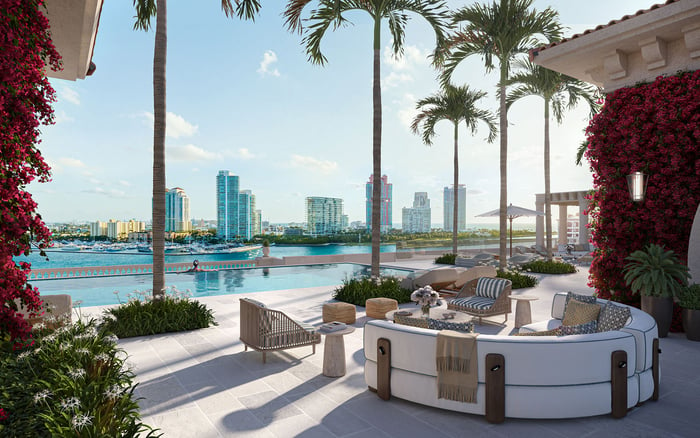
Rooftop amenities, including pools, have become key differentiators in new luxury development because they deliver leisure space without consuming unit square footage. The appeal is immediate: open-air views, a sense of arrival, and a lifestyle that feels curated. But the rooftop also concentrates complexity. Engineering, waterproofing, mechanical systems, access, and safety have to perform as one.
A private pool, by contrast, is singular in concept: you control access, rules, and the calendar. That simplicity, however, comes with direct responsibility for installation, maintenance, utilities, and the occasional surprise when equipment needs replacement.
This is the modern choice: shared spectacle or private sovereignty.
Rooftop pool decks are typically designed as destinations, not add-ons. They’re often paired with lounges, entertaining areas, and view-first planning so the amenity reads like a private club rather than a building feature. For many condo buyers, that positioning matters as much as the water itself.
The advantage is partly architectural. When a building dedicates the roof to leisure, residents gain outdoor square footage without giving up interior living area. In markets where high-design residences prioritize clean floor plans and larger terraces, keeping amenity functions off the unit level can be a quiet form of luxury.
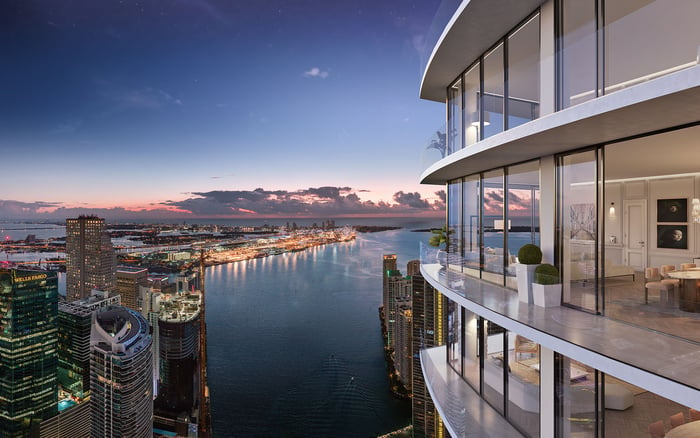
In Brickell, for example, an amenity-led lifestyle is a defining expectation in many towers, and buyers shopping Una Residences Brickell often evaluate the building experience as closely as the floor plan. The same mindset extends to oceanfront and beach-adjacent enclaves, where a rooftop pool can turn a daily ritual into something closer to a resort cadence.
What a rooftop pool rarely offers is exclusivity. Even in a boutique setting, it is shared, scheduled, and governed.
A rooftop pool is a design statement-and a structural event. Water weight is a defining constraint: water weighs about 8.34 pounds per gallon. That single fact shapes structural requirements in ways that are invisible during a showing, yet decisive for long-term performance.
Execution is not simply a matter of installing a pool shell. Rooftop pools generally require tight coordination across structural design, waterproofing, mechanical systems, and access and safety planning. Waterproofing details, drainage paths, and equipment placement become mission-critical because failures do not stay contained at the roof. They migrate.
For buyers, the takeaway isn’t to avoid rooftop pools. It’s to evaluate the building’s seriousness. In a well-executed luxury property, the amenity should feel effortless precisely because the engineering is not.
This is also where a penthouse buyer may face an interesting trade. Higher cost can deliver prestige, privacy, and views-and it can naturally pair with less-crowded amenity use compared to lower-floor residents. Privacy is not the same as exclusivity, but in a building where many residents treat the rooftop as an occasional destination rather than a daily habit, it can feel close.
A private pool is the cleanest expression of control. You set the rules, choose the temperature, define the aesthetic, and decide who enters the water. No sign-in. No posted hours. No neighbor’s guests crowding your preferred chaise.
That autonomy is the core luxury proposition, especially for buyers who treat their residence as a personal retreat. In neighborhoods where the outdoor environment is integral to the home’s architecture, a private pool reads as an extension of the design-not a shared amenity.
The financial side is equally direct. Luxury in-ground pool construction is commonly cited in the roughly $50,000 to $150,000 range, with higher totals for premium finishes and features. Infinity-edge pools typically cost more than traditional pools because they require additional engineering and a catch-basin or overflow system to maintain the vanishing-edge effect.
After installation, the true cost shows up over time. Pool ownership includes chemicals, cleaning, equipment upkeep, and utilities. Many owners prefer professional service to avoid the time commitment and the risk of chemical imbalance. Variable-speed pool pumps are a widely used lever to reduce energy consumption versus single-speed pumps, which can help manage operating costs.
In Boca Raton, a buyer considering a home like 749 Bamboo Dr Boca Raton may view the pool as part of a private-compound experience rather than a convenience. The question becomes: do you want to curate it, or outsource it?
The most consequential difference between rooftop and private pools may be where the expense appears.
With a private pool, costs are yours. Installation, service, repairs, resurfacing, equipment, and utilities show up as personal line items. That transparency can feel reassuring for buyers who prefer control and predictability, even if the numbers fluctuate.
With a condo rooftop pool, you fund it collectively through HOA dues and the broader building budget. Shared amenity operations and maintenance are typically handled that way, meaning you won’t receive a monthly pool bill-but you are still paying for the pool.
The trade is subtle. Your share may feel smaller and easier to absorb, yet it can become less predictable when major projects arise. Condo owners can face special assessments when an association needs to fund major repairs or capital projects beyond regular dues and reserves. These assessments are typically one-time charges approved to cover unexpected or underfunded expenses, and they can introduce real cost uncertainty.
This matters in any amenity-rich tower, whether you’re in a boutique coastal setting like 57 Ocean Miami Beach or a larger-scale luxury community. The lesson isn’t that assessments are inevitable. It’s that shared ownership replaces individual bills with collective governance.
Luxury is often defined by what you don’t have to manage.
A rooftop pool can be an elegant answer for buyers who want an elevated experience without personal maintenance. You arrive, you swim, you leave. Cleaning and equipment are handled. The deck is staged to read resort-like.
But shared amenities come with friction: other residents, guest policies, posted rules, and the quiet unpredictability of peak weekends. The rooftop pool may be immaculate, but it is not yours alone.
Private pools invert the equation. Crowding is rarely an issue, and privacy is built in-yet you remain the steward of water quality and mechanical reliability. Even with service, you’ll make decisions: repairs, resurfacing, upgrades, and operating preferences.
A sophisticated buyer treats it as a time-allocation question. If your calendar is tight and your standards are high, a rooftop pool is often the more efficient luxury. If your residence is a retreat and privacy is non-negotiable, private water becomes the stronger emotional asset.
Pools can add resale value, but the premium varies widely by region and buyer expectations. A poorly maintained pool can also hurt marketability, an understated risk for private owners who let the water or finishes slide.
At the same time, raw price gaps between homes with pools and those without aren’t clean proof of value. Homes with pools are often larger and more expensive to begin with, so the pool is frequently part of a broader profile rather than the single driver.
For condo buyers, the resale signal is different. Rooftop amenities function like brand cues: they communicate a building’s positioning and the lifestyle promise. In Bay Harbor Islands, a wellness-forward, design-conscious environment can shape demand, and buyers exploring The Well Bay Harbor Islands often evaluate how amenities support daily living. A rooftop pool, in that context, is not just leisure-it’s identity.
Before you choose rooftop or private, answer five practical questions.
First, define your privacy tolerance. If sharing a deck with neighbors feels like a compromise, the decision is already leaning private.
Second, measure your appetite for stewardship. Private pools reward owners who value control and are willing to oversee maintenance, even when it’s outsourced.
Third, test how you actually use water. If you swim daily, scheduling and crowding matter. If you swim occasionally, rooftop convenience may be ideal.
Fourth, consider cost psychology. Some buyers prefer transparent personal expenses. Others prefer the quiet smoothing effect of HOA budgeting, even with the possibility of assessments.
Fifth, think about the role of views. Rooftop pools often deliver a cinematic experience that a backyard can’t replicate, especially in dense, vertical neighborhoods like Brickell and Miami Beach.
Ultimately, both options can be “better” luxury. The right choice is the one that protects your time, matches your privacy standard, and aligns with how you actually live.
Are rooftop pools structurally risky by nature? Not inherently, but they require rigorous engineering because water is heavy and rooftop systems must be coordinated across multiple disciplines.
Why do rooftop pools feel more like resorts than standard condo amenities? They’re often planned with lounges and entertaining areas so the deck functions as a destination, not just a place to swim.
Do private pools always increase a home’s resale value? Not always; the value impact varies by buyer expectations, and poor maintenance can reduce appeal.
What is the hidden cost of owning a private pool? Beyond construction, ongoing chemicals, cleaning, equipment upkeep, and utilities can materially change the true cost.
Is an infinity-edge pool worth it? It can be, but it typically costs more due to extra engineering and an overflow or catch-basin system.
How do condo owners pay for rooftop pool upkeep? Costs are commonly handled through HOA dues and the association’s operating and reserve budgets.
Can rooftop pool repairs trigger a special assessment? Yes, associations may levy one-time special assessments to fund major repairs or underfunded projects.
Do professional pool services matter for private owners? Many owners use them to handle skimming, cleaning, and chemical balancing, reducing time and errors.
How can private pool owners reduce energy use? Variable-speed pumps are a common way to cut energy consumption compared with single-speed pumps.
Which option suits a frequent traveler better? Rooftop pools often fit frequent travel because maintenance is handled collectively, while private pools still need consistent care.
For a discreet conversation and a curated building-by-building shortlist, connect with MILLION Luxury.
If branded residences are on your mind — as a home or as an allocation — we would be glad to share what we are seeing, privately.
Begin a quiet conversation