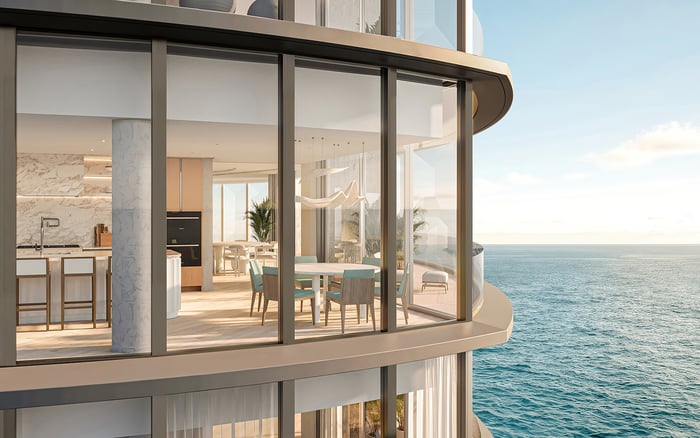
Oceana Bal Harbour advertises a bicycle area, but e-bike storage, battery charging, and elevator access require separate confirmation. A buyer-focused review of the permissions, safety guidance, and local route restrictions that matter before closing.

An e-bike can seem like a modest accessory to an oceanfront residence. For a buyer at Oceana Bal Harbour, however, its usefulness depends on several distinct permissions: where the bicycle may be stored, where its battery may be kept and charged, and how the device may move through the building.
The advertised amenities include “private storage & bicycle area.” That establishes an advertised bicycle-storage facility-not its capacity, allocation, or suitability for a particular electric bicycle. Nor does it establish permission to store spare lithium-ion batteries or use an outlet for charging. Bicycle storage and e-bike charging require separate confirmation.
For a purchaser expecting effortless daily access, these distinctions belong in the pre-purchase review. A polished amenity description cannot replace written confirmation that the intended routine is permitted. The absence of a publicly stated prohibition should never be treated as approval.
Begin with the residence, not the bicycle room. Ask whether a storage space accompanies the purchase, whether the rights are deeded or assigned, and which documents establish them. Confirm whether bicycle accommodation is separate from private storage and whether allocation involves fees or availability constraints.
Then describe the actual equipment. Give management the bicycle’s dimensions and specify whether its battery is removable. Request written answers on e-bike eligibility, restrictions on removable or spare batteries, and the dimensions of the proposed space. Permission for a conventional bicycle does not resolve those questions.
The review should distinguish three arrangements: storing the complete e-bike, storing the bicycle with its battery removed, and keeping the battery elsewhere. Ask which, if any, is permitted and under what conditions. None can be assumed from the amenity wording alone.
Buyers also considering Rivage Bal Harbour can use the same questions for comparison, while obtaining that property’s own answers. A shared location does not establish shared operating rules.
Storage and charging require different confirmations. Ask where charging is allowed, whether common-area outlets may be used, and whether unattended or overnight charging is restricted. If the plan is to charge inside the residence, request a direct answer about that location rather than extrapolating from a bicycle-room policy.
Battery-safety recommendations include choosing devices, batteries, and charging equipment listed and labeled by a nationally recognized testing laboratory, following manufacturer instructions, and using only the battery and charger designed for the device. These are safety recommendations, not evidence of Oceana-specific approval requirements.
Other recommended precautions include keeping e-bikes and batteries away from exit doors and storing them in a well-ventilated area away from combustible materials. Charging while sleeping, overcharging, charging at extreme temperatures, and charging multiple devices on one electrical circuit are discouraged.
Apply these recommendations alongside the association’s actual rules. A visible outlet does not establish permission to charge; general battery-safety recommendations do not establish a blanket ban on common-area charging. The buyer needs both a permitted arrangement and a safe routine.
Service-elevator access can determine whether an e-bike is convenient or cumbersome to use. The advertised bicycle area does not establish a service-elevator requirement, passenger-elevator permission, or a permitted route between the residence, storage area, and building exit.
Ask management to identify that route explicitly. Confirm whether bicycles must use a service elevator, whether batteries may be carried separately, and whether access hours, reservations, or fees apply. Clarify whether the answers differ for everyday riding, initial delivery, or move-in. Delivery procedures should not be assumed to govern routine bicycle use.
A walkthrough can make the written response more useful. Follow the proposed route and compare the bicycle’s dimensions with the space it would occupy. The objective is not to infer permission from physical access, but to test whether the approved arrangement suits the buyer’s habits.
For a frequent rider, an access limitation may matter more than a generous storage area. Assess the whole journey, not simply whether a bicycle fits in a room.
Bal Harbour’s Ordinance 2026-0670 prohibits electric bicycles, electric scooters, and other motorized mobility devices on the beach path, jetty and cut walk, and 102nd Street beach-access path. These restrictions should inform any expectation of using an e-bike for a waterfront outing.
Public-path restrictions and condominium permissions answer different questions. Permission to keep an e-bike at home does not authorize riding on a prohibited path. Conversely, a public-path prohibition does not establish an internal storage ban, charging restriction, or elevator policy at Oceana.
Before committing to an e-bike-centered routine, identify the intended destinations and confirm a permissible route. Beach proximity alone is not evidence of electric-mobility access.
If the search extends to Fendi Château Residences Surfside, repeat both the building-policy and route reviews independently. Neither Oceana’s arrangements nor Bal Harbour’s specified path restrictions should be assumed to apply to another property or jurisdiction.
Request the current association rules, storage assignments, battery and fire-safety policies, and elevator and move-in procedures. Ask management to tie its answers to the applicable documents so that an informal explanation does not become the sole basis for a purchase decision.
The written response should address the intended use in one coherent sequence: e-bike eligibility, storage allocation, treatment of the battery and any spares, permitted charging location, and daily access route. Where an answer is conditional, identify the condition rather than treating it as an unrestricted yes.
Keep the inquiry specific to Oceana Bal Harbour. Rules associated with another similarly named condominium are no substitute for this association’s documents. Have the buyer’s advisers review unresolved issues before relying on storage or access arrangements as part of the residence’s appeal.
The essential test is whether permission, safety, and convenience align. A satisfactory storage answer can still leave charging unresolved; an approved charging location can still leave everyday access inconvenient. Resolve each element separately, then assess the complete routine.
Ownership planning should also cover battery emergencies and disposal. Recommended precautions include calling 911 if a battery overheats, emits an odor, leaks, or deforms, and keeping lithium-ion batteries out of regular trash. Ask management how its emergency procedures address battery incidents and how residents should arrange appropriate disposal.
For a discreet, buyer-focused perspective on South Florida residential choices, explore MILLION.
If branded residences are on your mind — as a home or as an allocation — we would be glad to share what we are seeing, privately.
Begin a quiet conversationIts advertised amenities include private storage and a bicycle area. That description does not establish capacity, allocation, or e-bike eligibility.
An Oceana-specific e-bike ban is not established here. Obtain the current association rules and written confirmation rather than assuming either permission or prohibition.
The amenity description does not establish charging permission. Confirm approved charging locations and whether common-area outlets may be used.
The advertised facility does not establish a particular residence’s storage rights. Confirm allocation, dimensions, fees, and whether relevant rights are deeded or assigned.
An Oceana-specific service-elevator requirement is not established here. Ask for the permitted daily route, elevator rules, access hours, reservation requirements, and any fees.
The bicycle-area description does not answer that question. Request separate confirmation for removable batteries, spare batteries, and the locations where each may be stored.
It recommends devices, batteries, and charging equipment listed and labeled by a nationally recognized testing laboratory. Follow manufacturer instructions and use the battery and charger designed for the device.
No. Fire-safety guidance advises against charging lithium-ion devices while sleeping, but Oceana’s enforceable charging restrictions require separate confirmation.
Ordinance 2026-0670 prohibits electric bicycles, electric scooters, and other motorized mobility devices on the beach path, jetty and cut walk, and 102nd Street beach-access path.
Safety guidance advises calling 911 if a battery overheats, emits an odor, leaks, or deforms. Lithium-ion batteries should not be placed in regular trash.