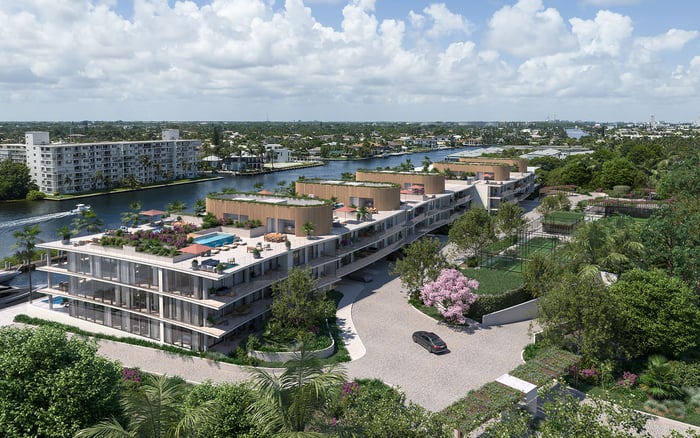
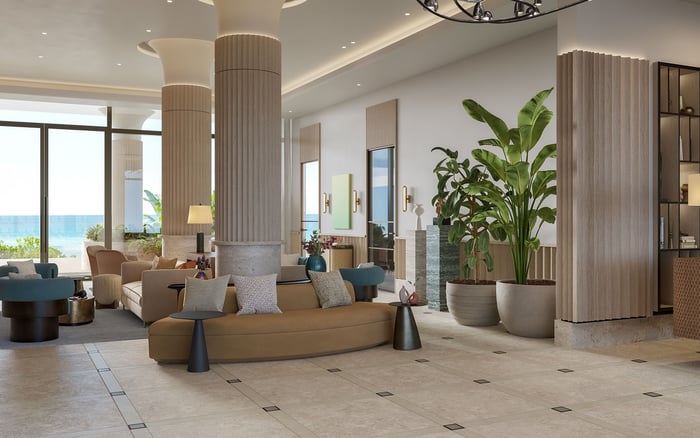
For families considering Hillsboro Beach, the finer points of residential living include who may supervise children, how caregivers enter, when guests can use amenities, and what liability documents actually say. A practical framework for resolving those questions before purchase.

A residence should accommodate the way a family actually lives: a caregiver taking children downstairs, grandparents visiting for the weekend, or an owner arriving after the rest of the household. In Hillsboro Beach, those ordinary arrangements deserve the same scrutiny as the floor plan and finishes. An attractive amenity is useful only when its operating rules support the intended routine.
For buyers considering Rosewood Residences Hillsboro Beach, the essential step is to request written answers about access, supervision, guest privileges, and liability documents. The considerations below provide a due-diligence framework, not a statement of that property's policies or confirmed offerings.
Ask management to identify who may use each amenity and which documents govern that access. Do not treat a description of an amenity as confirmation that every member of the household, caregiver, or visitor may use it on the same terms.
Permission to host a guest should not be treated as confirmation that the owner need not accompany that person, that advance registration is unnecessary, or that access extends to every amenity. Ask management to distinguish building entry from amenity entry, and overnight accommodation from recreational privileges.
Request the current governing documents, amenity rules, guest procedures, caregiver registration requirements, and any waiver forms. When an operating detail is material to the purchase, seek written clarification tied to the applicable rule-not a general assurance that the building is family-friendly.
Ask precisely who qualifies as a supervisor under the residence's rules. Have management address the actual arrangement: the child's age, the proposed supervisor's relationship to the household, and whether the owner will be present. Request confirmation for an adult caregiver or visiting grandparent rather than assuming either has the same permissions as an adult resident.
Then consider the pool, spa, and fitness facilities separately, where offered. Obtain any access and supervision conditions for each space; a general assurance that children are welcome is not a substitute for those details.
Ask qualified counsel to review any age-specific restrictions that concern you, including their fair-housing implications. Do not treat a rule's inclusion in a handbook as legal confirmation that it is enforceable.
Do not assume that a nanny or au pair automatically has resident privileges, qualifies as an acceptable supervisor, or can enter an amenity without the owner. Each point requires property-specific confirmation.
Ask management to address three distinct permissions: entry to the building, access to the amenity, and authority to supervise a child there. Then establish whether registration is recurring or visit-specific, whether a credential is needed, and how substitute caregivers are handled. These are questions to resolve, not presumed requirements.
For a household also considering Alina Residences Boca Raton, use the same written scenario in the Boca Raton comparison. A consistent question reveals more than broad descriptions of service: may the registered caregiver accompany the children to the amenity while both parents are away?
Describe a realistic visit to management, including grandparents, children's friends, and a caregiver. Ask who counts toward any guest limit, whether limits apply per unit or per resident, and whether the host must remain with visitors. Clarify whether permission changes when guests stay overnight or arrive before the owner.
When comparing a Pompano Beach option such as The Ritz-Carlton Residences® Pompano Beach, carry the same scenario into the discussion. The objective is not to assume equivalent privileges, but to understand how each residence would accommodate the household's plans.
Practical details deserve their own review. Ask for the exact wording on flotation devices, toys, strollers, and swim diapers, including any approval or storage procedures that would affect the family's routine.
Do not infer permission from a photograph or another building's practice. If a restriction appears to exclude a child's intended use, request written clarification and seek legal review where appropriate rather than assuming an exception will be available.
Ask what the governing documents say about responsibility for children's conduct and safety, including visiting children. Establish what the residence expects when a caregiver or guest is supervising rather than the owner.
Review posted notices and signed waiver forms separately. Ask whether a lifeguard is present, what supervision the household must provide, and which documents must be completed before access is granted. Do not use a general description of pool oversight as an answer to these specific questions.
Request every applicable form and ask who must sign, how minors are addressed, and whether caregivers have any signing role. Do not assume that a disclaimer or waiver resolves negligence liability; have qualified counsel explain the legal effect of the actual wording and circumstances.
Before committing, assemble the rules and written responses into a household plan covering caregivers, visiting children, guest counts, supervision, and required signatures. Obtain advice on unresolved legal questions before treating access as assured. The most valuable amenity is one whose permitted use fits the family without ambiguity.
For a considered approach to South Florida residential ownership, explore MILLION.
If branded residences are on your mind — as a home or as an allocation — we would be glad to share what we are seeing, privately.
Begin a quiet conversationDo not rely on the description alone. Request the residence's written eligibility, registration, accompaniment, and guest-limit rules.
That permission requires property-specific confirmation. Ask separately about building entry, amenity access, and whether the caregiver qualifies as an acceptable supervisor.
Give management the child's age and the proposed supervisor's relationship to the household. Request the applicable written rule and confirmation of whether the owner must be present.
Do not assume they do. Obtain separate access and supervision rules for each amenity offered.
Do not treat a published rule as confirmation of its enforceability. Ask qualified counsel to review concerning restrictions and their fair-housing implications.
Request the residence's written guest limit rather than assuming a number. Clarify who counts toward it and whether it applies per unit or per resident.
Yes, request the property's exact wording on toys, flotation devices, strollers, and swim diapers. Do not infer permission from photographs or another residence's practices.
Yes, obtain both for review rather than treating them as interchangeable. Ask counsel to explain their legal effect, including any implications for negligence liability.
Ask explicitly whether a lifeguard is present and what supervision the household must provide. A general description of pool oversight should not replace those answers.
Request current governing documents, amenity rules, guest and caregiver procedures, and applicable waiver forms. Seek written clarification of household arrangements that are important to the purchase.