A buyer-focused review of the emergency-power documentation, cooling-refuge arrangements, and post-storm reopening procedures to request before purchasing at Five Park Miami Beach.
At Five Park Miami Beach, the pre-purchase conversation should extend beyond architecture and daily service to a quieter question: what remains available when normal operations are interrupted? For an owner, the relevant luxury is not simply access to amenities, but certainty about power, cooling, mobility, and the conditions for returning home.
The development is marketed as a 48-story tower with 98 residences and approximately 50,000 square feet of amenities. Those figures describe its residential offering, not its storm performance. A detailed emergency-power allocation plan, a designated generator-backed cooling refuge, and comprehensive post-storm operating procedures remain unverified.
That distinction matters. An undisclosed arrangement is not necessarily an absent one. The buyer’s task is to replace assumptions with building-specific documents before making a commitment.
The most useful power question is not whether a building has backup capability, but precisely which loads it can support. Five Park’s generator capacity, fuel type, expected runtime, transfer priorities, and coverage for whole-unit power and in-unit cooling remain unverified.
Request the approved load schedules, generator specifications, fuel-storage information, maintenance records, and latest load-bank test. Ask for tested runtime and the load assumptions behind it. A duration without a description of the equipment it supports does not answer the household’s practical question.
Have management identify coverage separately for residential circuits, common-area HVAC, elevators, domestic-water pumps, dewatering equipment, fire pumps, alarms, and smoke-control systems. Coverage for these systems remains unverified. Do not interpret that disclosure gap as a finding of noncompliance.
A useful written schedule would distinguish automatically transferred loads, manually activated equipment, and systems subject to operating restrictions. Ask which functions take priority and what happens if available power or fuel becomes constrained. An appropriately qualified professional can help assess the technical documents against the buyer’s intended use.
A wellness lounge is not automatically a cooling refuge. No specific Five Park lounge, club, lobby, or wellness space has been verified as a designated refuge with generator-backed HVAC.
Ask management to identify any designated room by name and location, then document its occupancy limit, accessibility, backup-cooling duration, drinking-water provision, restroom access, and resident-use rules. Establish whether access would include household members, caregivers, and guests, and who would supervise the space during an outage.
The same documentary standard should guide a buyer also considering Setai Residences Miami Beach. This is a comparison framework, not a claim about that property’s emergency provisions: compare written operating commitments, not the atmosphere of a shared lounge.
Even a confirmed cooling room should not be treated as permission to remain during an evacuation or occupy a building deemed uninhabitable. Emergency comfort and authorization to stay are separate questions.
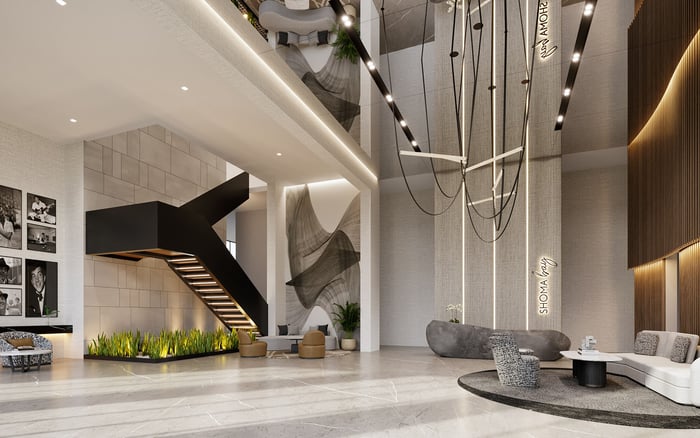
Five Park’s advertised amenities include two pools, a gym, spa, wellness lounges, and a pool bar and café. Other marketed spaces include co-working stations, private offices, business suites, a screening room, and children’s and teen areas. None of those descriptions establishes emergency-refuge status.
Likewise, advertised concierge, transportation, and wellness services carry no verified promise of post-storm continuity. Ask which services could be suspended, how residents would be notified, and what staffing arrangements management anticipates during recovery.
For households with medical or mobility needs, request written procedures for powered medical devices, refrigerated medication, and residents unable to use stairs. Ask whether any proposed arrangement depends on an elevator, a particular outlet, or staff assistance. Resolve these details before an outage rather than leaving them to an improvised discussion afterward.
The number of elevators receiving backup power, along with the inspection and operating conditions for post-storm service, remains unverified. Ask which cars, if any, would operate, what restrictions would apply, and who authorizes their return to service.
Treat domestic water as a separate inquiry. Request confirmation of pump coverage and the conditions management would require before describing water service as available. Ask how dewatering equipment fits into the emergency-power schedule rather than assuming every pump shares the same backup arrangement.
Five Park advertises valet service, electric-vehicle car ports, and a ride-share drop-off zone, but outage and post-flood procedures remain unverified. Request garage closure and reopening criteria, vehicle-retrieval arrangements, and any limitations on charging or valet operations.
For a buyer comparing Apogee South Beach, the same questions offer a consistent way to evaluate access. Neither property’s amenity offering alone supports a conclusion about its relative resilience.
Miami Beach does not distribute re-entry hang-tags. If checkpoints are implemented, proper identification and proof of necessity from an employer can assist with re-entry. Neither should be treated as a guarantee of access or permission to occupy a particular residence.
A home deemed uninhabitable by the Building Official must be vacated until proper repairs are completed. Municipal access and building habitability are distinct decisions, even when an owner can reach the neighborhood.
Request a written response matrix identifying closure authority, required inspections, elevator and garage restoration steps, resident communications, and reopening conditions. Ask who issues the building’s status updates and how residents receive them if their usual communication channel is unavailable.
Condominiums and hotels are encouraged to register Emergency Response Teams; Five Park’s registration status remains unverified. Ask management directly. Do not operate generators indoors, on balconies, or near open windows. A personal generator is not an acceptable workaround in those locations.
Before making a commitment, assemble the power documents, cooling arrangements, access procedures, and reopening matrix into one review package. Also request flood-exposure information, relevant engineering records, insurance deductibles, reserves, and potential special-assessment exposure. Five Park-specific findings on those financial and engineering matters remain unverified.
For a second-home household, identify who can receive notices, coordinate authorized access, and arrange alternative accommodation while the building’s status remains unresolved. Keep any promised assistance in writing, with its conditions clearly stated.
The purchasing standard is straightforward: distinguish confirmed capabilities from conditional services and unanswered questions. Five Park’s amenity offering can remain part of its appeal without being mistaken for evidence of emergency continuity.
For a considered approach to South Florida luxury ownership, explore MILLION.
If branded residences are on your mind — as a home or as an allocation — we would be glad to share what we are seeing, privately.
Begin a quiet conversationThe reviewed public materials do not establish which building systems or residential circuits receive backup power. That does not prove a system or allocation plan is absent.
Whole-unit and in-unit cooling coverage are not established by the reviewed marketing materials. Request written confirmation of supported HVAC equipment and operating conditions.
Request approved load schedules, generator specifications, fuel-storage information, tested runtime, maintenance records, and the latest load-bank test. Runtime should be explained alongside its load assumptions.
No specific lounge, club, lobby, or wellness space is verified as a designated generator-backed cooling refuge in the reviewed public materials. Ask management for any designated room’s capacity, accessibility, cooling duration, and use rules.
The reviewed materials do not establish how many elevators receive backup power or their post-storm inspection and operating conditions. Request written details on service restrictions and restoration authority.
Five Park advertises valet service, electric-vehicle car ports, and a ride-share drop-off zone, but their outage and post-flood procedures are not established in the reviewed materials. Ask for garage reopening and vehicle-retrieval arrangements.
Miami Beach does not distribute re-entry hang-tags. If checkpoints are implemented, proper identification and proof of necessity from an employer can assist with re-entry.
No. A home deemed uninhabitable by the Building Official must be vacated until proper repairs are completed; municipal re-entry does not override that requirement.
Request written procedures for powered medical devices, refrigerated medication, and residents unable to use stairs. Clarify any dependence on staff, elevators, or specific powered circuits.
Miami Beach warns against operating generators on balconies, indoors, or near open windows. A personal generator should not be treated as a workaround in those locations.