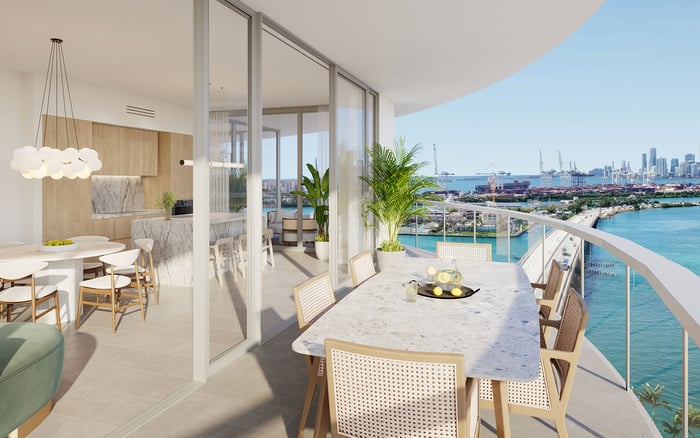
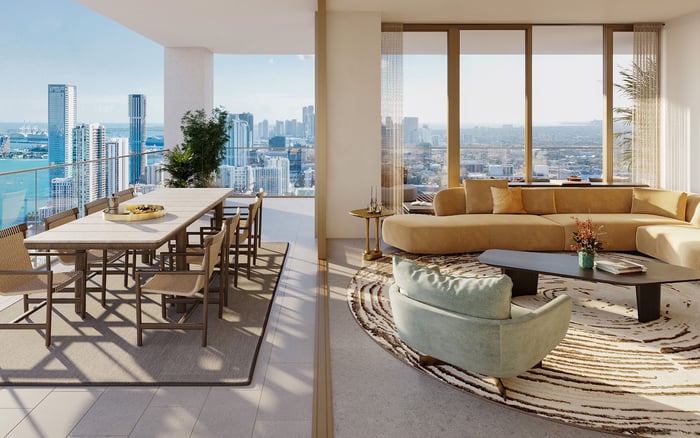
Five Park is complete and recording closings, shifting the buyer’s inquiry from whether the tower will rise to how its remaining inventory, financing and final obligations are managed.
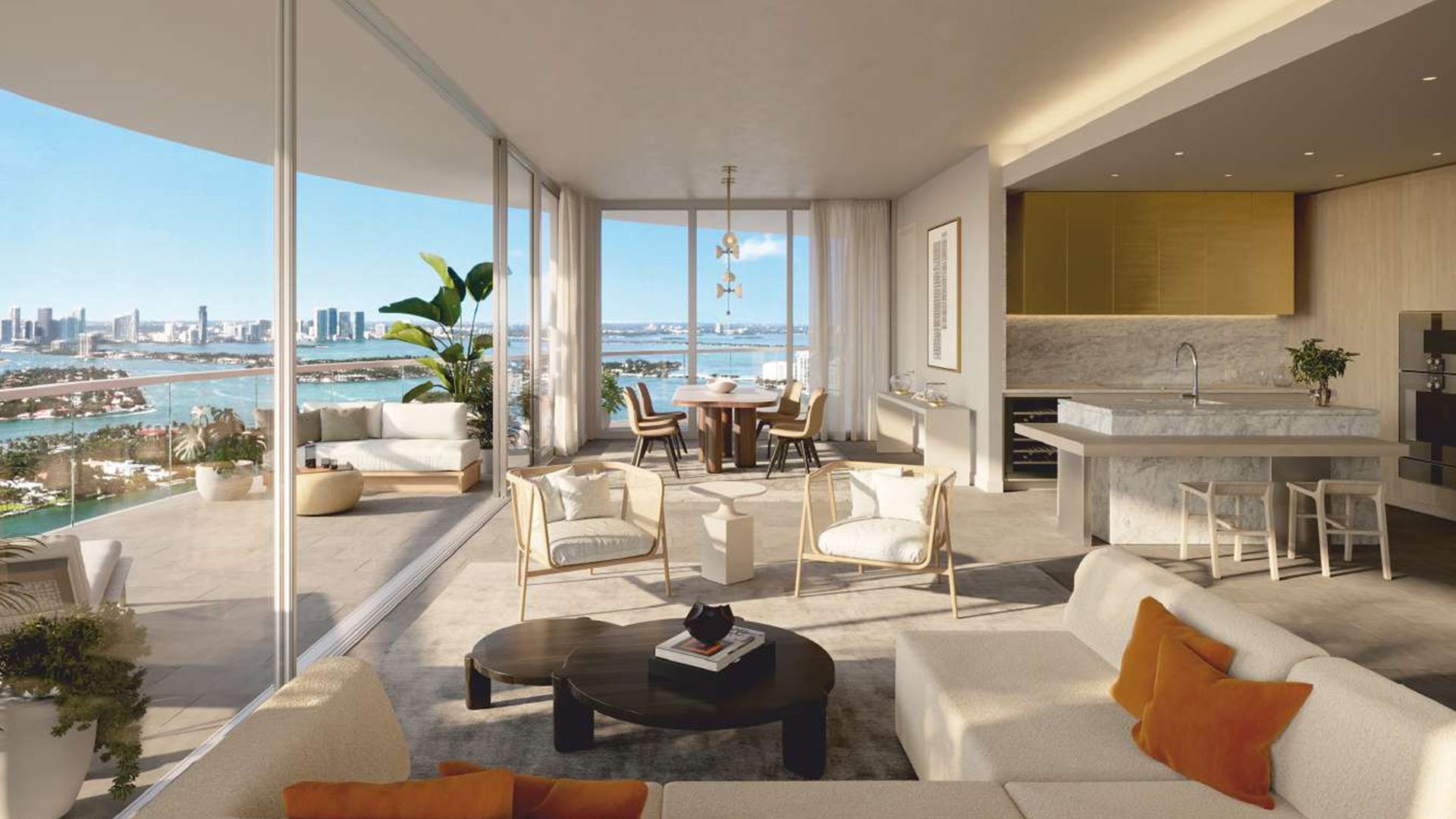
For buyers evaluating a residence, construction finance can seem remote from the selection process. At Five Park Miami Beach, however, the financing chronology provides a useful framework for understanding what has been resolved and what still warrants scrutiny.
The 48-story, 519-foot tower at 500 Alton Road was developed by Terra and GFO Investments. Terra is led by David Martin, while GFO Investments is associated with Russell Galbut. Completed in 2024 as Miami Beach's tallest tower, Five Park had obtained a temporary certificate of occupancy and begun recording condominium closings by November of that year.
That status materially changes the delivery-risk analysis. This is no longer an unfinished development facing an open question about whether its structure will be completed. The more relevant issues now include remaining-inventory absorption, pricing durability, sponsor carrying costs, lien releases, closing mechanics and any outstanding punch-list or completion obligations.
Completion reduces physical delivery risk, but it does not eliminate capital and closing risk.
Terra and GFO closed a $345 million construction loan from Blackstone and Apollo Global Management in March 2021. At the time, the facility was South Florida's largest residential construction loan funded since the pandemic began. Its scale indicates that sophisticated institutional capital was prepared to underwrite a major condominium project during an unsettled period.
That is a favorable signal, but not a substitute for buyer diligence. A lender's underwriting is designed to protect the lender under negotiated loan terms. It does not reveal the developers' precise equity contribution, current profit position or complete capital waterfall. Nor does a headline loan amount disclose future funding conditions, completion guarantees, recourse, reserves or the release price assigned to an individual residence.
The loan nevertheless matters in context. Large construction facilities are generally advanced through the building cycle rather than treated as a single, unrestricted pool of capital. For a buyer, the practical inquiry is not simply whether a major loan existed, but whether the project reached the contractual and legal milestones required for closings-and whether the residence can be conveyed under the applicable release and title arrangements.
Early financing materials placed completion in 2023. Completion followed in 2024, with substantial completion targeted for fall of that year. The temporary certificate of occupancy and the start of recorded closings by November 2024 mark a concrete transition from construction to occupancy and sell-down.
The approximately one-year difference between the early target and eventual completion should be understood accurately. It reflects delayed delivery relative to the initial schedule, but the facts do not support characterizing Five Park as unfinished or visibly distressed. For a current purchaser, the delay remains relevant when evaluating contract history, representations, remaining work and the distinctions among substantial completion, temporary occupancy approval and final closeout.
Buyers comparing a completed opportunity with other Miami Beach choices, including Shore Club Private Collections Miami Beach and The Perigon Miami Beach, should not treat every project's timeline or capital structure as interchangeable. The correct analysis is document-specific.
In February 2025, Terra and GFO secured a $103.2 million inventory loan from Apollo for the completed tower. The prior mortgage had been paid off the preceding December. Apollo's participation in both the original construction facility and the later inventory financing provides continuity across the building and sell-down phases.
An inventory loan is a normal tool for a completed condominium with residences left to sell. It can refinance earlier obligations and provide capital while closings proceed. The existence of such a facility should not, by itself, be read as distress. Yet its undisclosed terms are consequential: balance, maturity, extension rights, interest reserves, unit release prices and recourse provisions would sharpen any assessment of pressure on the sponsor.
Residences were advertised from approximately $1.25 million, placing absorption squarely within the luxury market. If sales slow, carrying costs and loan obligations can influence incentives, pricing decisions and the pace of sell-through. If demand remains durable, the same facility may simply support an orderly disposition of the remaining residences.
For investment-minded purchasers, this is where pricing and trends become more than a broad market conversation. The relevant evidence includes actual closing history, the current inventory schedule, concessions, if any, and the relationship between remaining collateral and outstanding debt. Buyers considering another established South Beach reference such as Apogee South Beach should still assess resale liquidity and sponsor-held inventory separately.
Five Park has been identified as a 227-unit condominium tower and as a 238-unit, 1.1-million-square-foot project. That discrepancy makes the legally declared residential inventory more consequential than marketing shorthand.
A buyer should request the condominium declaration and amendments, then reconcile those documents with the current inventory schedule and recorded closing history. The objective is to establish what legally constitutes a unit, how many residences have closed, which remain sponsor-owned and whether either count includes categories that are not directly comparable.
This issue affects more than arithmetic. Sell-through percentages, remaining collateral and the sponsor's exposure can all look different depending on the denominator. A precise legal inventory is therefore central to evaluating absorption and governance, particularly during the transition from developer control to a more owner-led condominium community.
The strongest review begins with the condominium declaration, amendments and applicable occupancy documentation. It should then encompass the current inventory schedule, closing history, outstanding mortgage documents, unit-release requirements and evidence that the specific residence can be conveyed with the expected title treatment.
Counsel should also examine any completion or punch-list obligations, escrow arrangements, warranties and unresolved common-area work. A temporary certificate of occupancy supports lawful occupancy at a key stage, but buyers should understand what remains before final closeout and which party bears responsibility for that work.
Finally, request enough loan information to understand maturity exposure and release mechanics without assuming that repeat institutional participation answers every capital question. The refinancing history is constructive, yet it does not reveal sponsor equity, profitability or the full priority of payments.
Five Park is now a move-in-ready proposition in the practical sense that closings and occupancy have commenced, but that label should not end the inquiry. The discerning buyer distinguishes physical completion from financial completion, and tower delivery from the longer process of inventory absorption and condominium stabilization.
Five Park's record presents a completed but delayed development backed by substantial institutional financing, followed by a conventional inventory-loan phase. Its construction risk has receded meaningfully. The remaining diligence is narrower but no less exacting: verify the declared inventory, closing pace, debt-release process, sponsor obligations and final completion status before treating the tower's completion as the end of the story.
For discreet guidance on South Florida luxury property, connect with MILLION.
If branded residences are on your mind — as a home or as an allocation — we would be glad to share what we are seeing, privately.
Begin a quiet conversationYes. Terra identifies the tower as completed in 2024, and condominium closings had begun by November 2024.
Yes. Early materials targeted 2023, while completion and the start of closings occurred in 2024.
Five Park was developed by Terra and GFO Investments. Terra is led by David Martin, and GFO Investments is associated with Russell Galbut.
The developers closed a $345 million construction loan from Blackstone and Apollo Global Management in March 2021.
The $103.2 million inventory loan supports the completed tower during its sell-down phase while remaining residences are marketed and closed.
Not by itself. Inventory financing is a normal tool for completed condominium sell-down, though its maturity and release terms remain important.
Public descriptions cite both 227 and 238 units. Buyers should rely on the condominium declaration and amendments to verify the legally declared inventory.
The focus shifts to final closeout, punch-list obligations, lien releases, title treatment, remaining-inventory absorption and sponsor carrying costs.
No. It is a favorable institutional signal, but it does not disclose sponsor equity, profitability or the complete capital waterfall.
Request the condominium declaration, amendments, inventory schedule, closing history, mortgage documents, release requirements and records of remaining completion obligations.