Five Park’s ownership economics require more than a quoted monthly assessment. Buyers should distinguish projected expenses from demonstrated operations, confirm assessment allocations and examine the documents behind the building’s service model.
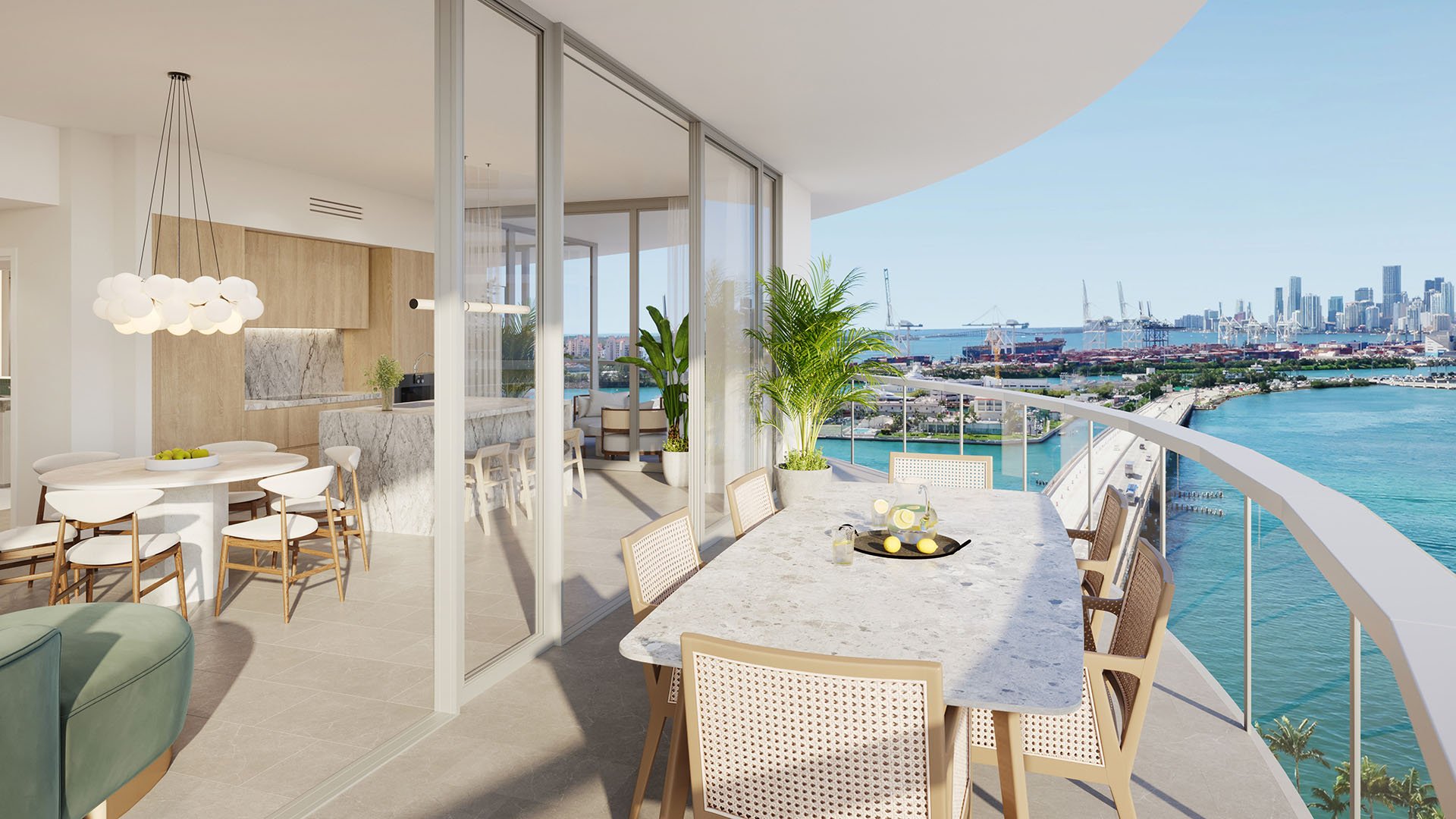
At Five Park Miami Beach, the ownership proposition begins with a 48-story condominium tower at 500 Alton Road, Miami Beach. Its architecture, interiors and extensive amenity program give buyers a tangible lifestyle to evaluate. The recurring cost of sustaining that experience demands a different kind of scrutiny.
A developer’s pro forma is a projection, not evidence of stabilized operating performance. The question is not whether an opening estimate looks attractive, but whether its assumptions reflect the services, contracts, insurance coverage and funding obligations owners will actually support.
That distinction does not establish that Five Park’s expenses were understated or that assessments have increased. It defines the standard of evidence a buyer should require before treating a proposed monthly carrying cost as dependable.
Five Park’s development partnership includes Terra, GFO Investments and New Valley. The legal developer is TCH 500 Alton, LLC; Terra’s role is distinguished through a limited trademark-use arrangement. Arquitectonica is the architect, and Gabellini Sheppard is the interior designer.
For a purchaser, those identities serve different purposes. Design credentials explain the physical offering; the legal developer identity helps frame contractual diligence. Neither replaces the documents establishing association obligations and a particular residence’s share of them.
The ownership review should connect three things: the residence being purchased, the entity responsible for each obligation and the mechanism through which expenses are allocated to that residence. Brand familiarity cannot replace that chain of documentation.
Five Park was completed in 2024. Delivery is an important physical milestone, but it does not establish a recurring expense baseline.
For underwriting purposes, buyers should look for actual spending under the intended service model, supported by current contracts, insurance invoices and reserve funding details. An adopted budget is more concrete than an early projection, yet it remains a plan. Actual-versus-budget results show whether that plan reflects operating experience.
Stabilization should not be assumed to occur on a fixed anniversary of completion. The stronger test is documentary: which expenses have been incurred, which remain estimates and which commitments may change at renewal?
If a search also includes The Perigon Miami Beach, apply the same distinction between projected obligations and demonstrated costs. That is a diligence principle, not a claim that the two projects share the same budget structure or operating history.
A quoted association-dues figure for Five Park is approximately $1.85 per square foot per month. Without the corresponding adopted budget and assessment notice, that number should not be treated as a verified assessment for a particular residence.
Applied to a stated 1,434-square-foot residence, the arithmetic yields approximately $2,653 monthly, or $31,835 annually. This illustrates the calculation; it does not confirm what a particular buyer will owe or establish which obligations the quoted amount includes.
Before using the figure in a purchase model, request the residence’s assessment notice and reconcile it with the applicable allocation schedule. Ask whether the quotation includes reserve contributions and any separately billed charges. Do not assume a square-foot rate captures every obligation.
Most importantly, the quoted rate cannot establish a pro-forma-to-actual increase, a stabilized expense level or a ranking against other luxury condominiums. Each conclusion requires evidence beyond a single quoted number.
The residence count remains unresolved: one figure is 98, while a later completion figure is 226 total residences. The difference should not be explained away through assumptions about club space or other building components.
Neither count should automatically serve as the denominator in an ownership-cost calculation. Buyers should obtain the governing documents and assessment allocation schedule to establish the assessable interests and applicable shares.
The practical question is not simply how many residences appear in a description, but how the relevant expenses are assigned to the residence under consideration. Until that mechanism is clear, dividing a building-wide estimate by either count creates an appearance of precision without a reliable foundation.
Five Park’s amenity offering encompasses 51,000 square feet and includes pools, fitness and spa facilities, coworking spaces, resident lounges and structured parking. That establishes the scale of the offering, not its annual operating expense.
The next step is to connect those spaces to service contracts and budget lines. What staffing is contemplated? Which services are contracted? What maintenance and replacement funding is included? These are questions to investigate, not evidence of staffing expansion or reserve shortfalls at Five Park.
The broader development also includes Canopy Park, a three-acre public park, and a Daniel Buren-designed pedestrian bridge crossing Fifth Street. Their presence does not establish that condominium owners fund their maintenance. Before a buyer assigns an expense, any applicable shared-facility agreements should define responsibilities and cost-sharing percentages.
A concise document request is more useful than an assumed escalation percentage. Ask for the original developer budget and current adopted budget, then compare their scope and assumptions line by line.
Request actual-versus-budget results and financial statements to distinguish projected expenditure from incurred costs. Obtain reserve funding details and any applicable reserve study to understand what the funding plan addresses.
Review insurance invoices, coverage information and renewal schedules alongside service contracts. Ask whether any developer contributions, guarantees or subsidies apply, and examine their terms if they do. Do not presume they exist.
Finally, obtain the assessment allocation schedule and applicable shared-facility agreements. Together, these documents should explain both the building’s expenses and the buyer’s responsibility for them.
For buyers also considering Apogee South Beach, a monthly figure alone is not a useful comparison. The comparison should document included services, reserve funding, assessment allocations and separately payable obligations. No cost advantage for either property can be established here.
At Five Park, the disciplined conclusion is narrower than a prediction of higher dues: a projection should remain a projection until operating evidence supports a more durable assumption. Insurance increases, post-turnover changes and funding gaps belong on the diligence agenda, not in a statement of established outcomes.
Luxury ownership is best evaluated with equal attention to the residence and the obligations that sustain its experience. The goal is not the lowest opening estimate, but a carrying-cost model the buyer can understand and substantiate.
For a considered approach to South Florida luxury ownership, explore MILLION.
If branded residences are on your mind — as a home or as an allocation — we would be glad to share what we are seeing, privately.
Begin a quiet conversationFive Park is a 48-story luxury condominium tower at 500 Alton Road, Miami Beach.
A pro forma projects expenses rather than demonstrating actual recurring spending. Buyers should test its assumptions against operating results, current contracts and funding obligations.
The project brochure identifies TCH 500 Alton, LLC as the developer. Terra is distinguished through a limited trademark-use arrangement.
No. Physical completion does not demonstrate that recurring expenses have been established through actual operating experience.
It should not be treated as a verified assessment for a particular residence without the adopted budget and corresponding assessment notice.
Applying $1.85 per square foot monthly produces approximately $2,653 a month or $31,835 annually. This is illustrative arithmetic, not a confirmed unit-specific obligation.
Publicly presented figures of 98 and 226 residences remain unreconciled. Buyers should use governing documents and assessment schedules, not either count alone, to establish their expense allocation.
The presence of these features does not establish owner responsibility for maintenance. Applicable agreements must be reviewed before assigning any costs to condominium owners.
Request original and current budgets, financial statements, actual-versus-budget results, assessment allocations and reserve funding details. Insurance documentation, service contracts and applicable shared-facility agreements are also important.
No. It distinguishes projected expenses from demonstrated operating performance without establishing understatement, assessment increases, reserve shortfalls or developer subsidies.