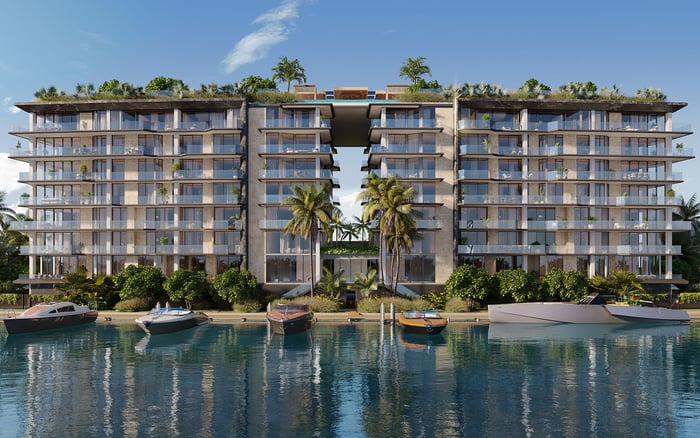
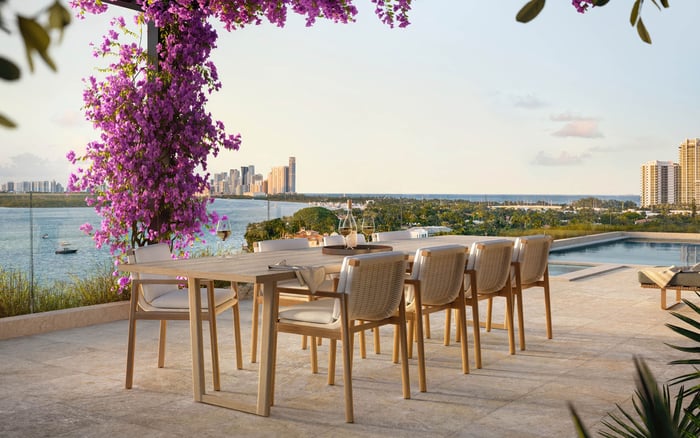
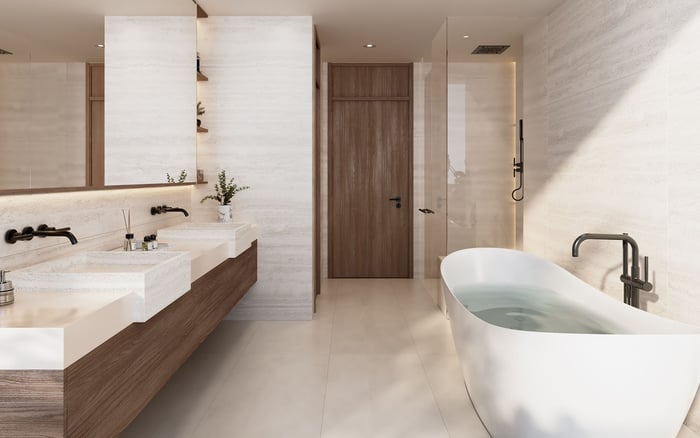
At Alana, the most defensible premium is attached not merely to water, but to a distinctive outlook with credible durability, privacy, light, and limited substitutes.
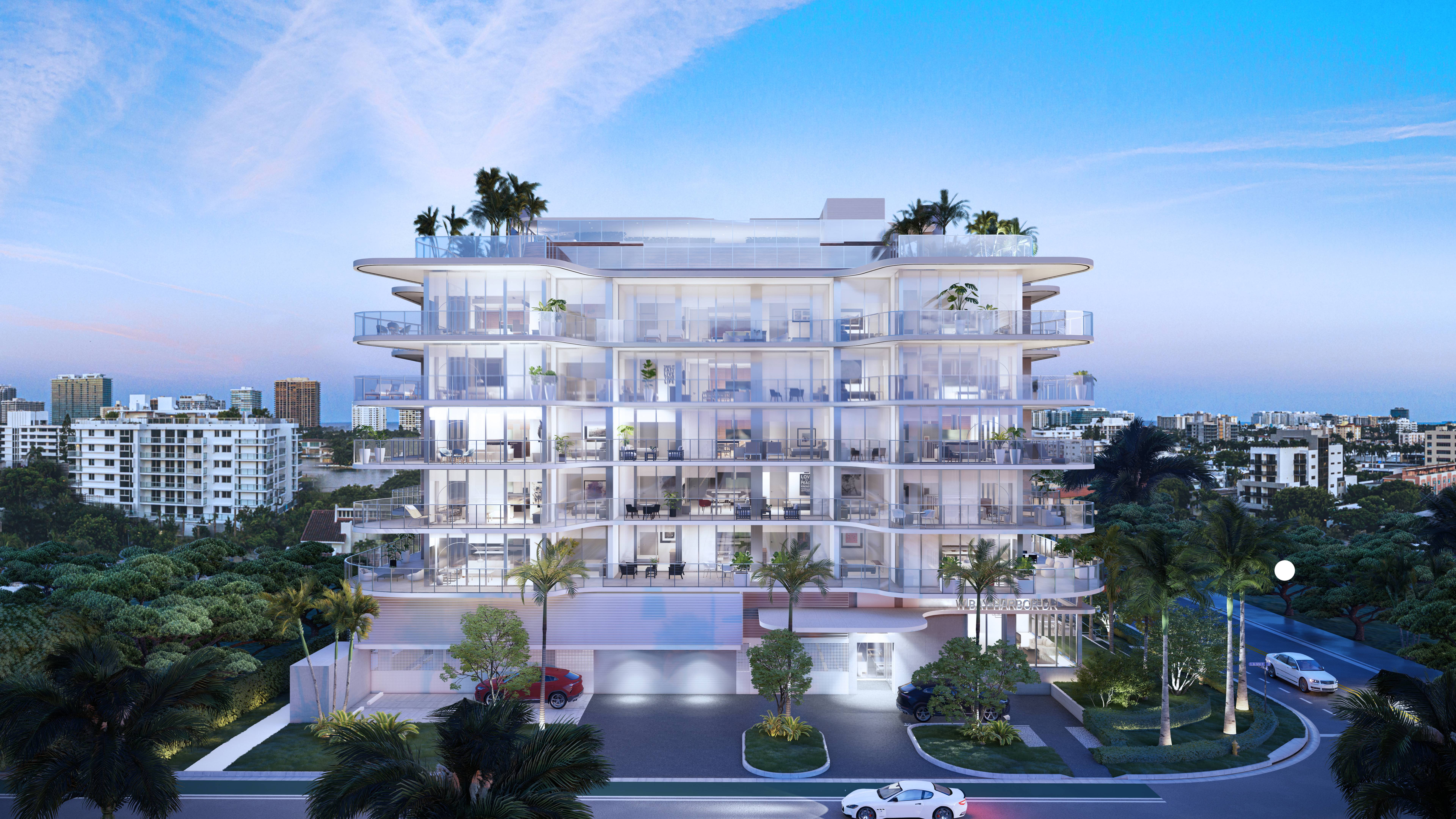
At Alana Bay Harbor Islands, selecting a residence begins with a distinction sophisticated buyers should insist upon: waterfront positioning does not make every line equivalent. A premium line is a vertical stack of residences defined by orientation, exposure, floor elevation, and the precise geometry of its sightlines.
That geometry determines what the eye actually receives. One residence may frame a narrow water view; another may layer water, skyline, and open sky into a broader composition. Natural light, visual privacy, and horizon width are distinct attributes-not incidental benefits that can be reduced to a single “water view” description.
The reservation decision should therefore turn on two questions: How exceptional is the outlook today, and how likely is its character to endure?
A disciplined valuation separates the view into its components. Start with the proportion of water visible from the principal living spaces and outdoor areas. Then assess whether the outlook also incorporates skyline, open space, or open sky. Layered views can feel more distinctive than a narrow aperture, particularly when the composition remains legible from both seated and standing positions.
Next, evaluate orientation and exposure. Consider the expected pattern of natural light throughout the day, glare during the hours when the home will be used most, and whether neighboring residences look directly into private interiors or terraces. Privacy can be as scarce as elevation, especially when two lines share a similar water-facing description.
Finally, judge breadth. A wide horizon may create a stronger sense of openness than a closer but tightly framed water view. Water-view quality is ultimately experiential, and buyers should resist reducing it to a binary test.
A premium is more defensible when the sightline has a credible chance of remaining open. That conclusion should never rest on a rendering alone. Renderings express design intent; they do not replace elevation studies or analysis of buildable neighboring sites.
Review the parcels between the residence and its defining outlook. Current uses may appear benign, while future development could alter the corridor. Zoning and height restrictions matter because they may constrain new construction or permit an obstruction that does not exist today. Any assertion that a view is protected should be confirmed through current zoning records, surveys, approved development applications, and legal due diligence.
This parcel-by-parcel review is especially important in pre-construction decisions, when buyers are reserving a future visual experience. The aim is not to eliminate all uncertainty, but to identify the premium lines with the strongest combination of present quality and long-term resilience.
Boutique buildings contain a limited number of residences by definition, and relatively few may occupy the upper levels. That can give higher-floor homes an added dimension of scarcity, provided the elevation materially improves the view, privacy, light, or horizon.
Floor height alone is not sufficient reason to pay more. Buyers should compare adjacent levels and ask what changes in practical terms. Does an obstruction fall away? Does the skyline become more visible? Is the terrace more private? A premium is easier to defend when the higher floor creates a benefit that a lower-priced residence cannot replicate.
This logic also informs resale. A line may attract stronger future interest when its defining combination of exposure, privacy, and layered outlook has few substitutes within the building.
The right premium is not a percentage that can be assumed in advance. No verified unit-by-unit pricing or quantified view premium establishes a universal answer here. Instead, value each incremental benefit: view quality, obstruction risk, elevation, orientation, privacy, and comparable-unit pricing.
Begin with the best lower-priced alternative in the building. Identify precisely what the premium residence adds and which of those additions are durable. Then weigh recurring carrying costs against the expected lifestyle and resale advantages. A more expensive residence may still be the more rational purchase if its differentiating qualities are scarce and difficult to reproduce, but that conclusion should follow analysis rather than emotion.
A useful investment test is simple: If the water view were narrowed or the skyline partially interrupted, would the residence still feel meaningfully superior? The strongest premium lines derive value from several attributes rather than one fragile sightline.
Local comparisons can sharpen judgment, but only when the same criteria are applied. A buyer reviewing Onda Bay Harbor and La Maré Bay Harbor Islands should compare orientation, elevation, privacy, horizon breadth, and exposure to neighboring development-not project names alone.
The same discipline applies when widening the search toward Bal Harbour and considering Rivage Bal Harbour. The purpose is not to declare one outlook universally superior, but to understand what portion of the asking price is attached to a genuinely scarce visual and spatial experience.
Before reserving, request the floor plan, orientation, stated elevation, and available sightline materials for the exact residence. Walk or study the surrounding parcels, identify potential obstruction zones, and confirm relevant restrictions with qualified legal and planning professionals.
Compare at least one adjacent floor and one alternative line. Assign separate scores to water, skyline, open sky, natural light, privacy, and corridor durability. The result should explain the premium in plain language. If it cannot, further diligence is warranted.
What is a premium line at Alana? It is a vertical stack distinguished by orientation, sightlines, exposure, and floor level.
Is every waterfront-facing residence equally valuable? No. Water visibility, skyline layering, open sky, privacy, and horizon breadth can differ by line.
Why does floor elevation matter? Added elevation may improve openness, light, privacy, or sightlines, while the supply of upper-level residences can be limited.
Does a rendering prove that a view will remain open? No. Renderings should be supplemented by elevation studies and analysis of buildable neighboring sites.
How should buyers evaluate obstruction risk? Examine intervening parcels, zoning, height restrictions, and approved development applications with qualified advisers.
Can a view corridor be legally protected? It may be constrained by applicable rules, but any claim of protection requires current legal and zoning confirmation.
What makes a layered outlook desirable? A composition of water, skyline, and open sky can create a more distinctive experience than a narrow view.
How should a reservation premium be calculated? Weigh view quality, obstruction risk, elevation, orientation, privacy, and relevant comparable-unit pricing.
Can premium lines have stronger resale appeal? Potentially, especially when their views and privacy cannot be replicated by less expensive residences.
Should carrying costs affect the decision? Yes. Recurring costs should be considered alongside lifestyle value, scarcity, and potential resale benefits.
For a tailored shortlist and next-step guidance, connect with MILLION.
If branded residences are on your mind — as a home or as an allocation — we would be glad to share what we are seeing, privately.
Begin a quiet conversation