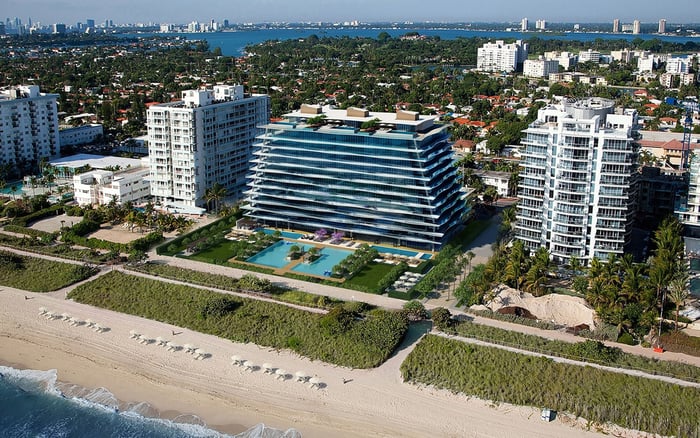
A Tokyo-to-Surfside relocation calls for more than a delivery estimate. Aligning contractual deposits, construction evidence and flexible temporary accommodation can protect both liquidity and the first year’s quality of life.

For a household moving from Tokyo to Surfside, choosing a residence is only part of establishing a new life. The first year also depends on when capital must be available, how reliably construction progress can be assessed from abroad, and where the household will live if possession comes later than expected. A compelling address cannot resolve those timing questions.
Start with two calendars: one for the purchase contract and another for the family’s arrival. A delivery estimate belongs on both, but it should not be the sole basis for ending a Tokyo lease, shipping a household or committing to nonrefundable accommodation.
If Ocean House Surfside is on the shortlist, make that distinction before coordinating the move. Evaluate the residence and the proposed transaction separately. The transaction should be supported by its own documents, not assumptions about neighboring projects.
Build a payment calendar directly from the proposed purchase agreement. Record each deposit amount, its trigger, the required payment date and the anticipated closing balance. Ask counsel to distinguish fixed dates from construction-linked milestones and explain how notices are delivered. Do not substitute a supposedly standard deposit schedule for the actual terms.
Florida’s 2020-2024 condominium escrow provisions offer an important framework, but should not be treated as independently verified current law. Under those provisions, payments exceeding 10% of the purchase price received before construction completion generally must be held in a special escrow account, subject to permitted withdrawals.
That qualification matters. Once construction begins, a developer may withdraw deposits above 10% for construction purposes if the purchase contract expressly authorizes it. Buyers should not assume that every dollar deposited remains untouched until closing. The 10% threshold is an escrow distinction-not a promised deposit schedule or a measure of a particular buyer’s exposure.
For a buyer also considering The Delmore Surfside, compare the documents: what is payable, when it becomes payable and what the agreement permits. Have Florida condominium counsel confirm the applicable law and explain the escrow language before signing.
The relocation budget should show more than the purchase price. Place deposits and the closing balance alongside temporary rent, remaining Tokyo housing costs, shipping, storage, furnishing, taxes, insurance and association charges. Confirm when each expense begins; do not assume all carrying costs start when the furniture arrives.
Prepare a base case and a delayed-possession case. The latter should test an extended accommodation period and additional storage without presuming that the developer will reimburse either. Keep relocation reserves clearly identified rather than treating funds committed to the purchase as available for contingencies.
For a Tokyo-based household, assign responsibility for payment instructions, document review and signing coordination before deadlines approach. Ask the relevant professionals what can be arranged remotely and what requires attendance. The aim is not to accelerate every decision, but to prevent a short contractual deadline from forcing an expensive relocation choice.
Surf Row Residences illustrates why milestones need interpretation. The 24-residence condominium development by LD&D and ONE Capital is at 8800 Collins Avenue. Construction began in late 2025; by August 2026, sales stood at 50%, with vertical construction advancing. Its anticipated 2027 delivery remains a project-level forecast, not a buyer-specific possession date.
Surf House has likewise been described as being in its pre-construction and sales phase, with estimated delivery around 2027. Neither estimate establishes the closing-notice period, extension provisions or occupancy conditions in an individual purchase agreement. Sales progress and visible construction should inform planning, not replace contractual review.
Request a consistent update package: dated photographs, completed work, upcoming work, permitting status and a revised delivery estimate. Ask for separate descriptions of readiness for the purchased unit, common areas and amenities. A general statement that construction is progressing does not establish whether the household can occupy the residence or enjoy the facilities it expects.
Maintain a dated record of those updates and compare each new estimate with the previous one. When timing changes, ask which relocation decisions should remain provisional.
For the purposes of the 2024 escrow provision, construction completion means issuance of a certificate of occupancy for the entire building or equivalent governmental authorization. Where no such certificate or authorization is issued, the definition uses substantial completion under the plans and specifications.
That definition serves the escrow statute. It does not, by itself, establish every contractual condition for closing or possession, nor does it resolve the readiness of every amenity. Have counsel explain which documents and conditions govern the particular transaction.
Before releasing a shipment or ending temporary accommodation, seek written confirmation of the relevant occupancy and closing status. Coordinate inspection, any agreed follow-up work and furnishing access separately. These are distinct arrangements to confirm, not automatic consequences of a projected completion year.
Temporary accommodation should protect the household’s routine while preserving options. Compare extension terms, cancellation provisions and storage arrangements before booking. A flexible arrangement may be more useful than one whose departure date depends entirely on the residence being ready.
Legal flexibility deserves equal attention. Ask counsel to review developer extension rights, any outside date, termination provisions, closing notice and any negotiated reimbursement. Do not assume that a delay creates an automatic entitlement to temporary rent, storage fees or changed flights.
The 2020 escrow provisions contemplate the return of escrowed funds, together with earned interest, when a buyer properly terminates under the contract or applicable condominium law. They also provide for applicable escrowed funds and interest to be paid to the developer if the buyer defaults. A delayed move is therefore not a reason to stop performing contractual obligations without legal advice.
Keep the residence decision separate from the pressure of an approaching arrival date. If considering Arte Surfside alongside other options, establish the terms and possession circumstances of the specific opportunity. Do not assume that an address answers the timing question.
A well-planned first year allows the household to settle without making every shipment, furnishing order and accommodation decision depend on one forecast. The objective is a coordinated transition: capital available when contractually required, construction information that supports decisions, and an alternative living arrangement that remains workable if timing changes.
For a considered approach to your Surfside residence search, connect with MILLION.
If branded residences are on your mind — as a home or as an allocation — we would be glad to share what we are seeing, privately.
Begin a quiet conversationTreat the projected year as a planning estimate, not a guaranteed possession date. Maintain a separate relocation calendar with flexible accommodation and shipping arrangements.
No. The cited statutory threshold concerns escrow treatment; the purchase agreement establishes the buyer’s actual deposit amounts and payment triggers.
Under the cited provisions, a developer may withdraw those deposits for construction purposes once construction begins if the purchase contract expressly authorizes it. Counsel should confirm the applicable law and contract language.
No. The discussion uses 2020–2024 editions, so Florida condominium counsel should confirm the law applicable to the transaction.
Include deposits, the closing balance, temporary rent, Tokyo housing overlap, shipping, storage and furnishing. Also budget for taxes, insurance and association charges, confirming when each begins.
Request dated photographs, completed and upcoming work, permitting status and revised delivery estimates. Seek separate readiness updates for the unit, common areas and amenities.
No. It is a project-level forecast and does not establish an individual buyer’s closing date or right to possession.
No. The escrow statute’s completion definition does not establish all contractual closing or possession conditions, which require separate review.
No automatic entitlement should be assumed. Counsel should examine the agreement, applicable rights and any negotiated reimbursement before the buyer commits to relocation expenses.
Do not assume a delay permits nonperformance or termination. The cited provisions distinguish proper termination, which can require return of escrowed funds and earned interest, from buyer default, which can direct applicable funds to the developer.